
 EN
EN
What is dialogue and why is it essential to build a world that we deserve
By Roberto Catalano*
Here’s the key: knowing that we do not know. No one possesses the absolute Truth, and by engaging in dialogue with everyone we can grasp aspects or fragments of truth that help us reassemble a shattered vase that we can restore only if we are “together”.
Pope Francis once said, “We are living not merely in an era of change, but in a true change of era.” We live in a world where traditional points of reference seem to have disappeared, and in the face of diversity it often seems that the only response is confrontation. We find ourselves helpless spectators of conflicts and violence that have been unfolding for years and before which we feel there is little we can do. Even in places that appear untouched by war, people live in a constant climate of polarization. This means the presence of tensions and potential conflicts that may erupt suddenly, even when they seem unexpected. The polarizations that we all experience firsthand are often rooted in social inequalities, in ethnic and cultural backgrounds, and therefore also in religious affiliation. To all this we must add generational distance which seems to turn our world even more into separate compartments progressively cutting off communication between age groups, isolating them into distinct segments within their own worlds in our societies.
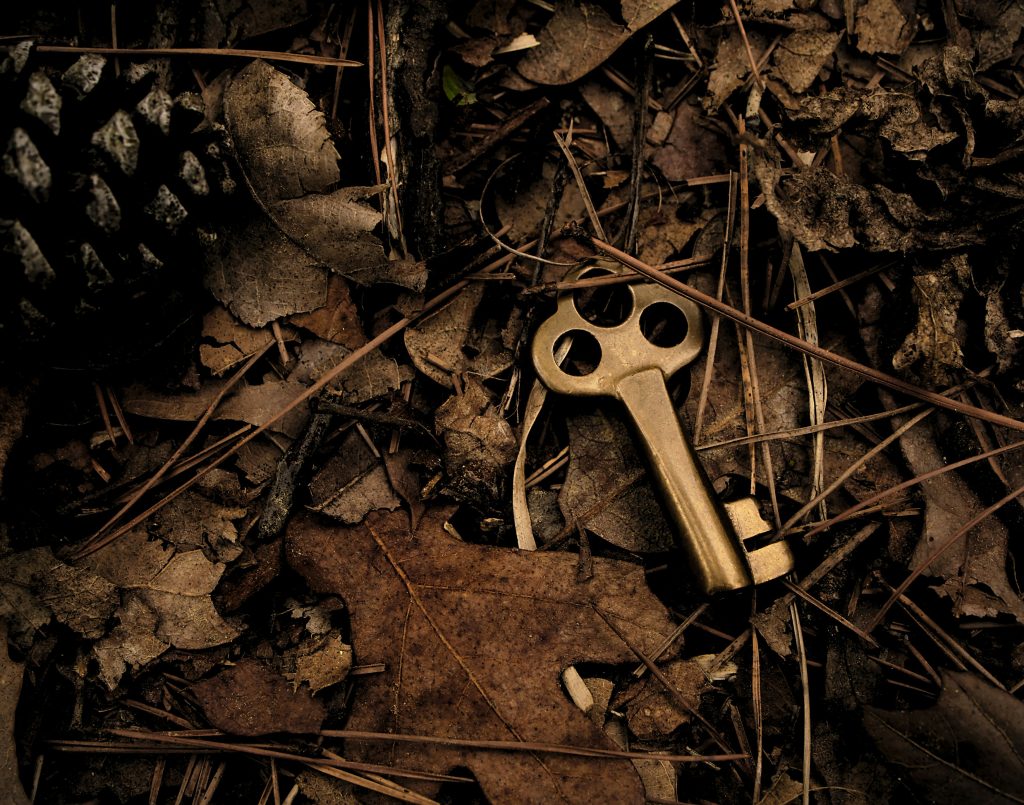
Dialogue as a key
In this complex context, dialogue emerges as an essential key to the future of humanity. If polarized groups do not find a constructive way to begin speaking with one another, to get to know each other, to appreciate one another, and to grant the “other” the possibility and the right to “be another” we will be condemned to direct confrontation. In other words, we must learn the art of dialogue today, an art that we could describe as a key to survival. This is not a discovery of our age, nor even of recent times. All cultures, when they return to their origins, recognize that dialogue was a defining element of their beginnings. It is enough to recall that the foundational text of Confucian philosophy is The Analects (literally, “The Dialogues”), and that Indian and Buddhist culture is likewise rooted in the exchanges between the guru and the disciples, or between the Buddha and his monks. The Jewish world, even today, continues to study and transmit its culture through dialogue. It’s method, in fact hevruta, means studying together, because—rabbinic wisdom teaches—studying alone means remaining ignorant. The thought and the school of Plato were also dialogical, and we cannot forget that the most beautiful and challenging pages of the Gospels are those in which Jesus dialogues with his disciples, with the people he meets along the roads of Galilee, and even with the crowds. It seems, then, that dialogue is part of the human essence. It naturally has its own style, its own methodology and of course its own foundations.
It is not possible to engage in dialogue if, first of all, we do not know ourselves. Identity—knowing who I am, who we are—is fundamental to developing the capacity for dialogue.
Equally essential is being aware of a certain idea of who is/are the “others”. And this is for myself and for my community. In each of our lives, there is a constant tension that we are called to navigate every day: the tension between identity and pluralism. Dialogue can help transform a potential clash into an appreciation of the other. The key to this process is the ability to put the Golden Rule into practice in our own environment and daily context: “Do to others what you would want them to do to you,” and “Do not do to others what you would not want them to do to you.” Every culture carries within itself a rich formulation of the Golden Rule, which emerges as a kind of indispensable know-how for healing differences, overcoming polarization, and ultimately achieving peace, mutual understanding and appreciation. Indeed, when practiced, the Golden Rule has a powerful capacity to set in motion mechanisms of mutual adjustment, helping individuals and groups build bridges and forget the very possibility of “conflict.” The experience of the Golden Rule helps us remain constantly open to those who are different from me/us. And openness means learning from others, growing and even transforming our own perception of reality.
Being confronted suspends prejudice and generates a question
A second aspect that dialogue requires of us is participation. The Golden Rule helps us avoid closing in on ourselves and becoming self-referential; it encourages us to lower our defenses and open ourselves to those who are different from me/us, learning much from their culture, personality and religion. Such attitudes, however, require reciprocity. Dialogue cannot be done alone. We must live the Golden Rule together; it is a way of responding to the openness of the other. All this contributes to mutual trust, which can never be taken for granted. It must be built anew at every moment and in every encounter. This helps us treat one another as equals, eliminating the prejudices and discriminations we all carry, legacies of our environment, our upbringing and the media bombardment to which we are exposed today. Finally, we must be empathetic, to feel what the other feels and to experience it with him or her.

During these processes, if it is true dialogue, the two or more participants – whether individuals or groups/communities – live an experience in which each one “feels involved, threatened, encouraged, stimulated, provoked, deeply shaken.” [1] Dialogue has a transformative power: one always emerges profoundly different from how one entered. Naturally, each of us is a child of our own ethnicity, culture and social community (group, clan, tribe, caste, political party, etc.) and carries prejudices toward others and toward other communities. Having “prejudices” is not necessarily negative. It becomes negative when they harden into unshakeable dogmas. The German philosopher Hans-Georg Gadamer highlights the importance of possessing prejudices that he considers legitimate; prejudices that, as such, cannot simply be condemned or eliminated.[2] The point is not to renounce one’s own tradition or to distance oneself from the religious and cultural origins that shape us. That would be impossible, for each of us is indissolubly linked to our own tradition and to the perspectives that have been handed down to us. Rather, the process is that of a hermeneutical back-and-forth that precedes the encounter with the “other” and allows us to change, refine and correct the expectations we carry in our minds and hearts. It is not easy to be aware of the prejudices each of us hold. We become aware of them only when they are challenged and called into question by an external stimulus. This is precisely where the process begins that can lead us to understand what is “different.” Being confronted by someone interrupts, suspends our prejudice and generates a question.[3] What matters is being ready to embrace this process, which leads to the Socratic awareness of “knowing that one does not know.” Indeed, a question can be asked only by one who is aware of their own ignorance and desires to know.
Here is the key: knowing that we do not know. No one possesses the absolute Truth, and by engaging in dialogue with everyone we can grasp aspects, fragments of truth that help us reassemble a shattered vase, one that we can restore only if we do it “together”. But all of this requires the patience to build, or rebuild a “culture of dialogue” moment by moment, day after day. Each of us is a protagonist and plays a part in it.
* The author is a professor at the Sophia University Institute and an expert in interreligious dialogue.
[1] R. Panikkar, L’incontro indispensabile: dialogo delle religioni, Jaca Book, Milano 2001, 33.
[2] Cfr. H.G Gadamer, Truth and Method, Sheed & Ward, London, 1975, 277.
[3] Cfr. H.G Gadamer, Truth and Method, 207.