

 EN
EN
From Colombia to Hungary: Sprouts of a human economy are shaping a new global reality
From the fields of Huila to the classrooms of Budapest, a new paradigm emerges. Youth and farmers prove that a humane economy is possible, prioritizing human dignity and collaborative work over traditional financial profit.
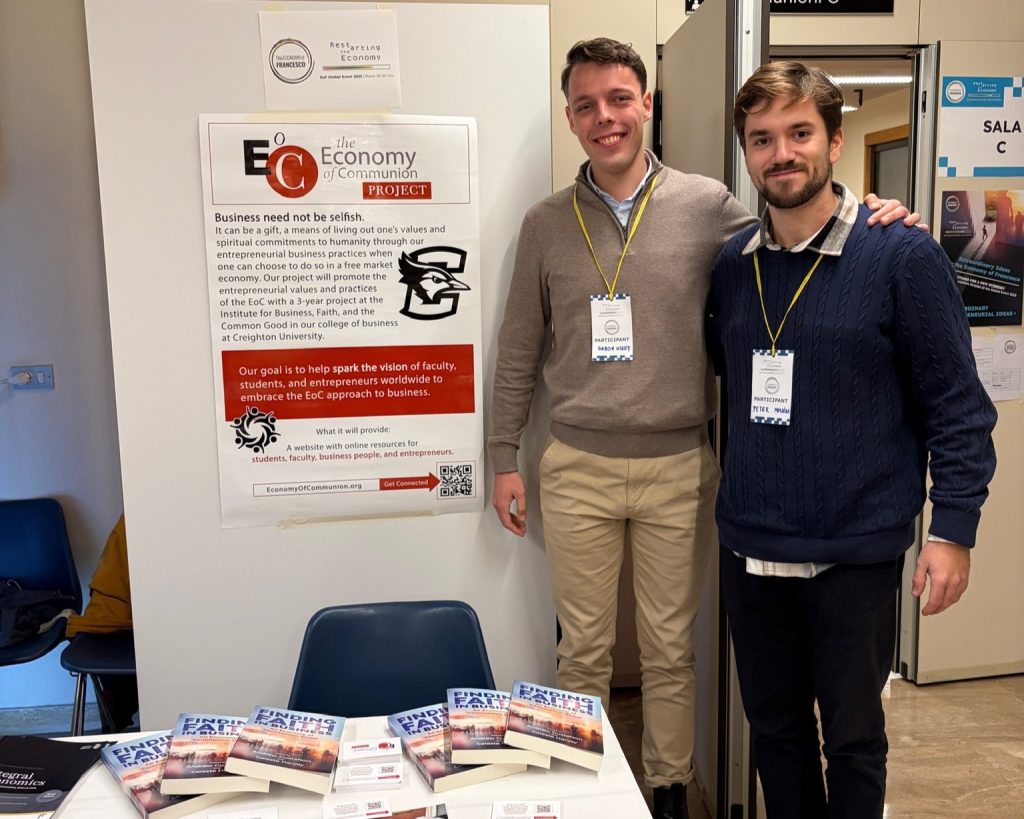
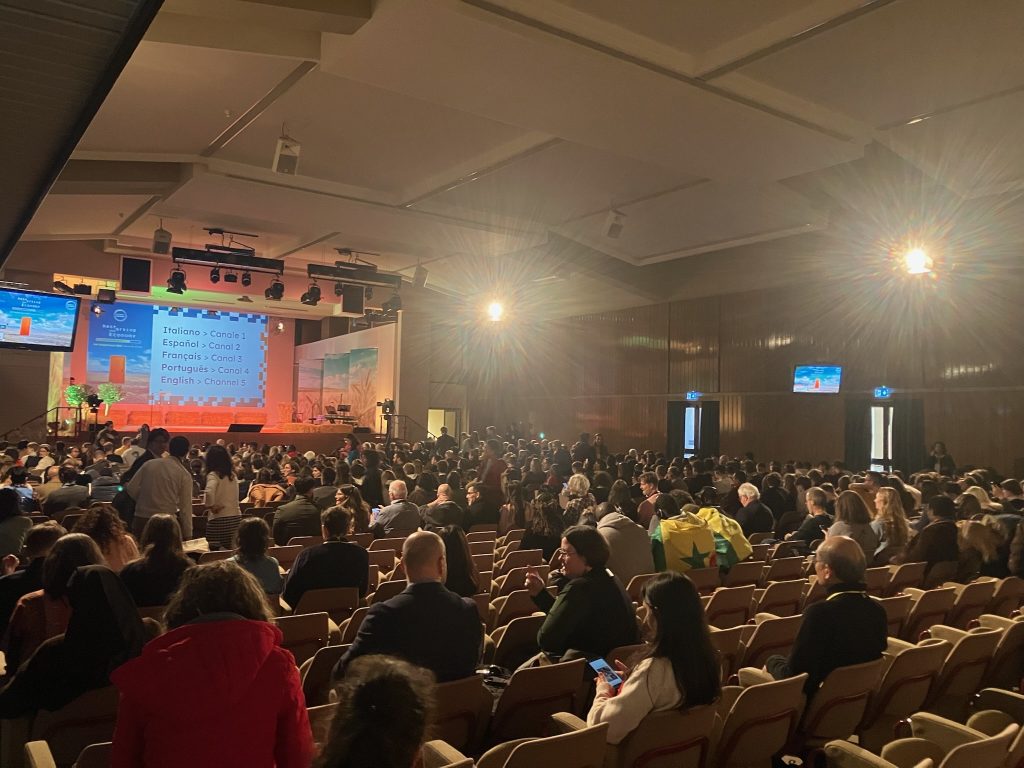
In November 2025, two young Hungarians — Péter Meszéna and Gábor Utassy — attended the Economy of Francesco (EoF) Conference in Rome, Italy. Over 500 people gathered to rethink the economy, a human economy, and both sought answers of how to align their personal values to their profession as they pursue their higher education in business and economics.
After all, its title was “Restarting the Economy,” where the words Rest and Arting were in separate lines — disjointed to emphasize the importance of both rest and art.
Restarting the Economy: The Art of Rest and Humanity
Péter described that so much of the conference involved music, which he really appreciated. Gabor said they also had other artistic workshops, like learning Chinese calligraphy. “The economy that Economy of Francesco imagines is something that is very human empowering,” Péter said, “and art is very close and important to humanity. And I guess it just makes it [the economy] more humane too.”
Their main takeaway from this conference? “Growth is cool, but it’s also tiring,” said Péter. “You can’t just keep doing that all the time. So you need rest. And it’s something that is not in the main focus of the mainstream economics [with] maximizing profits.”
Seeing the humanity of every worker rather than simply as an employee was also an important takeaway from the conference for Gabor. Although he said this might seem self-explanatory and straightforward, it can be easy to forget.
“When I work in multinational companies, it’s very easy to kind of slip in this area because it’s all about… metrics [and] numbers. And you kind of lose awareness of the essence of it, that you are actually working with people… and you should be working for people. And if you have a very open eye [and heart] to see the person then and this [diverse] artistic view, then you are more likely to not fall into this pit.”
This practice of recognizing the humanity in every worker is what this group of farmers in rural Colombia have been doing for over 30 years.
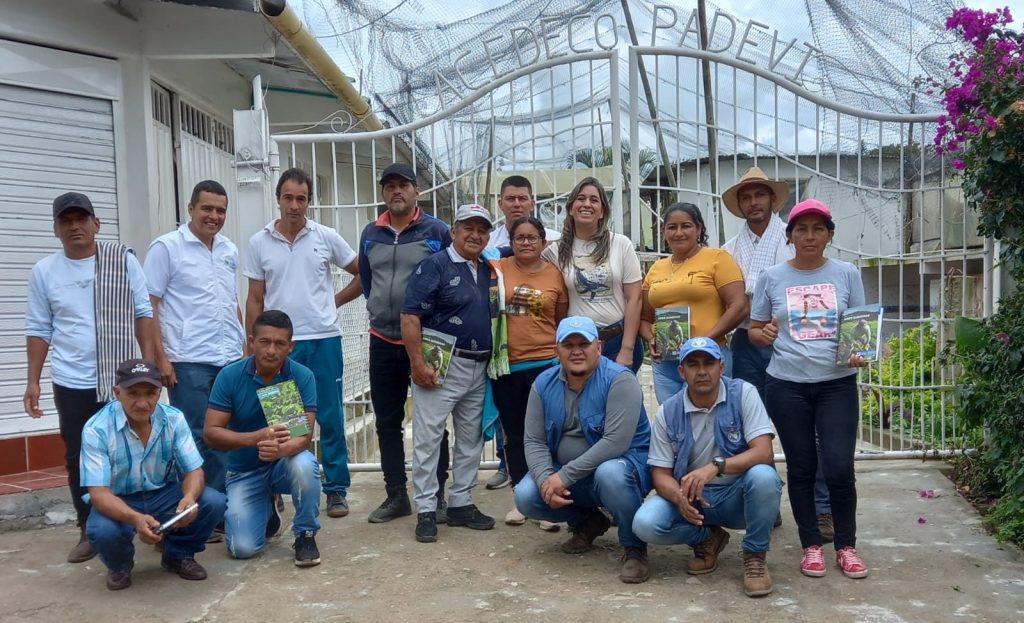
PADEVI in Colombia: Prioritizing Social Impact Over Balance Sheets
Priest Emiro Barrera Rojas founded the Asociación Comunitaria Economía de Comunión Palabra de Vida (ACEDECO PADEVI) in 1995. This was after he visited Loppiano, in Italy, a few years prior and learned about Economy of Communion: an initiative from the Focolare Movement that proposes a new business model deeply rooted in Catholic thought and the spirituality of unity. Economy of Communion principles guide entrepreneurs operating in the current structures of capitalism and free market systems governing most economies.
ACEDECO PADEVI is located in the rural district of Aguas Claras within the town of Timaná in the Colombia’s Huila department. There, they cultivate coffee, aquaculture, and livestock. Yesid Chilito, operations manager since 2012, said PADEVI’s main objective is dignified labour — and their poultry farms illustrate how they seek this practice.
Yesid, on his weekly work commutes into Aguas Claras, learned more about the community’s relationship to the consumption of chicken. “There was a recurring complaint [at the time] from everyone who went there [that] the most accessible protein for the community was chicken,” he said. “Because it was cheaper. But everyone complained about the quality of the chicken because the only chicken available at that time in the area was imported, and people complained that it was just water, that it tasted bad, [and] hat it smelled bad.”
That was when he proposed to raise their own chicken at ACADECO PADEVI to feed the community of Aguas Claras.
“It was a very high-quality food for everyone, something more like what we here in Colombia call ‘free-range chicken,’” Yesid explained. “It’s a delicious chicken, one that people really like, but it could be produced in a more industrialized way.”
He recounted how they have faced challenges in launching this endeavour. Their first attempt was with 100 chickens. “97 died,” Yesid said, “and the three that survived weren’t even close to [the final result] we wanted. But we kept growing, [and eventually] we managed to standardize the production process we already had… and then we decided to enter the market.”
PADEVI (taking the first syllable of every word in Palabra de Vida, or Word of Life in Spanish) counts with eight families and 14 associates, where production is entirely collaborative.
“Our organizational structure isn’t pyramidal,” Yesid said. “We’re all on the same level. Here, while there are managers, there aren’t hierarchical levels. Instead, we’re all responsible for specific actions or areas. And each person is responsible for a particular role that has been assigned to them.”
According to its website, ACEDECO PADEVI’s mission is “to live like the first Christians who had everything and shared everything in common, in order to improve the living conditions of its members and the surrounding community, through the production and marketing of agricultural products that allow the food security of the region to be maintained, under the philosophy of giving and sharing.”
Yesid said that “once the accountant told us we had to close the chicken business because it wasn’t making any profit. I told him, ‘But the chicken business is the one that generates the most jobs for me.’”
A “Drop in the Ocean”: The Future of EoF Local Hubs
Although this might seem counterintuitive in the mainstream way of doing economics, this can be one way of restarting the economy: through putting people at the centre and remembering the innate dignity work has, like Gabor highlighted at the Economy of Francesco conference in Italy.
“This is something I was personally struggling with when I first started to trying to dig deeper into this kind of alternative way of doing business,” Gabor said, “is that I felt too small and too insignificant to kind of contribute to something bigger.”
He quoted how this message from Mother Teresa really resonated with him: “We ourselves feel that what we are doing is just a drop in the ocean. But if that drop was not in the ocean, I think the ocean would be less because of that missing drop.”
“Like most people around me in my master’s program did not care about social impact at all,” Gabor said, “and I felt like, ‘Okay, maybe that’s not very encouraging.’ But it’s kind of, like, a confirmation that… you shouldn’t care about how small or [how] you perceive it as small… You just have to keep going and then it might get bigger.”
Gabor and Péter, after returning from the conference, met with the Economy of Francesco board to discuss the possibility of opening an EoF hub in Hungary. These are communities of young people worldwide committed to spreading these ideas within their local realities.
“They have hubs all over the world to make it local and not just something centralized and idealistic,” said Péter. “They want to focus on… really make it customizable to every place. And we came home and said that it should be in Hungary, so let’s take a step in that direction”.