
Workshop
From Senegal to Italy: the Travelling Cinema Caravan Facing up to the Mafia | Cinemovel Foundation

Cinema against the Mafia. Cinema for justice and freedom for all. This is the work the Cinemovel Foundation has been carrying out for two decades through the Libero Cinema in Libera Terra (Free Cinema on Free Earth) travelling festival.
If there is a noble, exemplary way of running a cinema … it is that of the Cinemovel Foundation, created by Elisabetta Antognoni and Nello Ferrieri. Its mission? To provide a cinema to people who no longer have one, or who have never had one. Cinemovel brings it to them, builds it for them in a symbolic and tangible gesture. On the white sheets hoisted up with determination and community spirit all over Italy (and not only Italy), valuable films are screened and relationships are built.
A Journey Into the Origins of Io Capitano
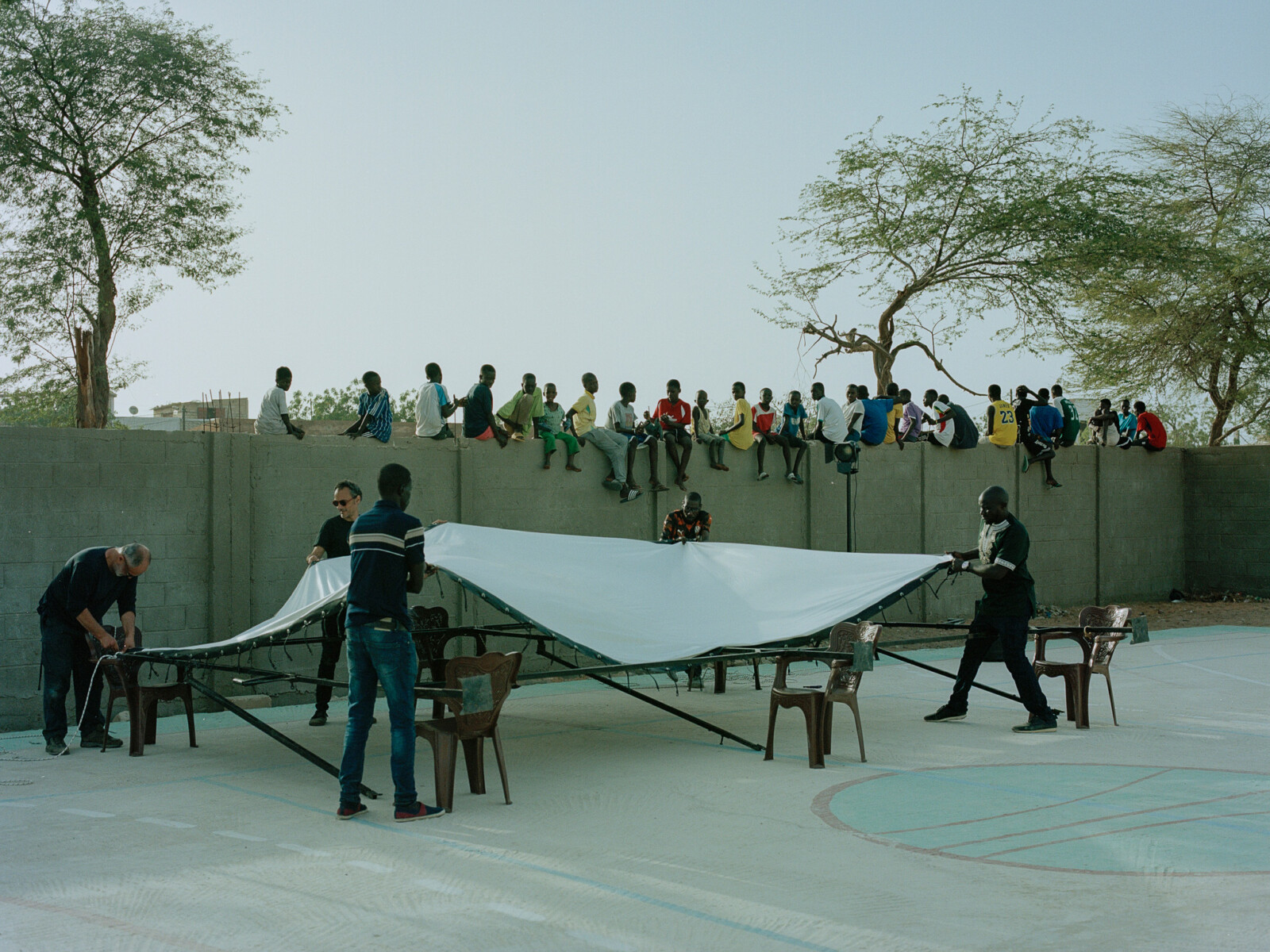
The initiative held its twentieth edition this year and did something special last year. In the spring of 2024, the Cinemovel caravan was flown to Senegal to bring the film Io Capitano, by Matteo Garrone (here is our review), to the place where the protagonists set off to find a better future in Europe.
The caravan took a journey around the African country, a journey with screenings and debates, meetings and shared reflections. The director himself endorsed this emotional, educational project. The journey was a return to the origins of Io Capitano, with a group that included Seydou Sarr, the extraordinary protagonist of the film; Moustapha Fall, another character in the story; and Mamadou Kouassi, who had inspired part of the story.
The Journey Recounted in a Documentary
Everyone responded passionately to Cinemovel’s proposal and took part in discussions with the audience after the screenings. There were a lot of powerful thoughts, incisive comments, many of which were captured in a documentary that told the story of this extraordinary adventure: Allacciate le cinture, il viaggio di Io capitano in Senegal (Buckle Up: the Journey of Io Capitano In Senegal), by Tommaso Merighi, available on RaiPlay.
It is a passionate report with testimonies from those who have faced the journey, from those who seek hope, and – thanks to the film, which the audience often sees for the first time through Cinemovel – from those who have gained a better understanding of the dangers of such a journey.
The Words of Seydou Sarr
Seydou Sarr, in a section of Allacciate le cinture, shared his feelings about the caravan’s journey to Thies, the city where he grew up. ‘There is no cinema,’ he explains, ‘and projecting the film here, in schools, is an absolute pleasure. The director made the film’, Seydou continues, ‘to show what really happens in the desert.’ He ‘accurately’ captures ‘reality’, which is why this is ‘an incredibly important film for us’.
Seydou expressed that he is ‘proud to represent those who do not have a voice’ and remembers meeting blocked migrants in Morocco during their journey of hope. Garrone had hired them for the film, and among them were ‘people from Senegal and Ivory Coast’. Their stories, the protagonist recalls, ‘motivated me even more’.
A Journey That Began Far Away and Ended up at Libero Cinema in Libera Terra
The story of Cinemovel began far away, during a trip in Africa that Elisabetta Antognoni and Nello Ferrieri took at the end of the nineties. This was where the idea of organising a travelling cinema visiting African villages, as well as social and health communication campaigns, was born. Mozambique, Morocco, Senegal, Tunisia, and even Brazil are among the countries crossed.
Libero Cinema in Libera Terra’s story slowly took shape in 2006, aided by a meeting with the cooperatives Libera Terra and Libera. It is a travelling cinema – the longest running in Italy – facing up to the Mafia through the medium of cinema.
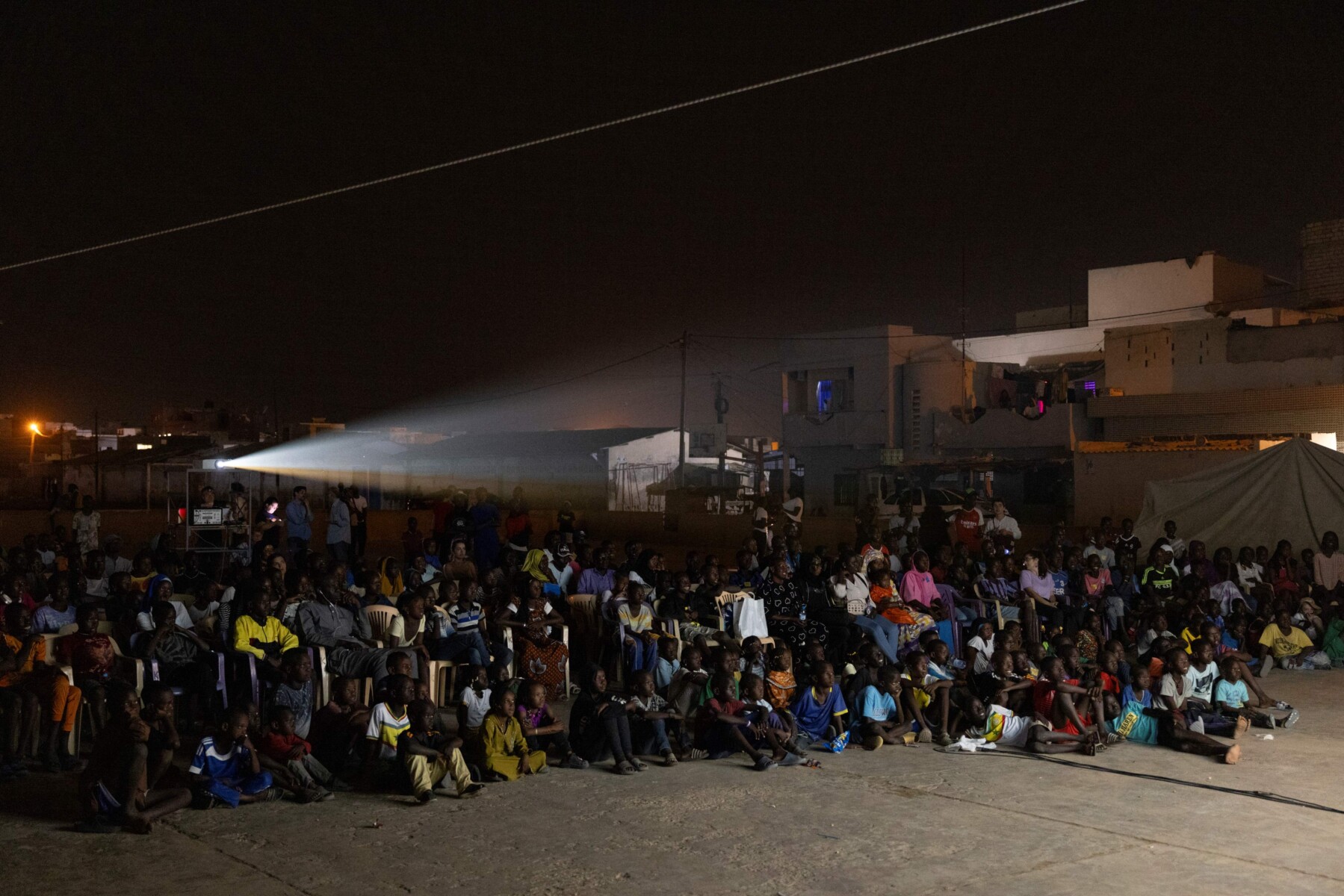
Every summer Libero Cinema’s truck starts up again in Italy, with its films and messages appearing in piazzas, in parks, in places seized from the Mafia and given back to the community.
From Portella della Ginestra to Tor Bella Monaca
The first edition of Libero Cinema – established by Cinemovel Foundation and Libera – took place at Portella della Ginestra: the place where, on 1 May 1947, eleven people were killed in a Mafia massacre. Cinemovel and Libero Cinema have been going strong ever since: 128 communities reached, 16 regions crossed, almost 106,000 miles covered, 197 films screened. Over 100 local associations have been involved.
Among the places being visited this year is Ventimiglia, a borderspace between Italy and France, and a forced homeland for migrants. It will then go to Catania, with its port where policeman Beppe Montana, who was killed by Cosa Nostra in 1985, is commemorated. Finally, it will travel to Tor Bella Monaca – one of the most dangerous neighbourhoods in Rome – on the anniversary of the Via D’Amelio bombing on 19 July.
Among this edition’s offers, other than the documentary Allacciate le cinture, is the performance Mafia Liquida (Liquid Mafia) – the film that is drawn live by Vito Baroncini on an overhead projector – and the films The Judge and the Mafia Boss by Pasquale Scimeca; No Other Land by Yuval Abraham and Basel Adra, the winner of the 2025 Oscar for best documentary; A World Apart by Riccardo Milani; The Story of Frank and Nina by Paola Randi; and There’s Still Tomorrow by Paola Cortellesi.
Together to Build Community with ‘The Power of Us’
Libero Cinema engages with diverse audiences of different languages and genders at the fertile intersection of culture, simplicity, memory, tenacity, redemption, and relevance, which shapes the identity of Cinemovel.
They bring screens to places where there has been injustice, where there has been abandonment. Freedom where the Mafia had brought terror, in places seized by criminality, in forgotten spaces.
Theirs is a story full of light, not only for the – certainly reassuring – masses, but for continually bringing about healthy socialisation, for building a community that puts people at the centre. ‘The festival has never been an event to consume,’ the leading figures of Libero Cinema write, ‘but a process to experience: each step is built with the help of Libera, social cooperatives, administrations, parishes, schools, and citizens. Over the past twenty years they have told stories of civil resistance, of fights against corruption, of viable alternatives, all with an eye to the youngest generations, to nourish awareness and imagination.’
‘As Paolo Borsellino wrote,’ we read, ‘“Mafia culture can only be eliminated through a culture of legality.” Libero Cinema, for twenty years, has been following this path, with a screen mounted beneath the stars, and with the power of us’.
Article Translated into English by Becca Webley