
Watch
Chief of War Review: Dialogue, Power, and Politics in the History of Hawaii

Chief of War is an epic and eventful series that, despite its historical specificity, is very much pertinent to the world of today. The factual, yet metaphorical, drama explores power dynamics in general, as well as political dynamics between nations and human beings, and is streaming on Apple TV+.
Chief of War explores themes of peace and war, as well as of dialogue and the use of weapons. This powerful Apple TV+ series has nine episodes, released weekly, with the final episode streaming on 19 September in the UK and the US.
The series explores the splendour of an uncontaminated landscape, one that is completely natural, not (yet) buckling under the commercial interests of the modern world. However, this modern world, this Western conqueror – laden with gunpowder and greedy for supplies, materials, and money – strikes that landscape with force and brutality.
The History of Hawaii
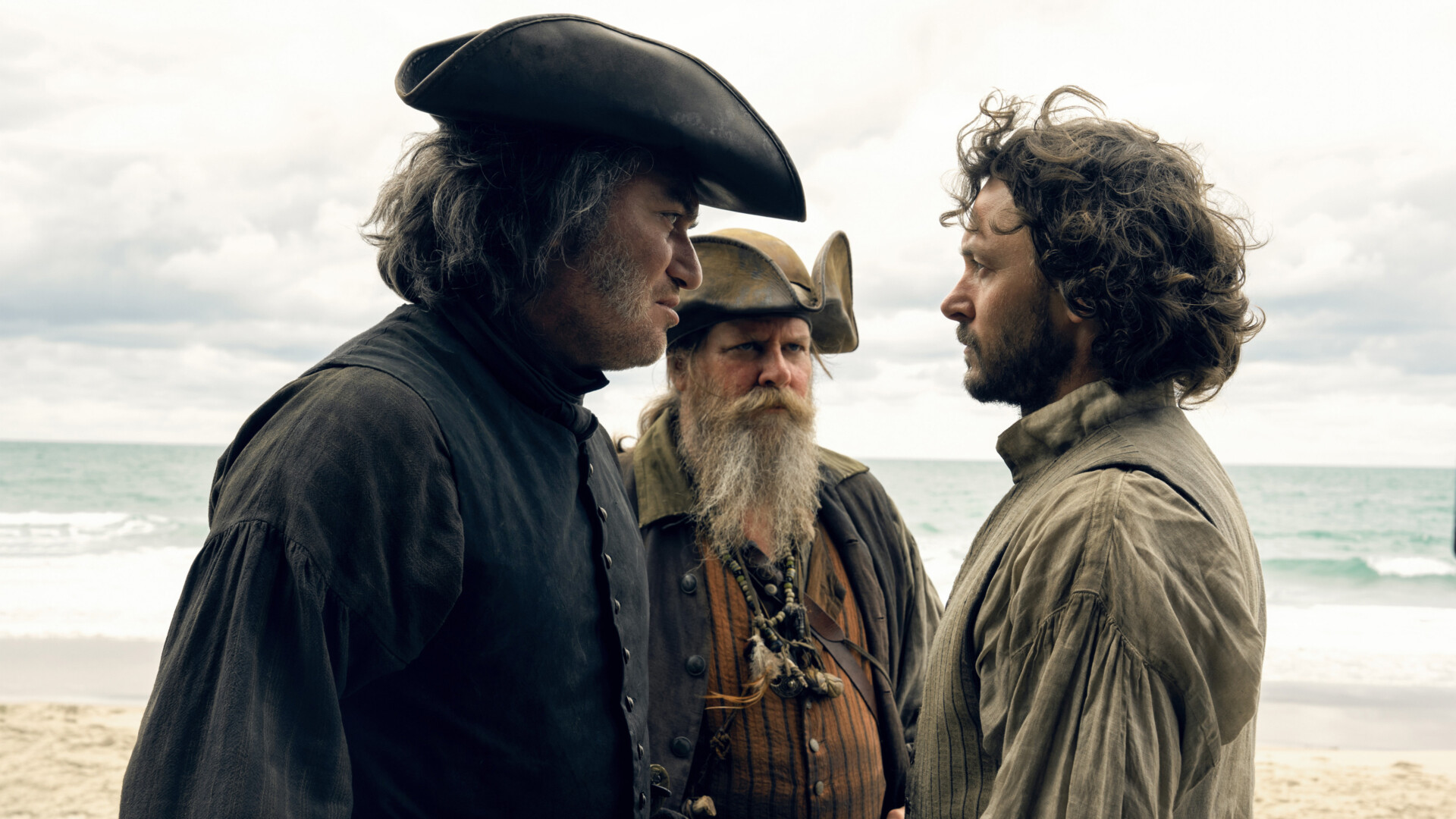
These conquerors exhibit a restrained, looming brutality, but only up to a point: when the ships of pale faces point their cannons toward a white beach, toward defenceless, disbelieving bodies, they are suddenly transfixed by the inhabitants of this bay in the Hawaiian islands. A complex story not without violence, the story of these inhabitants is one of tribes and unification, and the series tells it with due care.
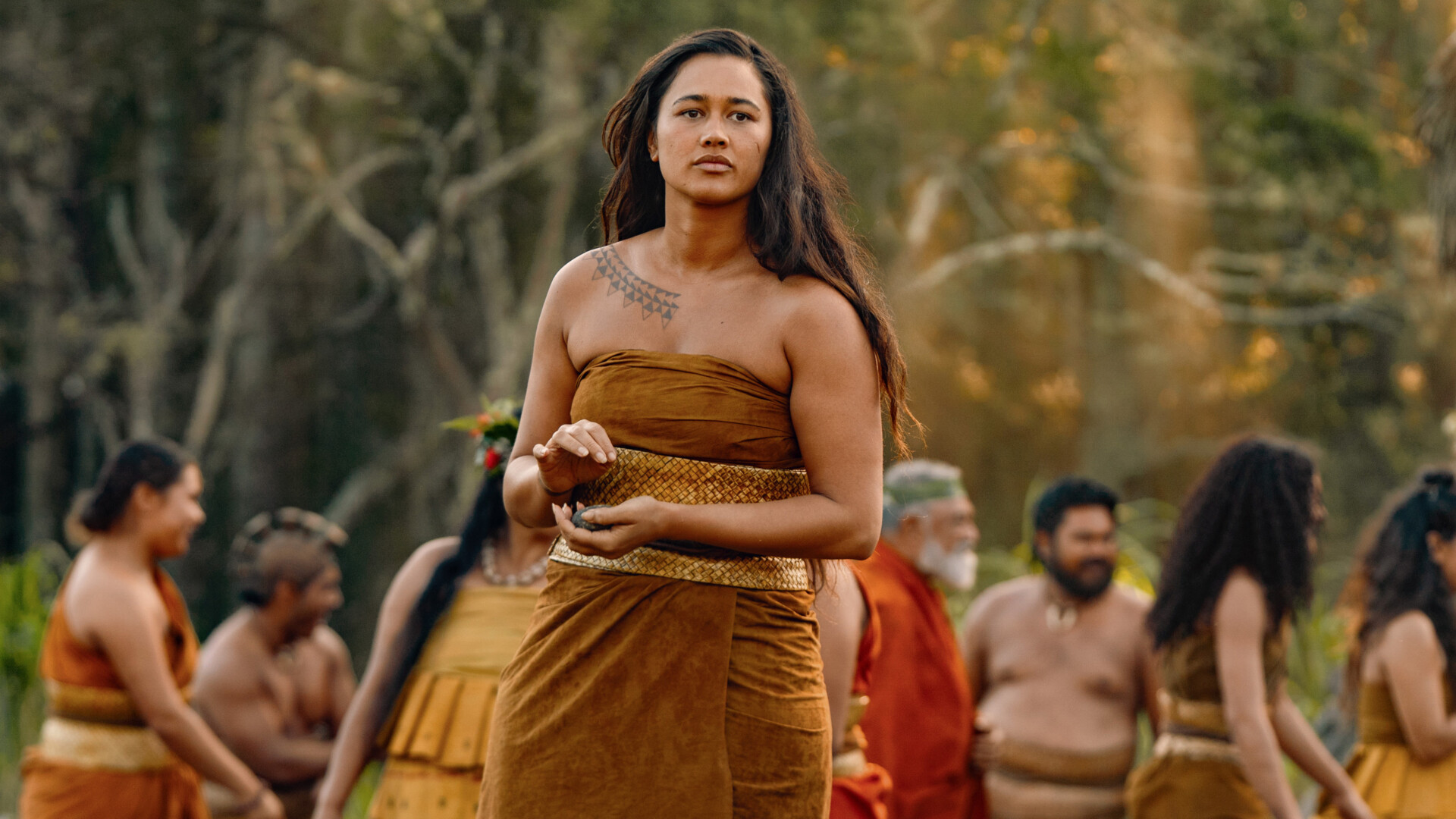
It achieves this through several methods, ranging from the use of the languages spoken by each clan at the time to the admirable attention paid to the costumes, domestic environments, and all the everyday spaces in which the communities of the archipelago live. It achieves this by showing their day-to-day activities, from fishing to farming, from traditions to rituals. The historical drama begins memorably, with villagers catching an enormous shark.
Politics in Chief of War
There are kings, advisers, and warriors. There are military formations and differing ideological perspectives. There is, reading between the lines, democracy and dictatorship. There is love for a people, desire for these people not to live in fear, but in harmony, in prosperity, and in peace.
There is narcissism in Chief of War; there is self-worship and worship of disseminating one’s own bloodline throughout the islands. There is the thirst for conquest as an end in itself, there are the gods who are made complicit, having been – all experienced internally – invoked and challenged.
In one word, there is politics in Chief of War: complex, mighty, ambitious, necessary, terrific, and painful politics, balancing precariously on the fine line separating peace and war, death and life. A politics uncertain whether it can continue along this path with weapons silenced, throwing them aside, or whether it must be tainted, degenerate, and succumb to the madness, the brutality, the inhumanity of war.
The Four Men of Chief of War
Along with the two interesting – and anything but passive – female characters, there are four principal male characters. The first is Kaʻiana, played by Jason Momoa. A character who initially has mythological qualities, he becomes more and more contemporary, more and more cerebral, on top of his (undeniable) physicality. He is a warrior, but he is also a man fleeing war; he does not love it, especially when it is used as a means for an individual to increase their own personal power.
Kaʻiana (against his will) meets Western civilisation and, on returning to his island, has come to realise that there are threats to the prosperity and peace, to the very future, of his people now coming from two fronts: internally, from the other islands, and externally, from a more powerful culture, in terms of military means and strategy. A culture that differs greatly in how it views its God-given natural spaces.
Alongside Kaʻiana is Kamehameha, the king who (in the real history of Hawaii) was able to unify the different islands of Hawaii, which had – up until that point, at the end of the eighteenth century – been at war with each other. He is a symbol of peace in the series; the one who, along with Kaʻiana, truly cares about the people of Hawaii. He differs, however, from Kaʻiana in that he does not believe in violence, but rather in using dialogue as a tool for growing together.
It is not that Kaʻiana would not like this, but from his – at this point – disillusioned perspective on the world, marked by experiences both within and outside of this geographic paradise, the possibility of resolving these delicate issues without using weapons is fairly remote.
The other two male characters, the two rival leaders, are the incarnation of narcissism – and, metaphorically, of a totalitarian regime in which one person owns a community. The series presents politics as a dilemma, as an open question, as a source of doubt, revealing its position, its fragility, its subjection to the terror of suffering the hell of war, of resolving conflict with blood.
A Contemporary and Pertinent Series
Chief of War does not idealise indigenous populations. It does not fixate on their purity, but tells us of a human violence, a power struggle that had already been seen throughout those cultures dominated by capitalism and weaponry. However, these populations demonstrate a greater degree of rationality than the West, where the only god is the accumulation of material wealth.
The series is therefore only partially a celebration of the harmony among these ancient populations, as was, for example, The New World – a film by Terrence Malick about Native Americans – and Dances with Wolves.
Chief of War is filled with visual splendour, with wisdom, with caution in how it blends the action and bloodshed of battle with the many political conversations, with the different characters’ positions on the difficult choices to be made. It is a contemporary drama that does not simplify the issues it touches upon: peace, war, and politics. Rather, by observing them in this manner, it respects them and gives us a way to reflect, to understand the consequences of each.
The series is pertinent today because it allows us – based on the seven (of nine) episodes released so far – to transpose the different characters and the different political positions onto the world of today, a world that is no less difficult or in danger than that of the series. Chief of War can therefore be seen as a jumping-off point – rather than an end point – for United World Project as, in September, its focus shifts to the themes of politics and active citizenship.
Article Translated into English by Becca Webley
Related news



Top stories
 Historic Crisis of Violence in Mexico: ‘Synergy for Peace’ as a Collective Response
 The Med25 Bel Espoir’s Journey: Eight Months and Two Hundred Young People in Mediterranean Waters
 Young African Leadership: The T4NA Project to Strengthen Democracy on the Continent