Workshop
The Urgency of Integral Ecology: the Message of Laudato Si’ in the Documentary The Letter

The documentary The Letter: A Message for Our Earth delves deep into Pope Francis’ vision for caring for our shared home. Discover why the kind of integral ecology proposed in Laudato Si’ is needed more urgently than ever.
The documentary The Letter helps us to understand the value of the Laudato Si’ encyclical even better, as we hear from ordinary people, Pope Francis, and Lorna Gold. A journey around various parts of the world – India, the Amazon, Senegal, Hawaii, all the way to Assisi – to reflect on the subject of integral ecology.
Pope Francis’ Message Against Indifference
‘This “becoming used to” is a terrible illness’, Pope Francis says at the start of the documentary The Letter: A Message for Our Earth. The film was created by the Laudato Si’ Movement, in collaboration with the Dicastery for Promoting Integral Human Development.
Pope Francis is referring to becoming indifferent to injustice, to the destruction of resources and of the fundamental natural equilibrium between nature and mankind. Becoming indifferent to inequality, to the absence of care for the Earth and for ourselves, to the lack of beauty, freedom, truth, and humanity. ‘The cry of the Earth and the cry of the poor cannot continue,’ Pope Francis comments in The Letter.
Pope Francis fought against this indifference, against this insidious illness that is also tackled in The Letter. The documentary is built around the Pope’s crucial 2015 encyclical, Laudato Si’, on caring for our shared home: that is, our planet and every form of life that inhabits it.
Directed by Nicholas Brown and available free of charge on YouTube, The Letter continues to be – three years since its release on 4 October 2022, on the Feast of St Francis – an invaluable tool for navigating the present and the future. It remains a fundamental lens through which to view the problems of our time and tackle them effectively.
The Protagonists’ Stories: Four Voices for the Earth
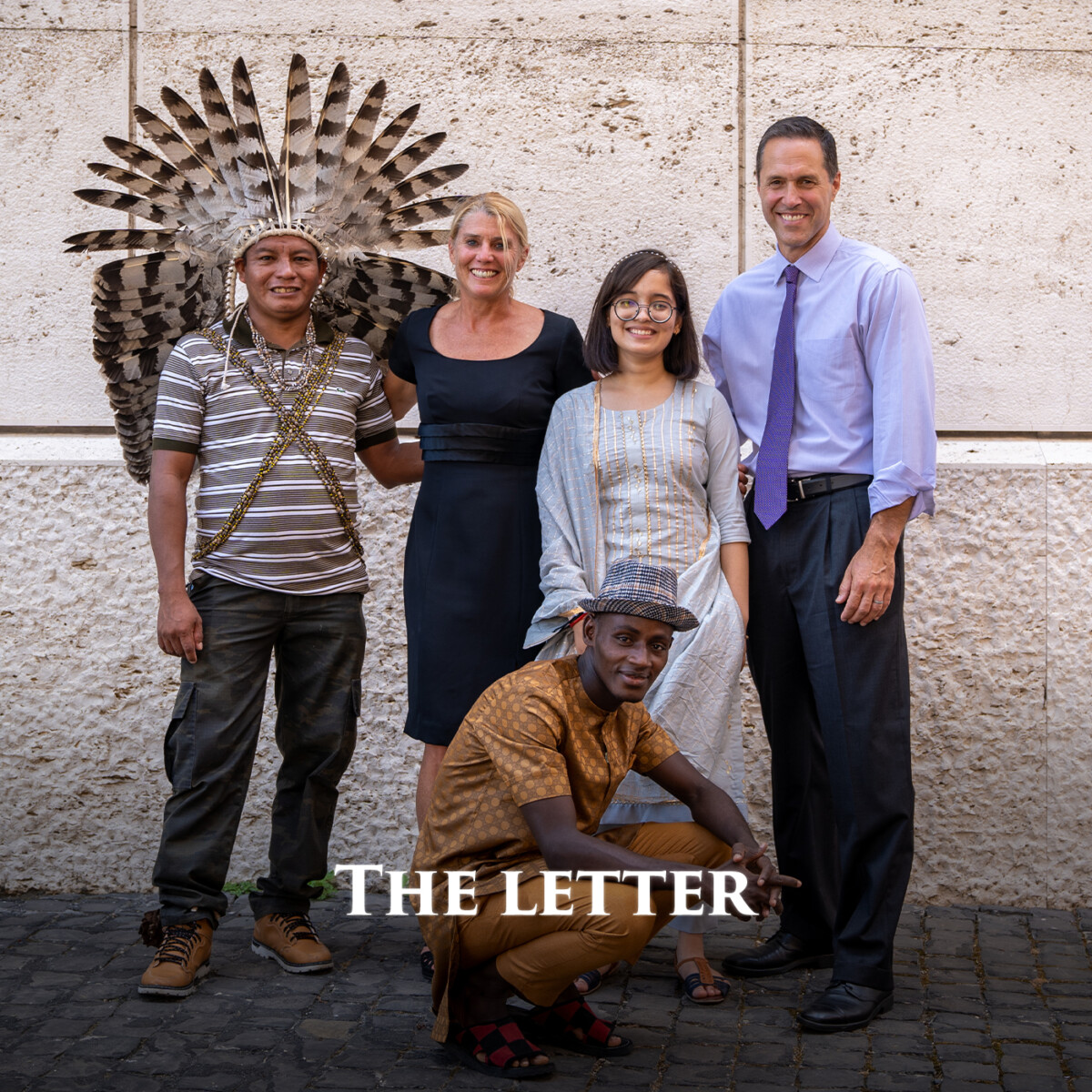
The film begins with five people from all over the world receiving a letter. Men and women, young and old, who exemplify four identities that are pivotal to environmental balance, according to integral ecology. They represent, as we hear in The Letter, ‘four of the various voices Pope Francis makes explicit reference to in Laudato Si’’.
Part of the letter they received reads: ‘We thank you, from the bottom of our hearts, for what you have done up to this point. With Laudato Si’, Pope Francis hopes to begin a new dialogue on how we are shaping the future of the planet.’
These five people – all battling the climate crisis assaulting the Earth, as well as its social consequences – are Rouna Kaudé, a climate refugee from Senegal, who represents the voice of the poor and the marginalised. He teaches us about the many people forced to flee their native lands because there is no future there. Then there is Ridhima Pandey, an Indian teenager who is already an activist at barely 13 years old. She represents the voice of the younger generations, those who will come face to face with the future. The third recipient of the letter is Dada Odair, an indigenous leader from the Amazon – more specifically, the Marò territory. Dada represents all the indigenous communities of the world and acts as the voice of other peoples like his own. Finally, there are Robin Martin and Greg Asner, two scientists from the Hawaiian islands. The couple represents nature in the form of wildlife and biodiversity; as nature does not have a voice, they have elected to speak on its behalf.
Having received the letter and shown signs of the climate crisis where they live, all five begin a journey to the Vatican, in Rome, where they meet Pope Francis. Then the recipients go to Assisi, in Umbria, where Saint Francis was born and raised – a man who Bergoglio describes in The Letter as ‘a man of peace, a man of poverty, a man who loved and protected Creation’.
Here they all reflect on their experiences with the Holy Father together, like siblings on the same boat, growing more united, stronger, and less alone in this good fight.
Lorna Gold and the Universal Message of The Letter: Everything Is Connected
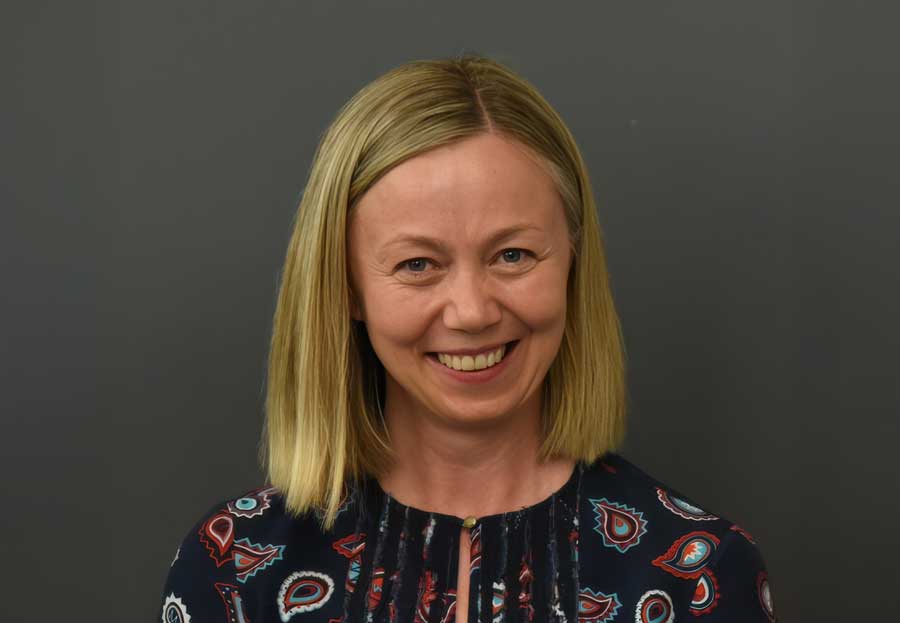
Lorna Gold is with them in Assisi – in the forest next to the Sanctuary of Eremo delle Carceri, where Saint Francis would pray and meditate – just as she was with them when they met with the Holy Father at the Vatican.
Lorna Gold, who has been an environmental and social justice activist for years, is now the executive director of the Laudato Si’ Movement – you can read our interview with her on United World Project. She features in The Letter from start to finish and introduces several incredibly important concepts.
‘Laudato Si’ is a letter that Pope Francis has written to you,’ Lorna explains at the start of the documentary. ‘And that usually gets people. They’re going, “Hmm, Pope Francis didn’t write me a letter.” I say, “Oh, yes, he did. He wrote you a letter. He wrote every person on the planet a letter to share his concerns about the state of the world.”’
In another part of The Letter, which poignantly addresses the tragic theme of migration, Lorna Gold talks about the research the Pope carried out to unite the ‘various peripheries of the planet in the kind of dialogue’ in which science and faith can work together. Bergoglio himself explains this in Laudato Si’, the first papal encyclical on the environment, and reiterates it several times in The Letter.
Bergoglio first echoes the idea that civilisation does not equal freedom from slavery, given ‘the kind of progress we are making: economic supremacy creates many, many slaves’. He goes on to discuss how the theory behind Laudato Si’ is in dialogue with science: ‘God gave us the capacity for investigation, the intellectual ability to look for truths’.
An Appeal to Hope and Shared Responsibility
The Letter reminds us, even today, after three years and the recent loss of Pope Francis on 21 April, that doing it together is easier and more effective. ‘I am not fighting alone anymore,’ the representative for indigenous communities declared among the trees of Assisi, after having felt the warmth and listened to the word of the Pope and his siblings striving to turn his goals and values into reality. The film highlights the importance of sharing each other’s pain to make it more bearable and transform it together. After all, Pope Francis himself reminds us at the end of The Letter that ‘none of us is an island’.
The same is expressed in Laudato Si’, which reminds us that we are all connected, and that, paraphrasing even further, nothing on this planet is an island. Everything is connected, everything is part of something else, starting with our environment – something that, as we hear in one part of The Letter, the vast majority of religions consider an important thing to protect.
Article translated into English by Becca Webley