

 EN
EN
“Cinema dismantles prejudices”: MedFilm Festival as a tool for transformation
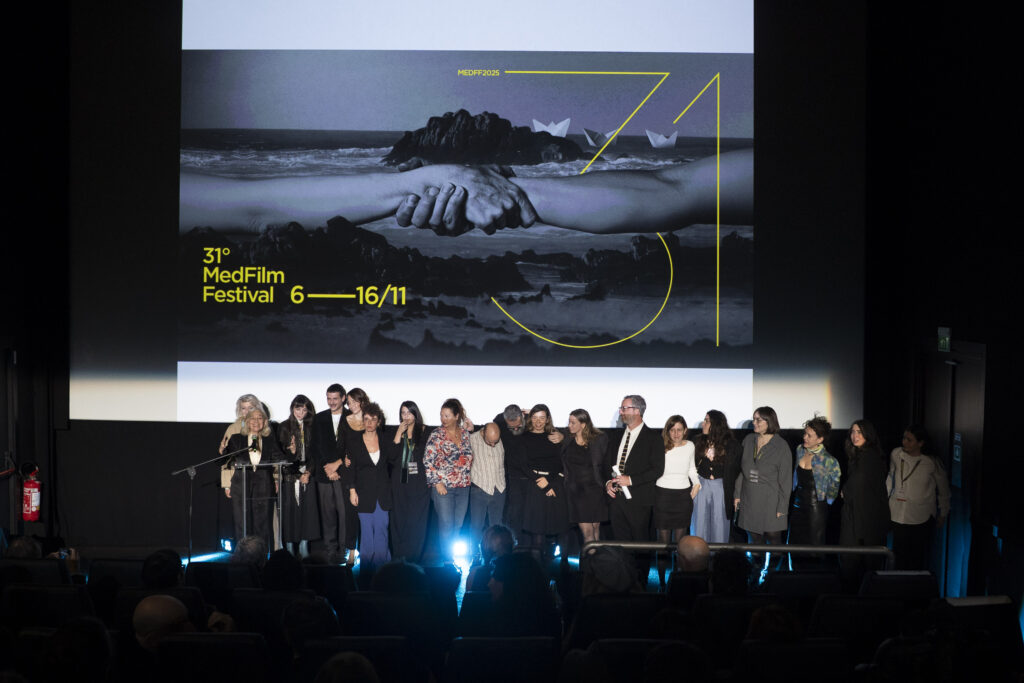
“How can you not fear someone? Only by getting to know them.” MedFilm Festival founder Ginella Vocca explains how quality cinema becomes a disarming tool for dialogue, intercultural exchange and social transformation to building unity across the Mediterranean.
There is a film festival dedicated to the Mediterranean, a festival centered on dialogue and on the relationships among the precious diversities of this ancient sea, rich in stories and cultures. It is called the MedFilm Festival, it takes place in Rome, and it has successfully existed for 31 years. For this reason, when speaking with Ginella Vocca—its creator, founder and director—we started from the beginning.
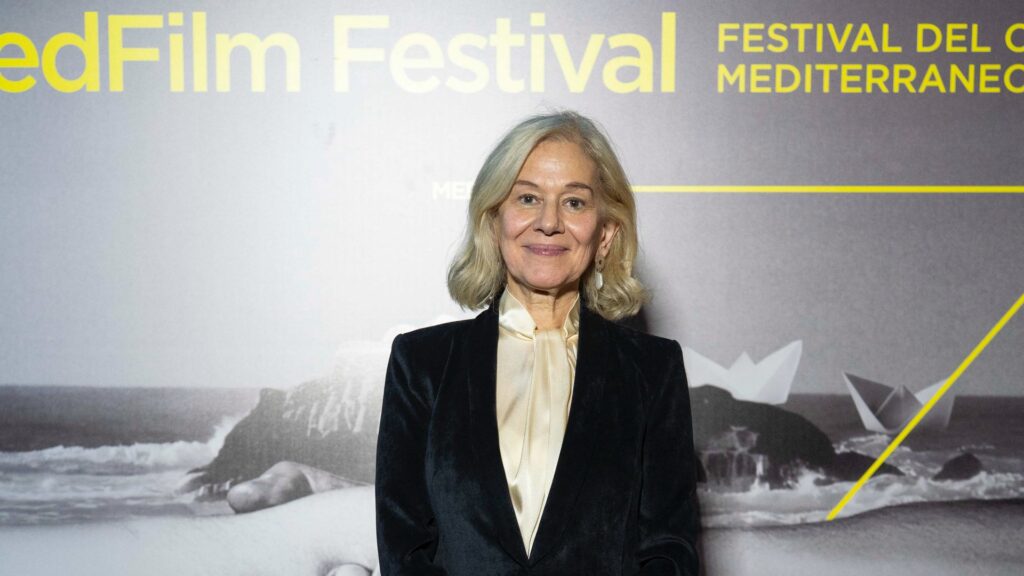
How did the idea of a festival that embraced the entire Mediterranean come about?
It grew out of a sense of attention and gratitude toward the cultures of Africa, which I discovered as a child thanks to my father’s work in countries such as Libya and Nigeria. Visiting him after school, I fell in love with music, audiovisual arts and creative expressions that I later could not find upon returning to Italy. Over time, I began to ask myself why Africa, particularly the northern part of the continent, was absent from official cultural circuits. That is where the idea originated; a festival to fill a gap, a void.
How important is the existence of a festival like MedFilm, with its ability to help build a kind of shared consciousness around this extraordinary sea? While respecting and highlighting its many cultures, today?
For us it is essential, because we need direct testimony from the talents of the region’s countries. Unfortunately, the Mediterranean is often spoken of as a single, indistinct entity, when in reality it is an extraordinarily multifaceted space, with common themes on which it is vital to build a shared identity and new prospects for peace and prosperity.
For that Mediterranean so abundant in riches…
The Mediterranean is a world of extraordinary wealth, both in natural resources and in culture. Perhaps this is why it is so contested and so tragically marked by terrible events. Culture is a door that always remains open even when those of diplomacy and politics are shut harshly. Culture crosses borders and is difficult to contain. That is why it is essential to give voice, space and visibility to the many talents of the Mediterranean region, both those rooted in tradition and those driving innovation. This includes young directors and even film students, whom MedFilm follows closely through its Metexis project.
How well suited is the Med to being a tool for dialogue and intercultural exchange?
The MedFilm Festival is not simply suited to being a tool for dialogue and cultural understanding; its very purpose is to serve precisely that role, to foster dialogue, to deepen knowledge of cultures, to promote intercultural exchange and to help preserve cultural diversity, which, like biodiversity is essential for the survival of our species. It is therefore vital to directly know, observe and listen to the cultures of the people who make the Mediterranean area so rich and unique.
If we say that the Med is a tool for peace, how would you respond?
The first step toward openness to others is not being afraid of them. And how can you avoid fearing someone? Only by getting to know them. Cinema and culture more broadly offer the most beautiful, free and sincere way to get to know people. So yes, the Med has always been a vehicle for peace, even structurally: it hosts institutional and diplomatic entities that are often difficult to bring together, and yet artists, despite the presence of powerful institutions and diplomatic representatives from their countries, feel completely free to express themselves. None of this is easy to manage, but we have succeeded for 31 years because we are driven by the desire to listen, learn, dialogue.
The Med is able to delve into the folds of the Mediterranean’s complex, and often dramatic, reality. It does not turn this sea into a postcard.
No, it does not turn the Mediterranean into a postcard, even though it remains irresistibly beautiful, even in its most dramatic representations, because of its light and its colors, from the blue of the sea to the red of the earth. Even its architecture: take Gaza, one of the oldest cities and ports of the Mediterranean, whose buildings unfortunately no longer exist, having been destroyed. There are places in Libya completely razed to the ground, the great Buddha statues, places in Iran and Iraq. Over the past thirty years, terrible things have happened, events that tend toward the erasure of memory. Cinema also helps us through its ability to bear witness to the beauty of these places.
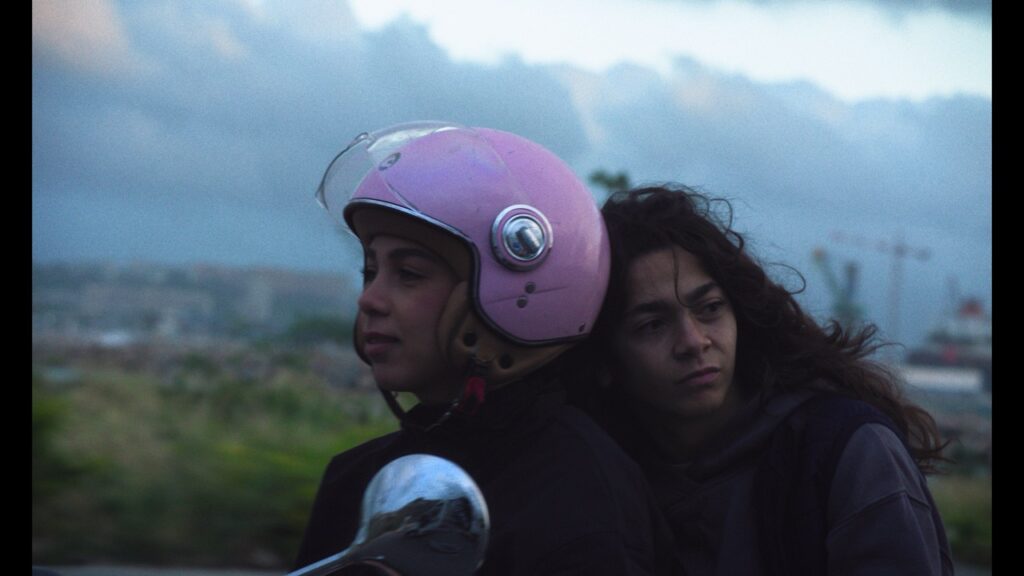
We see, for example, this destruction in the film Nezouh – A Hole in the Sky, a Syrian work shown at the Med a few years ago. How important is it to convey such complex, historical drama in order to make Mediterranean dialogue truly effective?
Nezouh, A Hole in the Sky (you can read our review here) had its Italian premiere with us, and we have a wonderful relationship with its director, Soudade Kaadan: both a friend of the Med and an extraordinary, visionary artist. Her film is remarkable because it tells an unbelievable story – unbelievable, at least, for those of us living in peace – a house whose windows and walls are gradually destroyed, until a hole opens to reveal the sky. Through that hole, the protagonist will eventually pass to begin a new life whose outcome the film leaves unknown. The director managed to portray an unimaginably dramatic situation in the form of a human comedy, because that is what human beings are: capable of crossing the abyss and emerging with the will to live and build still alive inside them.
Cinema is a universal language capable of crossing borders. How much have you observed this over the years? And how much more aware are you now that cinema can be a disarming tool?
Cinema is indeed a disarming tool, at least quality cinema, because it addresses universal themes that matter to every human being and dismantles prejudice. But it is disarming only when it reaches an audience. What we can say—and it flatters us—is that after attending the Med, viewers tell us they have experienced such a powerful “taste” that when they return to regular theaters, they find other offerings bland and trivial.
What do these reactions tell you?
They show us that mainstream distribution often fails to support that kind of cinema—highly accomplished from a technical standpoint—that does not leave you indifferent, that plants something inside you which grows into new awareness. In Italy, there is a lack of attention for films that dare to step outside commercial norms. We continue on our path, and we work to support exactly this type of cinema.
Within the Med there is a project called Builders of Dialogue. What is it exactly? How does it integrate with the festival’s structure and philosophy?
Everything takes place within the very framework of the festival, which brings national and international institutions into dialogue, diplomatic missions in Italy and abroad, artists among themselves and with institutions. The high and the low, the South, the East, the North, and the West. All of it meets in dialogue at the festival because everything fits within a coherent and harmonious design. This includes the inmates of Rebibbia prison, who participate as jurors in the Metexis project. It includes industrial sectors from across the Mediterranean, hosted in Rome during the Festival, and film professionals (including directors and producers) from the four corners of the Mediterranean who meet during the Med Meeting to build synergies and collaborations—to attempt to create new works together. Everything is in dialogue at the Med.
How do you choose the films?
The Med is a complex machine with limited funding. Those who work within it do so with enormous motivation. The selection committee is made up of six highly specialized experts in Mediterranean cinema, each with their own area of focus: be it Iranian, Egyptian, or Lebanese cinema. Each member makes proposals, but we also open a call on the Freeway platform, where films can be submitted for each edition. Of the roughly 700–800 submissions we receive, we select the best for the festival. Around 10% of them.
Pope Leo XIV recently described filmmakers as “pilgrims of imagination, storytellers of hope, messengers of humanity.” He cited Paul VI’s message to artists: “This world needs beauty in order not to sink into despair.” He invited filmmakers to “make cinema an art of the Spirit,” capable of “educating the gaze” and of “not fleeing from the mystery of fragility.” “Great cinema,” he said, “does not exploit suffering; it accompanies it and investigates it. Giving voice to complex feelings is an act of love.” How much do you agree with these words?
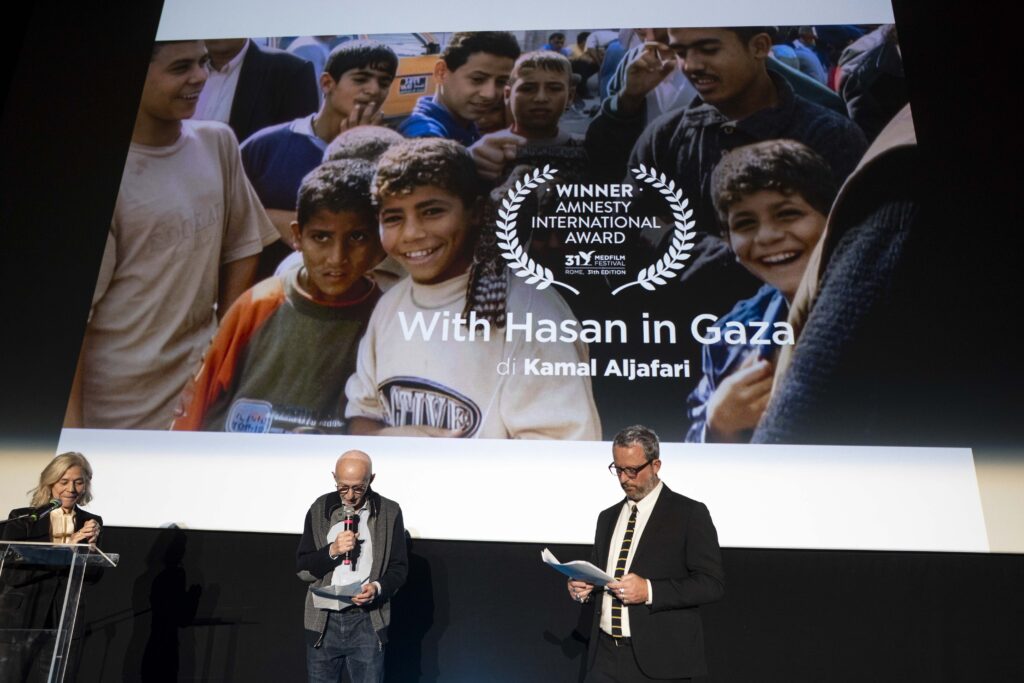
Every part of Pope Leo XIV’s reflection is absolutely compelling especially for those of us who work in cultural research and dissemination, which is the mission of the festival. It is true that the world needs beauty not to fall into despair, and cinema is certainly an art of the spirit, like all arts. Moreover, cinema is a popular art that reaches millions of people and therefore carries enormous power to educate the gaze and help us not turn away from the mystery of human fragility. Beautiful, too, is the idea of not exploiting suffering but accompanying it, examining it and giving voice to those who live it. This year and in past editions, I have often found hope in the energy of artists like the Palestinian filmmaker Kamal Aljafari. When art is sincere and pure, it can portray even the most terrible tragedies, but it always does so, as we were saying, with a trace of hope.