

 EN
EN
“Communication is Relationship” – Interview with Journalist and Writer Michele Zanzucchi
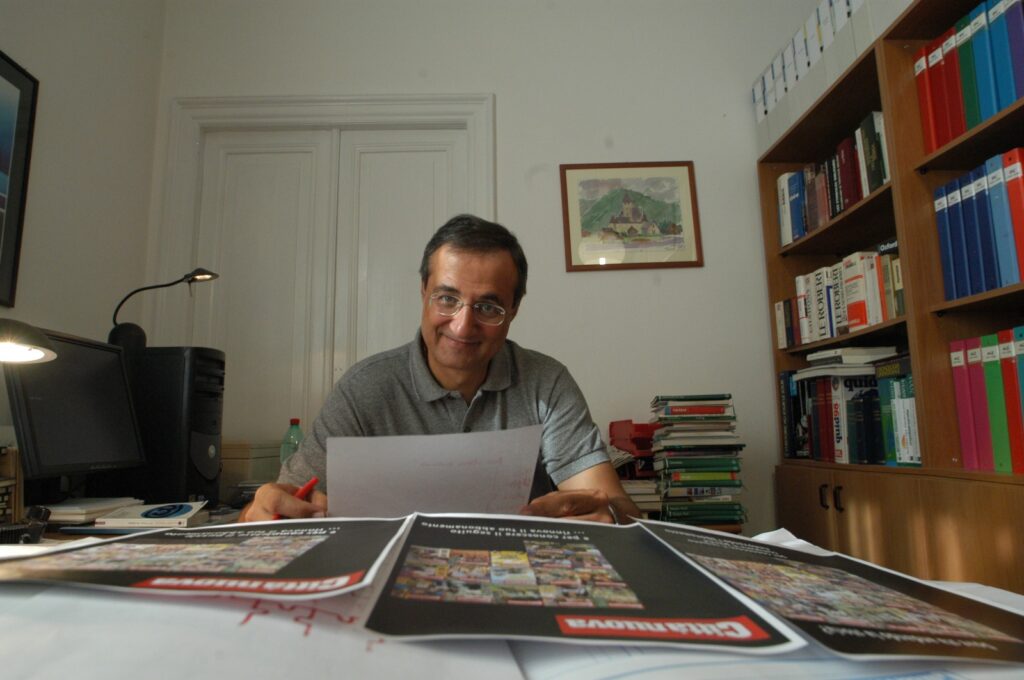
An interview on communication with Michele Zanzucchi, journalist and writer, former director of Città Nuova, professor of communication at Sophia University Institute and at the Pontifical Gregorian University, and author of more than seventy books.
To continue our journey into the topic of media and communication, we met with journalist, writer, and communication sciences professor Michele Zanzucchi, who served for many years as director of Città Nuova. We began with a reflection on our delicate times, marked by a very tense geopolitical situation, an extremely mediatized society, and highly sophisticated technology. So, the first question was this:
What role does communication play in this complex context? And what role can it have in building the common good?
I believe that communication —in both its meanings: communication and information— plays an increasingly important role, at times even a decisive one. A single adjective whispered on social media or in a web magazine can circle the globe in the blink of an eye, trigger sudden stomach aches in politicians of the moment, and open polarized chasms dividing the world into good and bad. But it can also mend long-standing wounds, give meaning to things, and open unexpected solutions to complex problems. Interpersonal communication, amplified by social media, and media information can be forces for building the common good —or, conversely, forces for destroying social life. It depends on many factors, because we live in a complex society that requires complex answers. But I would highlight the role of the informer, whether a professional or a “tinkerer” on social networks: the person who communicates and informs can determine to what extent the news contributes to good or to harm. The responsibility lies, at least in part, with them.
Speaking of technology, we now live in a contradictory situation: on the one hand we have cameras and microphones everywhere, which means that, compared to the past, we have a much greater capacity to collect documents from every corner of the world. On the other hand, however, this sort of democracy of communication leads us to a dangerous capacity for manipulating information —even through what we could call a democracy of technology. How difficult is it to navigate this treacherous terrain?
It’s not easy, and a single journalist or informer can do little alone to counteract the heavy influences they are subjected to. The excess of documentation —the data flood— must be handled with care; it is no coincidence that professionals in data management are on the rise. In an age of artificial intelligence, stratospheric processing power, and information that seems to be slipping out of the hands of the professionals themselves, there is only one solution: working in teams, pooling skills, and using one’s unique and unrepeatable ability to inform in service of the community that is being informed. From the users’ side, I believe it’s essential to trust a few journalists or particular media outlets, because it’s hard to find your way on your own. But it’s also important to be careful and diversify one’s sources of information, so as not to fall victim to the bias of relying on a single source.
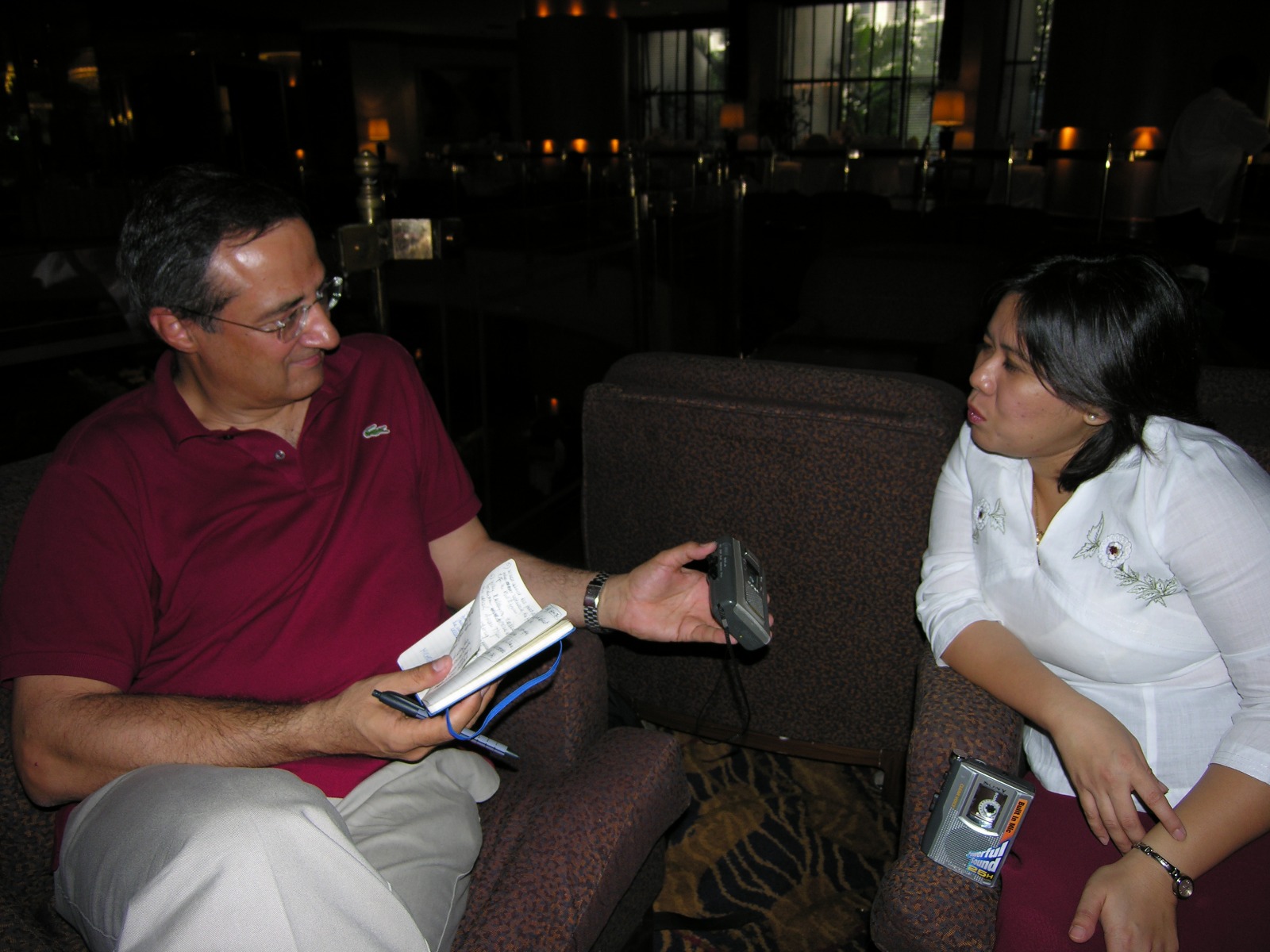
Today, as all communication is changing, what is the journalist a guarantor of? How do they differ from other communicators?
A journalist is someone who turns a fact into news. Their power lies in giving newsworthiness to what happens. In doing so, they choose what should become public knowledge and what will instead remain forgotten. In this discernment —which is vital for information— the journalist must carry out all the necessary source checks to ensure balance and truthfulness in their reporting; but that’s not enough, they must also seek confirmation within the editorial team with which they interact. A true journalist has learned the tools of verification, news writing, and news dissemination —something an ordinary citizen cannot possess. Citizen journalism, which has its own importance and is currently challenging professional journalists, can never fully replace them, especially in the three functions I mentioned: verification, news writing, and dissemination. Citizen journalists are rather sources —to be verified— than actual journalists.
For journalists, the starting points are always reality and the search for truth. But to what extent do they also have a duty, based on these two principles, to work towards a better world? To build values such as peace and brotherhood among people?
Whether they want to or not, whether they do it intentionally or not, a journalist is nonetheless an opinion maker, a creator of public opinion. It’s true that in the Anglo-Saxon school of journalism, it was taught that the journalist’s person should always disappear into the news. For a long time, many Anglo-Saxon press outlets —The Economist still does this, at least partially— omitted the very name of the journalist who wrote the news piece or article, in order to guarantee objectivity. Today, however, it’s generally accepted that the journalist plays a role in the news, if only through their choice of language or the omission of this or that source. I believe that a journalist’s human heritage should be reflected in their writing, without hiding it. If a journalist is Christian, they should say so; their “intention”, as Kapuściński said, will emerge anyway and will be objective. I go into this at length in a recently published book, Manuale di Giornalismo Dialogico —manual of dialogical journalism would be its translation— (Città Nuova, Rome, 2025)
Ours is also a society of images. This means of communication seems to have surpassed the word. What originality does the written word still hold? What power does it still have over images? What unique quality can images never take away from it?
The image is itself a word. That is, it expresses something. We must never forget that. But very often, images can deceive, and they can do so more than the written word, because it acts on our brain not only on the rational part but also on the emotional part. We often watch a TV segment for two minutes and think we know everything, because images are much more immediate than words, as they engage human faculties that reading does not activate. But deception is just around the corner, and in these times of deepfake and AI-generated images, we risk entering a world where falsehood becomes the norm. Writing can offer a much broader view of an event than images. Words have the advantage of allowing you to delve deeper into a news story, to dissect its meanings, much more so than the image.
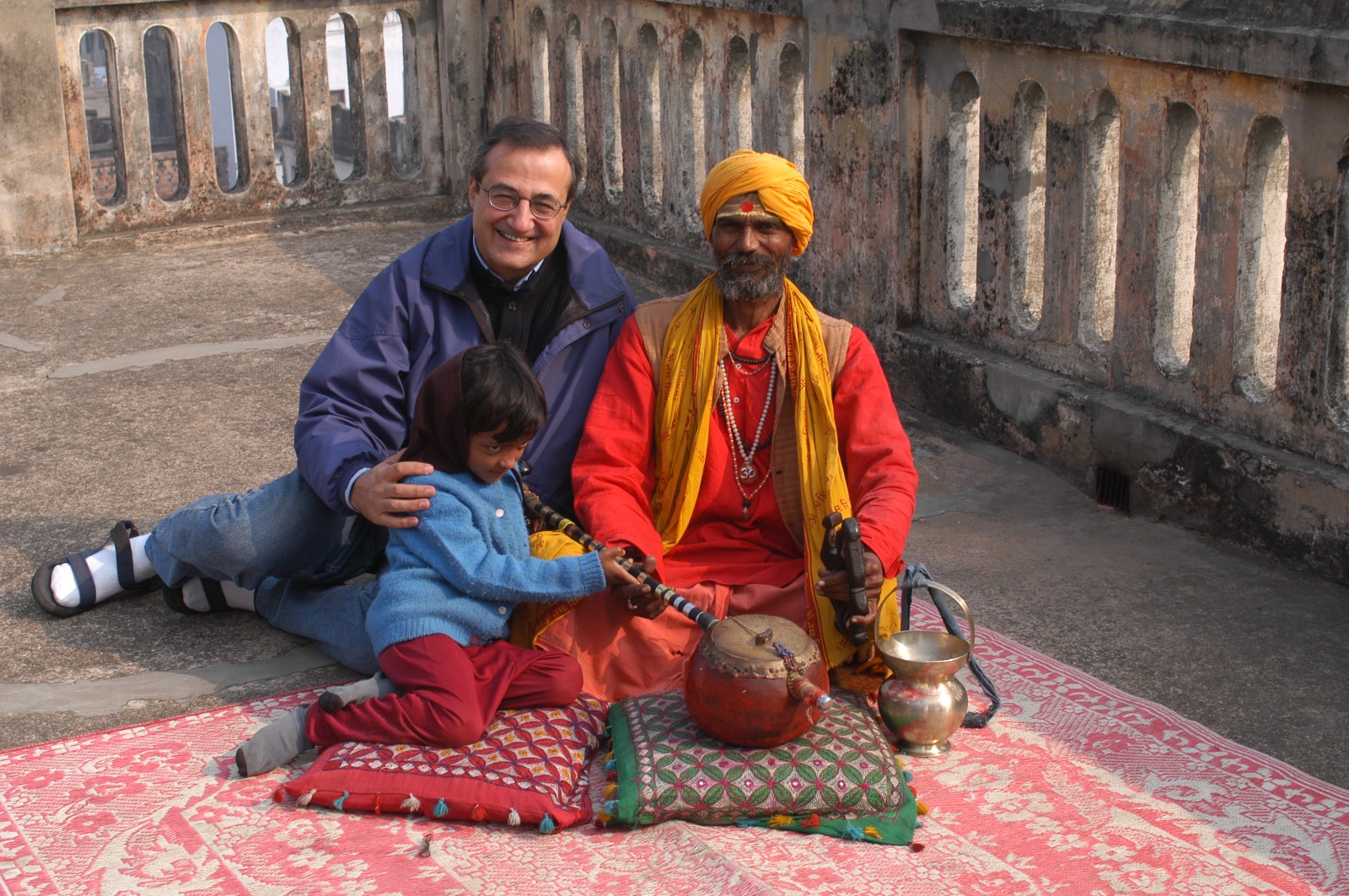
In your work you have been sent to Kurdistan, lived for a long time in Lebanon, and travelled to several countries in Central Asia. How important is it for a journalist, and more generally for a communicator, to go on-site and become a physical instrument of communication, in a time when technology allows us to “travel” while staying at home?
I’m an old-school reporter —I have visited three-quarters of the states currently recognized by the UN, and I have written dozens of reportage books. In my opinion, if they have the opportunity —because in the journalism system more and more people end up working in front of a computer, at the desk— a journalist must see, must go to the place where an event is happening. Engaging all five senses —guided by intelligence— allows for better understanding, for grasping details that explain the whole, for “hearing” the witnesses, for constantly picking up new elements of comprehension. Travel, see, observe, verify, understand. Journalism that stays behind a computer is never fully journalism.
Your work is not only that of a journalist but also of a writer. How is the book doing? What role does it have in a time when the internet forces us to consume information quickly? What power does the “long time” of the book retain?
The transition from journalism to book writing is natural if one wants to truly understand things. It requires time, and therefore not everyone can afford it. But for a journalist, it is an experience that feels like the fulfilment of their aspirations, if only because it gives them more space to express themselves. The book may appear to be in crisis, especially in its printed form, but it will remain a beacon for journalism. And those who really want to understand things should start reading. A book allows the reader to immerse themselves —more than articles do— in the writer’s perspective, to use their eyes, their touch, their senses, and their intelligence to understand a fragment of reality. Of course, the journalist who writes a book also finds their ethical responsibility multiplied.
To what extent is communication part of exchange, of the encounter with the other? How great, on the other hand, is the danger that it will become a servant of the opposite, of closure, of division?
Communication is relationship. Even God is God because He communicates, giving Himself to each one of us. Of course, communication can be good or bad, constructive or destructive. We humans are human because we communicate. Chiara Lubich also said this in one of her four foundations of communication. The other three —and with this I conclude— were corollaries of this fundamental insight: the communicator must “become one” with the reader, with the interlocutor, with the very writing and the sources themselves; they must never compromise by considering the medium more important than the person; and finally, as the fourth element of communication for unity, communication must be positive and constructive.