

 EN
EN
Dino Impagliazzo, the ‘Chef of the Poor’: The Radical Decisions of a Man Both Ordinary and Extraordinary
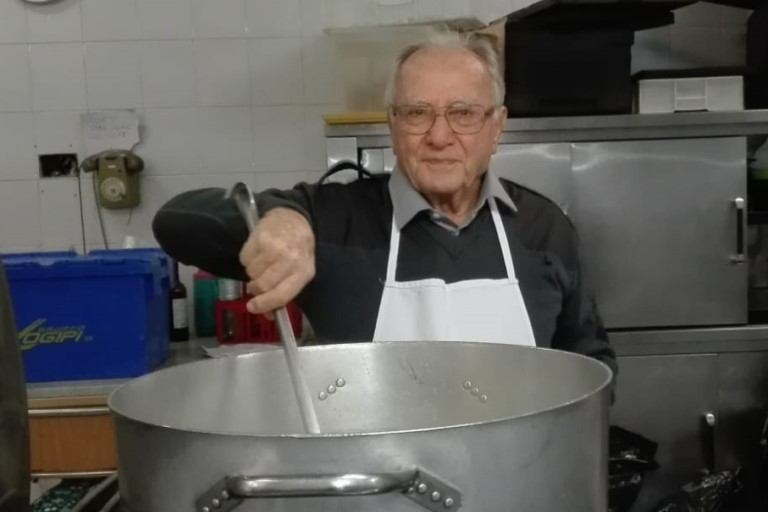
The story of Dino Impagliazzo and the volunteer organisation he founded, RomAmoR, told by the organisation’s current president, Elio Mattei, and Riccardo Bosi, author of Pane e Dignità, a book about Impagliazzo, about what it is like to prepare around 700 meals per week.
‘Every day we are all called upon to experience the beauty of connection,’ you can read on the RomAmoR ODV website, ‘and sometimes we choose to meet the other: those who are marginalised, those who go unseen, but those who are nonetheless part of this small, great world of ours.’
That other – the most vulnerable among us – is at the heart of RomAmoR. The association was born from an encounter between Dino Impagliazzo, the founder of the association, and the homeless people at Rome’s Tuscolana station; it was born ‘from his desire’, we read on, ‘to take care of them, to meet with the other, to love them unconditionally and accept them as they are.’
The great book Pane e Dignità – published by Città Nuova and written by Riccardo Bosi, along with Paula Luengo Kanacri – tells the life story of Dino Impagliazzo. It describes him as ‘A father, a grandfather, a hard worker, a son, a great man from the island of La Maddalena, in Sardinia. A kind man, full of life. A child at heart, sensitive in both his soul and his actions. A big hugger, stubborn and passionate in his eternally-unpredictable choices.’
That Blessed Bread
‘The day he retired,’ Bosi recalls, ‘Dino Impagliazzo said to his wife: “If I stop, I’ll turn into a mummy.”’ While searching for a path for the next stage of his life, he met a young man in a tough spot. He got a coffee with him. He brought him a homemade sandwich. They became friends. The young man expressed that he knew other people who were struggling, and asked Dino for more help, who rallied the people in his building, and even the neighbourhood.
The thing grew, and the number of volunteers increased. A new life began on the streets. Hot meals, prepared with love, came to the darkest corners of Rome’s train stations: outposts of hell, non-places where invisible and desperate homeless people float and struggle not to be seen.
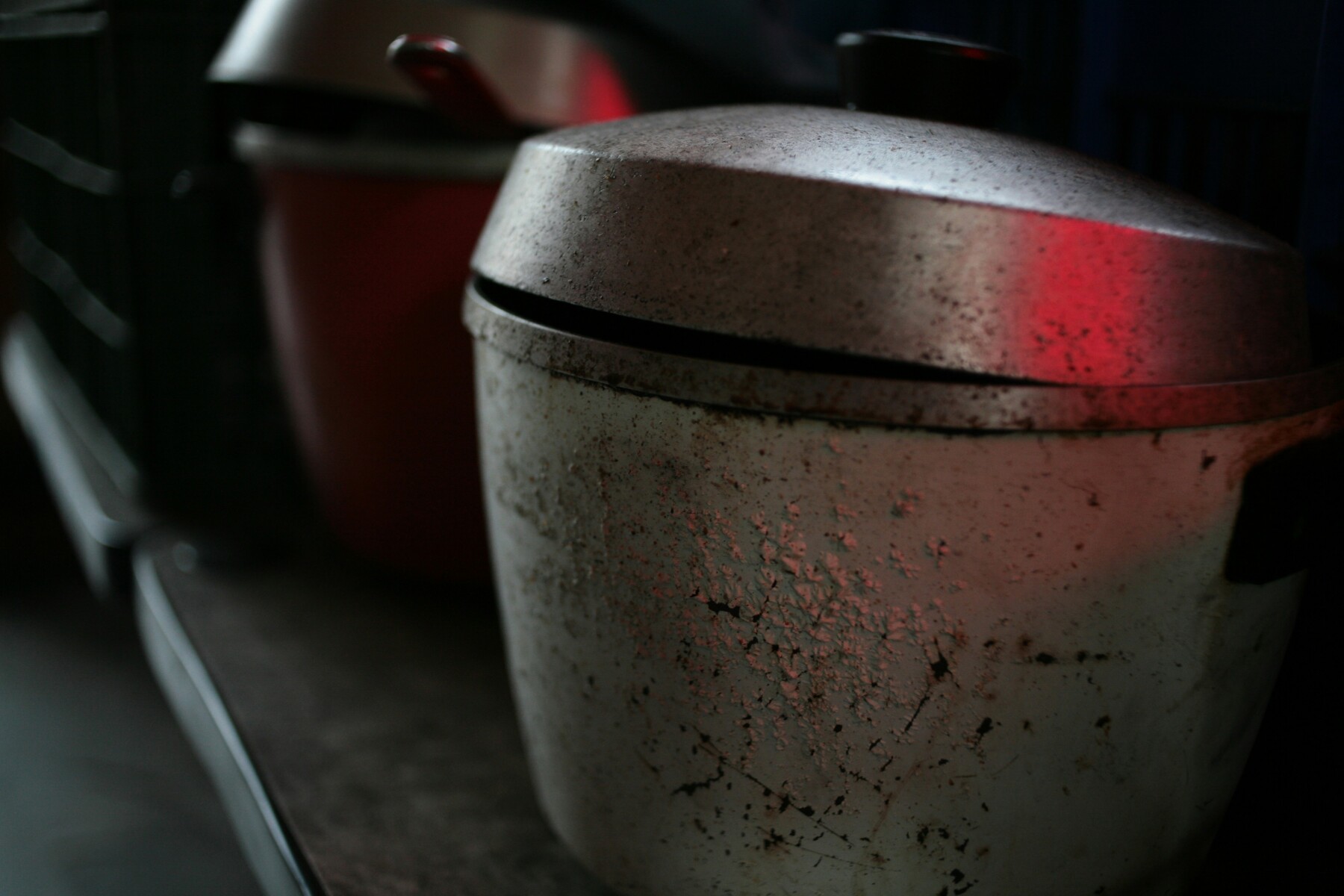
This is how RomAmoR was born. ‘From an act of love. From the radical and evangelical decision of a man both ordinary and extraordinary. From the profound understanding that, in the great sea of life, we are all paper boats, fragile and fleeting, and none of us have reached land.’
Dino Impagliazzo’s Lesson Has Grown
To talk about how RomAmoR has evolved over time, we met with its president, Elio Mattei. ‘RomAmoR provides meals for homeless people using surplus food from shops, bakeries, supermarkets,’ he told us. ‘We collect the donated food, which is usually close to expiring, and make meals that we then bring to train stations. We go to Tiburtina and Ostiense twice a week, and to San Pietro on Saturdays. We prepare around 700 meals per week.’
For so much work, there must have to be a very clear and efficient process in place, we commented. ‘Once again, we have Dino to thank for getting us access to a professional kitchen, provided by the Padri Rogazionisti,’ Elio responded. Initially a volunteer, Elio worked beside Dino Impagliazzo for years, eventually becoming president of RomAmoR in 2022, after Dino’s death. ‘We are responsible for paying the bills, and there is also the van we use to collect donations and bring the meals to each station.’
Invaluable Work in the Silence of Our Institutions
Elio recalls that ‘at the start, Dino used to do everything with his own car. Today that would be impossible, with the mountains of work carried out by the nonprofit’s almost 130 partners.’ Today, especially working in a city as complex as the Italian capital, RomAmoR is setting an example for large-scale active citizenship. ‘Like that of the other volunteer organisations that prepare food for those in need – Caritas, Sant’Egidio, the Red Cross, various parishes – our work is fundamental’, he explains, ‘because there are so many people who need to eat, and there is no process in place or action from our institutions. This becomes particularly apparent in the summer, when volunteer organisations slow down and people in need become desperate.’
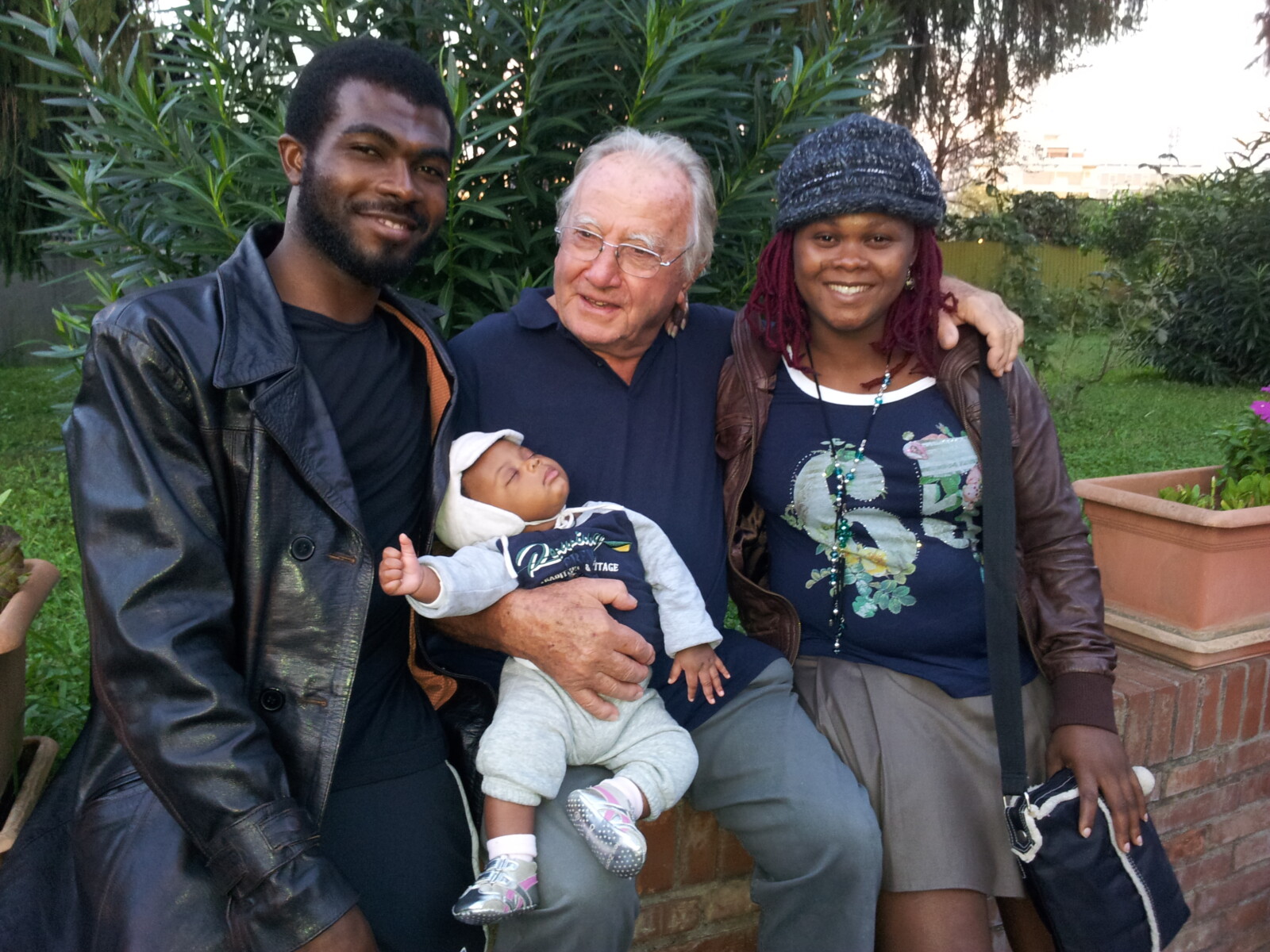
We asked Elio whether he thinks we do not talk about this societal wound enough. ‘Given the inadequacies of our institutions, perhaps they prefer not to talk about it and just let the various nonprofit organisations make up for their shortcomings. Organisations like us, who quietly work behind the scenes to raise funds because, unfortunately, there are many expenses.’
Gratitude Pays Off
We asked Elio which – even after doing this work for years – he feels more strongly: the pain of seeing endless suffering, or the joy of seeing solidarity and generosity flourish between human beings. ‘I can attest to the immense gratitude of the many people I meet who not only need a meal, but also someone to listen to them, to take care of them. We rub shoulders with people suffering through all kinds of hardships: alcoholics, drug addicts, immigrants on their way through Rome. Inevitably, we come face to face with delicate situations that are not simple to deal with. We see so much despair.’
One More Memory of Dino Impagliazzo
Dino Impagliazzo was awarded the Commander Order of Merit of the Italian Republic in 2020 by the President of Italy, Sergio Mattarella. We asked Elio to share one of his memories of the ‘Chef of the Poor’: ‘A great man, a person who did everything his his power – even economically – to fulfil his dream of helping as many people as possible. He always said, in life, there is nothing more beautiful than helping others.’
Article translated into English by Becca Webley