
 EN
EN
Aeham Ahmad: the pianist of Yarmouk in Syria’s bombed skies
Amid the rubble of Syria, art becomes an act of resistance. Discover the story of Aeham Ahmad, the “The Pianist of Yarmouk”, who defied the horror of war with the invincible beauty of his musical notes.
A piano among the ruins of war. Beauty sprouting from horror. Music against the extreme violence of bombs. Art, always a tool for dialogue and encounter, appearing where its opposite looms. Therefore, where it is needed most. Peace sought, prayed for, pleaded for through a disarmed yet powerful gesture, seemingly small but unforgettable. Notes and song, the white of peace against the black of every conflict.
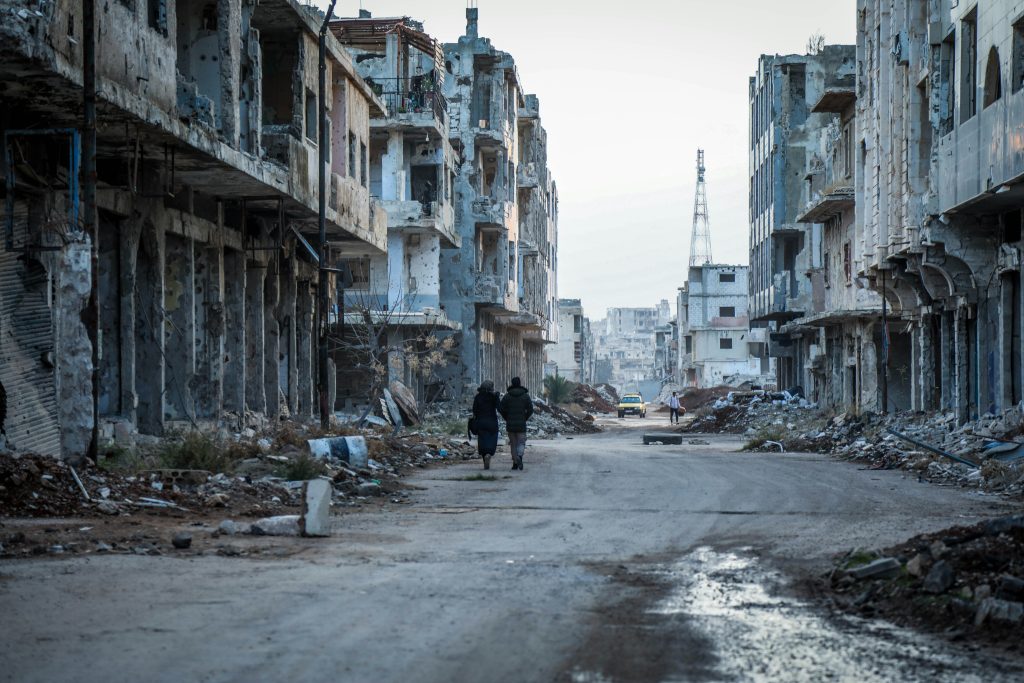
Music as resistance amid the ruins of Syria
All this lives in the keys played by Aeham Ahmad, who carried his piano among stones, dust, ruins, poverty, hunger, and pain in the Yarmouk refugee camp in Syria. He played it during the civil war, among gutted buildings and piles of rubble in the streets.
He did it for the children, to shield them from tragedy, to distract them from atrocity. Then for himself, to remain human, and for those who could no longer see even a thread of light.
Can an image chip away, confront, fight the monster of war? If it can travel the world and move it, burrow into the soul and linger there, and reveal the abyssal distance between itself and the place where it occurs, then that image becomes an effective instrument of peace. A seed of resistance, humanity and hope.
It is an image stronger than its opposite. The immortal response of the human being to an ancient, deep wound that grips the human condition. It is David against Goliath, and we know how that ended.
Aeham Ahmad, of Palestinian origin, was born and raised in the Yarmouk refugee camp, a district of Damascus, until he was forced to flee after his piano was burned by the ISIS on April 17th, 2015. Brutally, because it was deemed dangerous, an enemy. Considered a weapon to be destroyed, also because of the worldwide attention it had gained through the internet.
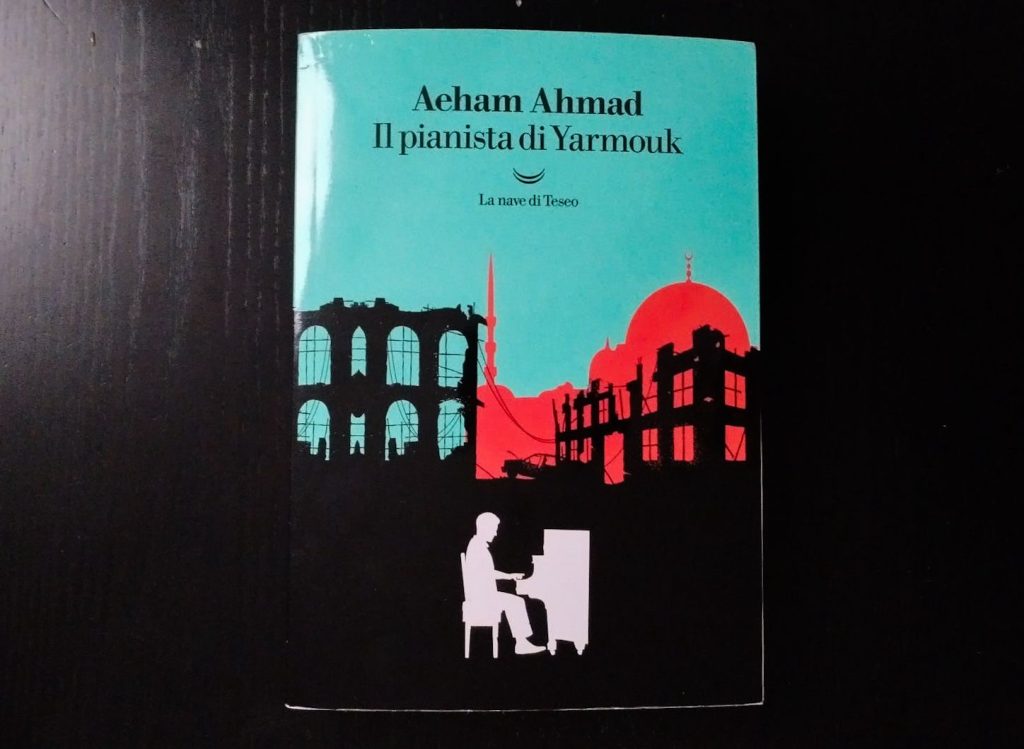
“Everything happened very quickly,” Aeham recalls in his book The Pianist of Yarmouk, in which he narrates his story in the first person. “The preacher went into the shed near the checkpoint and came out with two plastic bottles filled with a brownish liquid. I began to step back, to move away from the roadblock. The preacher poured the bottles over our cart”.
The Refugee’s Journey: from the Balkan Route to Europe
Aeham’s piano went up in flames, and his own life in Yarmouk was no longer safe. From that moment on (and the book narrates it well), his story became that of a migrant fleeing war, a refugee along the Balkan route, hoping to reach Europe. His life turned into a suspended existence, like so many (too many) others. Invisible lives in danger, until their arrival (far from guaranteed) in the old continent.
Once again, Aeham Ahmad’s life was saved by music, after which, like so many others, had been forced into a harsh, risky, compulsory journey toward the lights of a wealth that is often indifferent. Cold, wary, when not openly hostile and rejecting.
Aeham Ahmad’s story became a journey from Syria to Germany, where he began playing again after passing through Turkey and Greece. Through forests and across the sea, through cold, loneliness, and fear. Even through imprisonment and shipwreck. Through the painful, though fortunately not definitive, separation from his wife and children.
The book contains all this too: not only the piano amid the rubble. Not only the power of images that traveled the world, touching the hearts of millions and encapsulating Syria’s suffering, but also the invincible human desire to react against the demon of war.
“The Pianist of Yarmouk”: a book between memory and hope
Within The Pianist of Yarmouk lies the story of Aeham Ahmad before the war: the fragrant beauty of a country still at peace, his musical instrument shop in Yarmouk, the uprisings in Arab countries at the beginning of the 2010s, and then the war, with its most atrocious injustices that began with the killing of Zenaib, a little girl shot by a sniper while she was in the street listening to, and accompanying, Ahmed’s music at the piano.
The book’s protagonist speaks of this at length, with great pain, weaving together the account of the routes taken by multitudes of desperate people in flight with that of his new life in Germany, in the Europe where he now performs concerts. Between the loneliness before being able to embrace his loved ones again and the longing for home, in a life that remains, in any case, that of a refugee.
“Some days I am overcome by melancholy. And by anger. On other days, though, I feel happy,” Aeham writes at the end of the book. “Sometimes I have the impression that the dark days are becoming fewer. And then there are days so bright that I feel free of any sense of guilt. When a concert goes particularly well, when I think I have achieved something, that I have truly made the world a little better”.
These are words of hope at the end of a story made unique by an extraordinary gesture, one that has become an iconic, symbolic image in many parts of the world. An image of peace, of beauty, of response. An important image even though, as Aeham Ahmad concludes, “images never tell the beginning of stories. And about what happens afterward, they remain silent.” That is why books exist, especially beautiful ones like The Pianist of Yarmouk.