

 EN
EN
Pastificio Futuro: The Young Offenders Making Pasta and a Second Chance

Pastificio Futuro is a pasta-making project centred around the Casal del Marmo young offender institution in Rome. Offenders are given the opportunity to receive technical training and gain real employment opportunities through this social economy initiative that sees a path towards reintegration in artisanal gastronomy.
A wall can divide, protect, hide. But it can also be a doorway.
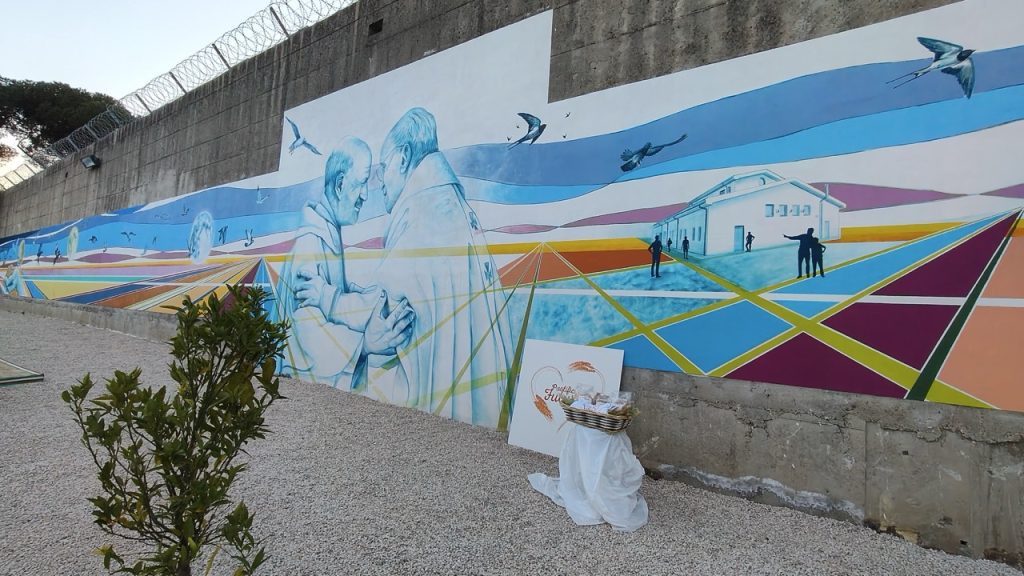
Since November 2025 the perimeter wall at Casal del Marmo, a young offender’s institution in Rome, has told a different kind of story. In this place where, for years, the grey concrete marked a clear border, there is now a long mural filled with colour, symbolism, and possibility for the future. The mural represents Pastificio Futuro, a project that combines work, art, and human connection to give young people who have spent time incarcerated a second chance.
The video in this article gives a voice to those young people, their educators, those who believe that, even in a place of deprivation, something new can be born.
A Project Sparked by an Embrace
The story of Pastificio Futuro began with something that was both literal and symbolic: an embrace between Pope Francis and Father Gaetano Greco, the long-serving chaplain of the Casal del Marmo young offender institution. One simple, radical question arose from that encounter: what do these boys really need not to lose hope?
The response was not an abstract idea, but something concrete: a real job.
Somewhere to learn a trade, take responsibility, experience healthy relationships, and build a better future, one day at a time.
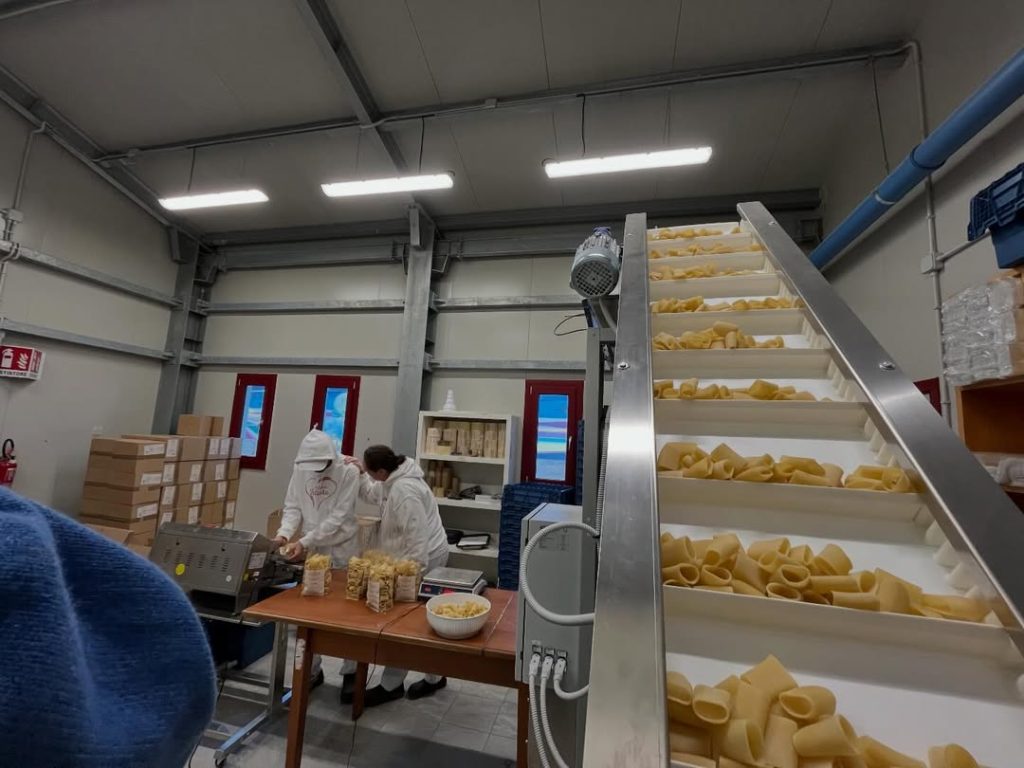
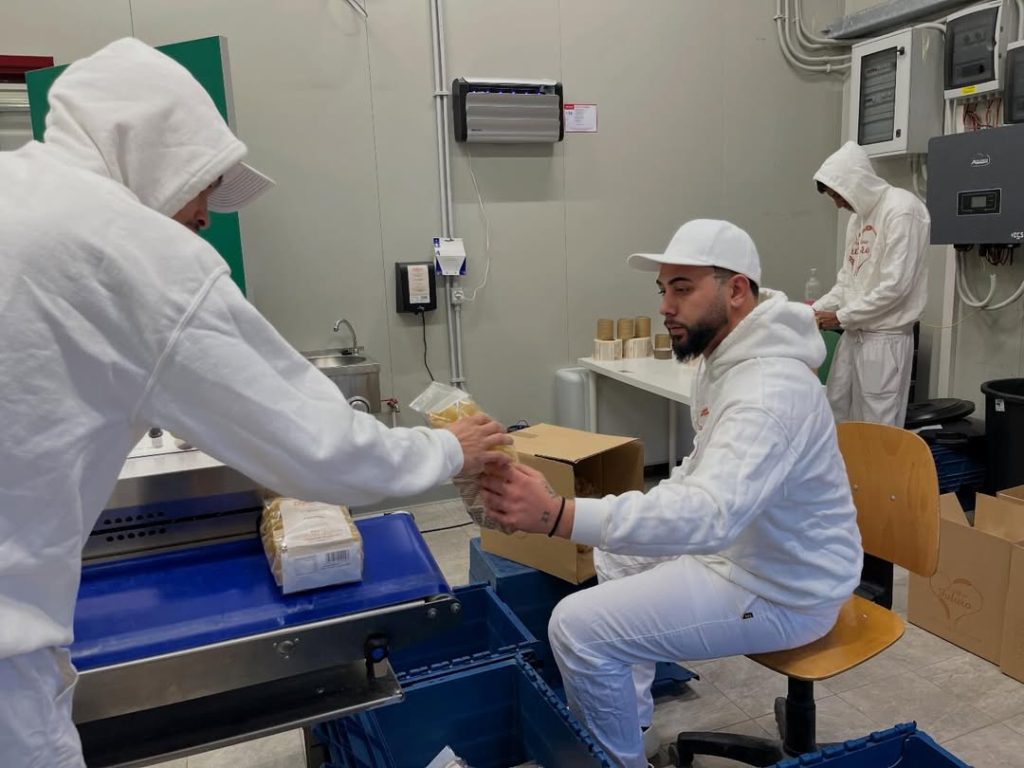
The result was Pastificio Futuro, an artisanal dried pasta factory housed in a small building next to the institution. People within the youth justice system – offenders being released or coming from other areas of the system – can work under a regular contract, learning not only how to make pasta, but also how to work together.
Why Pasta?
The choice of pasta was not random. It is a simple, everyday food that can bring different cultures and families together around one table. But it is also a powerful metaphor: pasta takes time, patience, care. This same attitude is needed to navigate the winding paths of human change.
At Pastificio Futuro the work is not just production. It also involves training, relationship building, and shared responsibility. Educators, employees, and the boys work side by side, rejecting labels in favour of human connection. No one is reduced to their mistakes here; everyone is seen for the person they could become.
The Mural: a Window Into the Possible
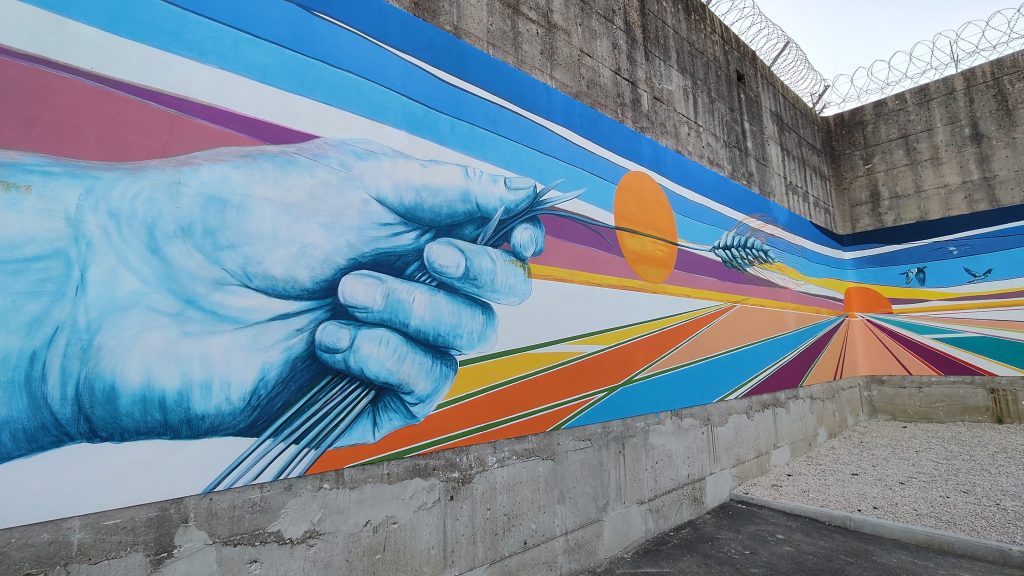
The mural on the perimeter wall – which was unveiled in November 2025 – visually tells their story. Made with direct contribution from the boys, it is like a big window, opening onto another horizon: grains of wheat, birds in flight, hands reaching out, an embrace creating a new future.
It does not erase the wall, but transforms it. It does not deny the boundary, but crosses it symbolically.
As the boys explain in the video, even the mural’s imperfections – the mistakes, the flaws – became part of the creative process. It sends a clear message that any mistake can be rectified, any wound can become a jumping-off point.
A powerful message emerged during the inauguration ceremony: some wounds cannot be erased, some ‘black holes’ are an inextricable part of a person’s story. But it is possible to build around these voids, like the grass growing back around a crater, or the flowers adorning a pothole. Even something that has caused suffering can be surrounded by signs of new life, without being allowed to devour the hope of a future yet to be built.
A Transitional Space, Not the Final Destination
Pastificio Futuro does not want to be a final port, but a transitional space. A place to learn, get back on one’s feet, and acquire the skills to embark on other opportunities in their careers and lives.
That is the future those on the reel have powerfully imagined: hope not as an illusion, but as a concrete possibility, built day after day through dependable relationships, decent work, and mutual trust.
A Symbol That Speaks to Everyone
Pastificio Futuro is now also open to the public. The pasta made there can be bought online and directly at the factory, which means anyone can support the project in a simple and tangible way.
Choosing this pasta means becoming part of a story of redemption that acknowledges the past, without being held prisoner by it. A story that demonstrates how doing good – when people get organised and come together as a community – can build a better future.
Watch the video. Listen to their voices. And reflect on a question that concerns us all: what can happen when we choose to believe in hope?
Translated into English by Becca Webley