

 EN
Polo Lionello Bonfanti: Twenty Years of Social Impact and the Economy of Communion
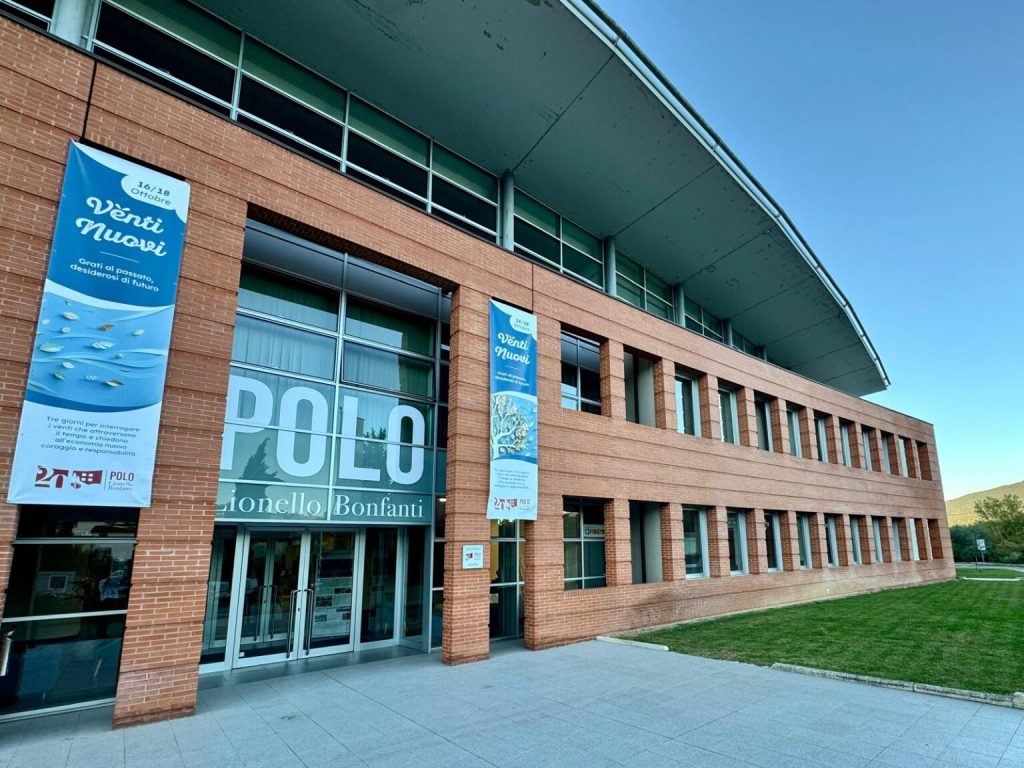
Built in Burchio as the Economy of Communion’s first business centre in Europe, the Lionello Bonfanti centre celebrates its twentieth birthday with its ‘Twenty New’ events: a living laboratory that has brought together over 40 stories of integral ecology, fraternity, and the Economy of Francesco.
The story begins 20 years ago, in October of 2006. It is a story that delves into the topics of entrepreneurship, work, and the economy. One that highlights the importance of reciprocity, communion, and human solidarity. It is the story of the Polo Lionello Bonfanti, a centre built in Burchio, found in the Figline e Incisa Valdarno comune of Tuscany, near the Focolare Movement’s international citadel, Loppiano.
The centre is named after the judge who oversaw the development of houses, streets, workplaces, and social life in Loppiano for years. Luigino Bruni writes on the Polo Lionello Bonfanti website that he was ‘a man who spent many years attending to the citadel’s civil affairs. A man with a strong aptitude for social work and a calling for justice.’
What Is the Lionello Bonfanti Centre and the Economy of Communion?
The Polo Lionello Bonfanti is the first entrepreneurial centre in Europe devoted to the Economy of Communion (EdC), an approach to work and doing business first developed by Chiara Lubich. Founder of the Focolare Movement, she launched the project in 1991, putting people and the common good at the centre of the economy and forming an active network of businesses around the world.
‘The Polo Lionello Bonfanti’, you can read on their website, ‘is one of seven international centres of the Economy of Communion. It hosts businesses, associations, training centres, and social organisations that promote an economic model based on fraternity, inclusion, and sustainability. With a strong emphasis on the coming together of business, training, and civil society, the centre advocates for economic ideas and practices that combine development, innovation, and the common good.’
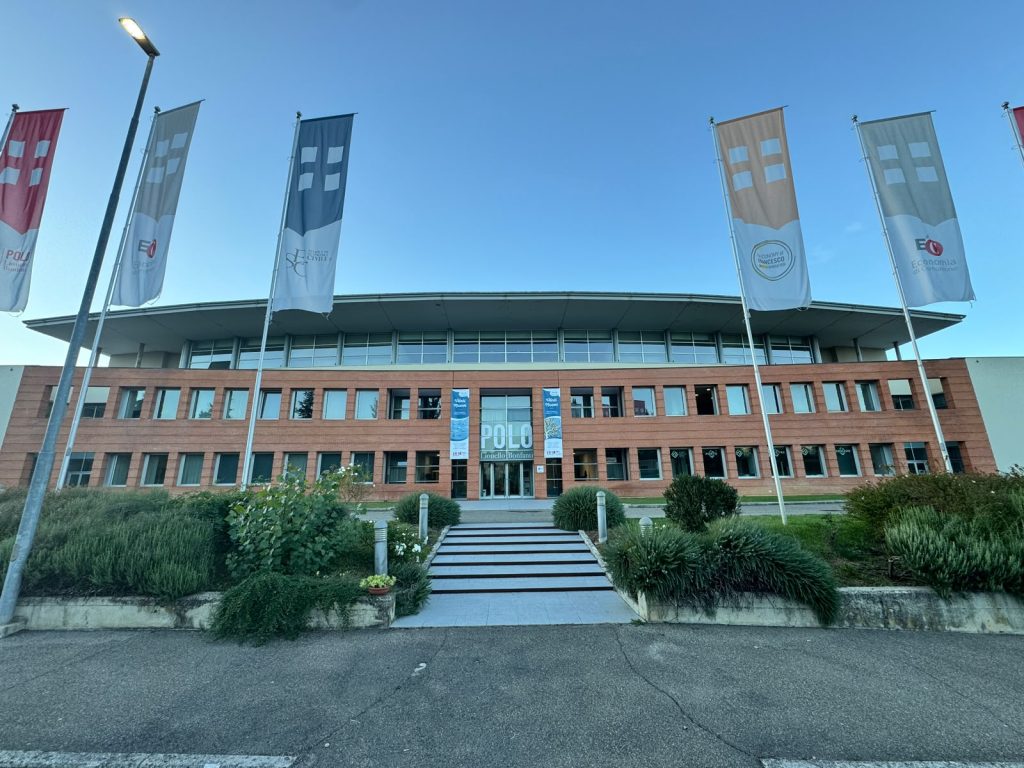
For two decades the Polo Lionello Bonfanti has been supporting the Economy of Communion, civil society, and the Economy of Francesco, demonstrating that ‘doing business differently is possible – and necessary.’ Offering up its 10,000 square metres as a place for encounter, it also supports cooperatives, associations, organisations, businesses, and individuals. The centre welcomes stories of productivity and sociability, all united by a desire to put synergy and cooperation above competition. Unity above individualism.
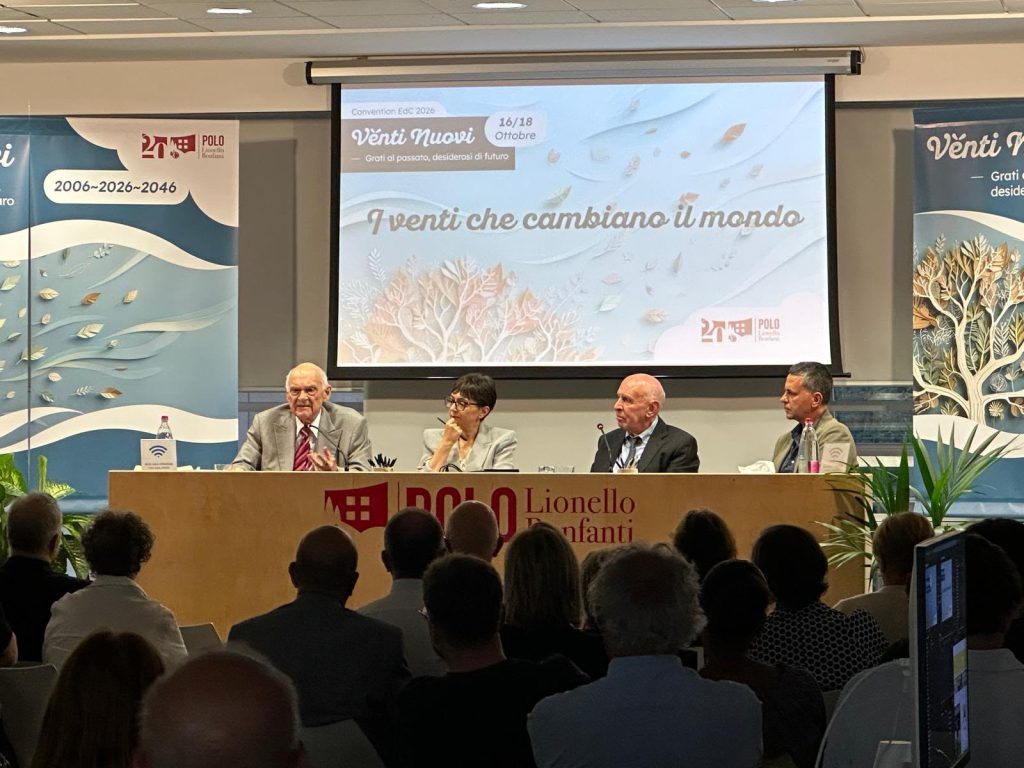
The centre’s different spaces form ‘an ecosystem of businesses, relationships, and daily cross-pollination that no isolated office could offer.’ Today over 40 business journeys are taking place inside the walls of the Polo Lionello Bonfanti, a centre that also acts as a place of study, sharing, and higher education. Inside there are courses, meetings, debates, and cultural events to help foster authentic connections with the nearby area, local communities, and nature – bringing together business, art, and spirituality.
Polo Bonfanti: a Story (Also) About People
The Polo Lionello Bonfanti is a ‘place where work, culture, and community come together every day’. The centre’s story was only made possible by the work of thousands of partners and workers who decided to invest in an approach to the economy that really takes humankind into consideration. Among the centre’s most significant figures is Father Oreste Basso, who oversaw its construction and subsequent work. He was a key adviser and strove to mark it as a sacred place, where people could try a new way of doing business, one characterised by sharing and community spirit.
Father Oreste Basso was the guardian of the Lionello centre, from inception to growth – and with him, we remember all the others who believed in the EdC. Among these is entrepreneur Pietro Comper, from Trento, who pioneered the Economy of Communion and was one of the founding members of the AIPEC. You can read his story in an interview, as well as in the book Una vita fà, La storia di un imprenditore (A Lifetime Ago: The Story of an Entrepreneur).
The Events for Polo Lionello Bonfanti’s Twentieth Anniversary
To celebrate the centre’s twentieth anniversary in style, several events were organised between 16 and 18 October, under the title ‘Twenty New’.
The first night began with a discussion between economists, entrepreneurs, journalists, and key figures within the Economy of Communion – all curated by Maria Gaglione, the editor of EdC S.p.A. Polo Lionello Bonfanti. The event was titled, ‘Where do the winds of global change come from? The challenges facing the economy today.’ Among the participants were Stefano Zamagni, an economist; Marco Girardo, a journalist and the editor-in-chief of Avvenire; and Alberto Ferrucci, an entrepreneur and pioneer of the Economy of Communion movement.
The evening was dedicated to Frances of Assisi, 800 years after his death, with a prize for the Voice of Francesco competition, which asked poets, musicians, illustrators, and narrators, ‘What economy does Francis sing of today?’ There was also a theatrical performance of the Canticle of Francis, where actress Cristina Colonnetti gave voice to Chiara of Assisi.
Saturday morning began with a debate, curated by Beatrice Cerrino and entitled ‘Work, Finances, and Civil Society’. Different speakers attended, including Vittorio Pelligra, who is a professor of economic and statistical sciences at the University of Cagliari, as well as the director of the Scientific Committee of the Scuola di Economia Civile (School of Civil Economy). Also speaking was Paolo Santori, a professor at the LUMSA University in Rome, who chairs the scientific committee of the Economy of Francesco Foundation.
Later on Saturday was the collective story ‘Twenty years of the centre: when an institution becomes a place’, as well as a reflection on the question, ‘What is the significance of the Lionello centre in the economy of today?’, curated by Luigino Bruni.
On Sunday morning, the eighteenth, Sister Alessandra Smerilli – economist and Prefect of the Vatican Dicastery for Promoting Integral Human Development – gave an open address. This was followed by Rosy Bindi, the former Italian minister and the president of the parliament’s Antimafia Commission, speaking with journalist Paolo Loriga, from Città Nuova.
The three days of celebration and reflection closed with a meeting titled ‘The Compass Rose’, which posed the question: ‘How many new winds do we want to generate, together, for the economy of tomorrow?’
Polo Lionello Bonfanti, Saint Francis, and Pope Francis
At the Lionello centre a variety of organisations with international leanings come together to experiment with new economic models and put them into practice. ‘This is why we say that a new economy is growing here,’ you can read on their site. A new economy, yes, but an economy capable of keeping ancient figures and models – like that of Saint Francis of Assisi – in mind, both ideologically and concretely, as a point of reference for humanising the economy and work.
It is no coincidence, as we have seen, that the Lionello centre acts as the headquarters and organising committee for the Economy of Francesco Foundation. Established in response to Pope Francis’ call to bring together young economists and entrepreneurs from different countries, the aim is to put soul back into the world economy.
The inspiration came directly from Saint Francis of Assisi, with his values surrounding equality, fraternity, and caring for others, nature, and the gift of creation. Pope Francis outlined all this during his pontificate in his document on ‘Integral Ecology’.
Among other things, the centre organises training initiatives based on the Laudato si’ and Fratelli tutti encyclicals, which were themselves inspired by Saint Francis and written by Pope Francis. In fact, the large entrance space that welcomes people into the centre was dedicated to him in 2025 with the inscription ‘Hogar Papa Francesco’. Cultural events and meetings are organised here with the purpose of welcoming in people and ideas, and therefore keeping dialogue, fraternity, and hope close to heart.
Translated into English by Becca Webley