

 EN
EN
School as a Workshop for Peace: Anna Granata and the Democratic DNA of Italian Education
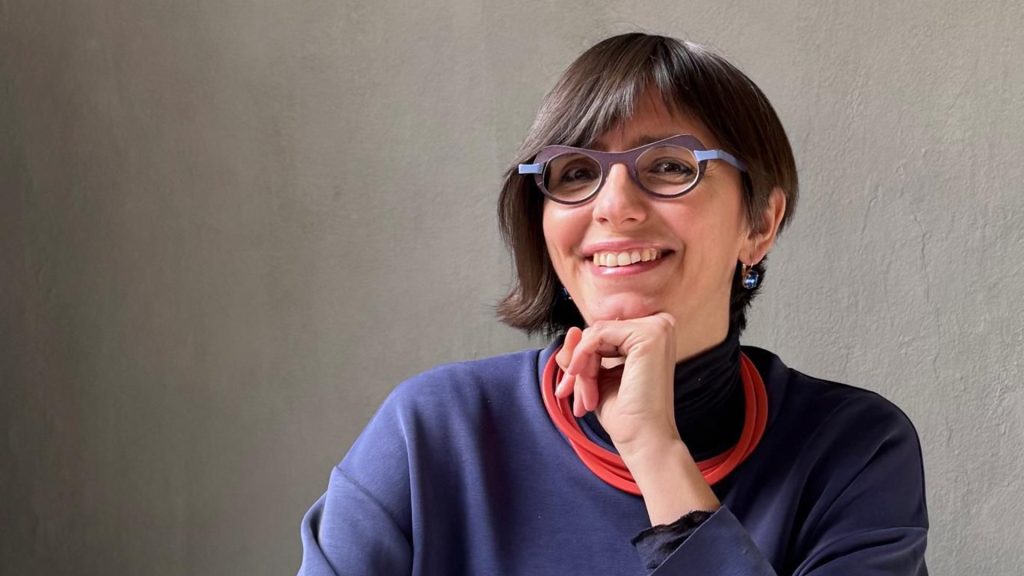
Anna Granata, professor at the University of Milano-Bicocca, reminds us that teaching peace is not an abstract utopia. It is something that happens every day in Italian classrooms among children with diverse stories, languages, and backgrounds.
Anna Granata is a professor of pedagogy in the Department of Human Sciences for Education ‘Riccardo Massa’ at the University of Milano-Bicocca. She specialises in cultural, social, and gender diversity as educational resources, as well as equality and creativity in education. She has written several books on these subjects, and we are grateful to her for accepting our invitation for a conversation during the month United World Project has dedicated to education.
Anna Granata has given us a lot of food for thought with her truly insightful responses. We began with a question related to the tragic situation we are faced with today: war, which finds its restorative antithesis in peace.
Anna, what role can schools play in creating peace?
As in the past, and today more than ever, schools can offer an alternative to society. One that does not mean being in conflict, but which acts as a workshop to establish a new culture, an alternative to the norm. In these times of increasing conflict and adversity, school – which is supposed to be a cultural institution – can teach us about respect and how to engage with the ‘other’, how to live together peacefully. And not just in theory.
In practical terms?
By using the invaluable tool of the classroom, a tangible place where children can experience democracy. The Italian education system was founded amid the ruins of the Second World War, at the request of Italy’s founding fathers and mothers, who saw school as a place to morally rebuild the country. Article 34 of the Constitution says: ‘Schools are open to everyone.’
A big idea in very few words.
At school, children who have different stories, social backgrounds, and origins learn how to live together. They have first-hand experience of the fact that it is possible. In this historical moment, we are struggling to imagine the alternative to peace, but in schools – even imperfectly, disjointedly – the coexistence of difference is a reality that students experience every day. When it works, it is the perfect example of the miracle of coexistence, which is the most beautiful thing in the world. It seems like a utopia, but it has become a reality in this fundamental democratic institution that truly is everyone’s school.
It seems this is no small thing in the least.
Italian schools, from a regulatory perspective, are perhaps the most inclusive in the world. Children with and without disabilities share the same space, and native kids attend the same schools as students who come from far away, do not speak the language, and have maybe never been to school before. Children from very different socio-economic backgrounds. Sitting side by side in class, they learn that you can be whoever you want to be, no matter where you started out. The DNA of our democratic school system is rooted in teaching peace. Although, unfortunately, what we see from copycat models in other contexts – it never is easy to borrow a model – is that competition and evaluation are prioritised. This just takes us further away from the visionary idea of democratic schooling set out in the Constitution.
UWP prioritises peace, as well as unity, brotherhood, dialogue, and encounter. How important is it to teach these values, over superiority, self-interest, and competition?
These values represent education itself: from the Latin verb ‘educere’, to bring forth, to draw out each individual’s personality, their aspirations. Supporting them in this journey to give life to a community of diverse people who have learnt to live in harmony.
Aside from school, there are other educational bodies. Loris Malaguzzi believed that the third educator is a child’s environment, and that ‘The child has a hundred languages, but they steal ninety-nine.’ What did he mean?
Malaguzzi contributed to flipping the idea of ‘childhood’, which literally comes from the Latin for ‘one unable to speak’, on its head. In reality, children are born with 100 ‘languages’, and it is the role of education to nurture them. The method behind Reggio Children is one of the cutting-edge Italian educational approaches known around the world. Children learn how to become citizens, in relation to each other, because of the relationship they form with their environment, which is their third teacher. This is where childcare services with a specific focus on beauty were born.
How can the principles of beauty be applied in practice?
By creating spaces where the artistic is given a central role. And where the third teacher, as Malaguzzi calls it, is designed and set up to awaken a desire for beauty in very young children. These educational facilities include art studios, puppet workshops, and vegetable gardens. Everything teaches us how to live together.
Fantastic!
A place where kids can express themselves and contribute culturally, for example, through painting and theatre. Even with vegetable gardens. They are languages children need because, according to Malaguzzi, children do not need very little; they need a lot. They have profound questions and an immense desire to explore, know, create. Malaguzzi condemns the kinds of schools – predominantly belonging to the compulsory education system – that reduce children’s languages rather than recognise and nurture them.
He expressed that in a poem as well, correct?
‘Il cento c’è’, or ‘The Hundred Is There’, which says ‘The child has a hundred languages … but they steal ninety-nine.’
What does that mean?
That we have created a school system where a small number of these languages, regarded as ‘hard knowledge’, carry most weight: language, maths, science. Disregarding others that nourish young children’s passions endlessly.
A broader, deeper outlook on education…
A big idea for education and for childhood itself. Unlike how children in the nineteenth century were seen: half-adult, but a whole person with many needs, including cultural ones, to nurture.
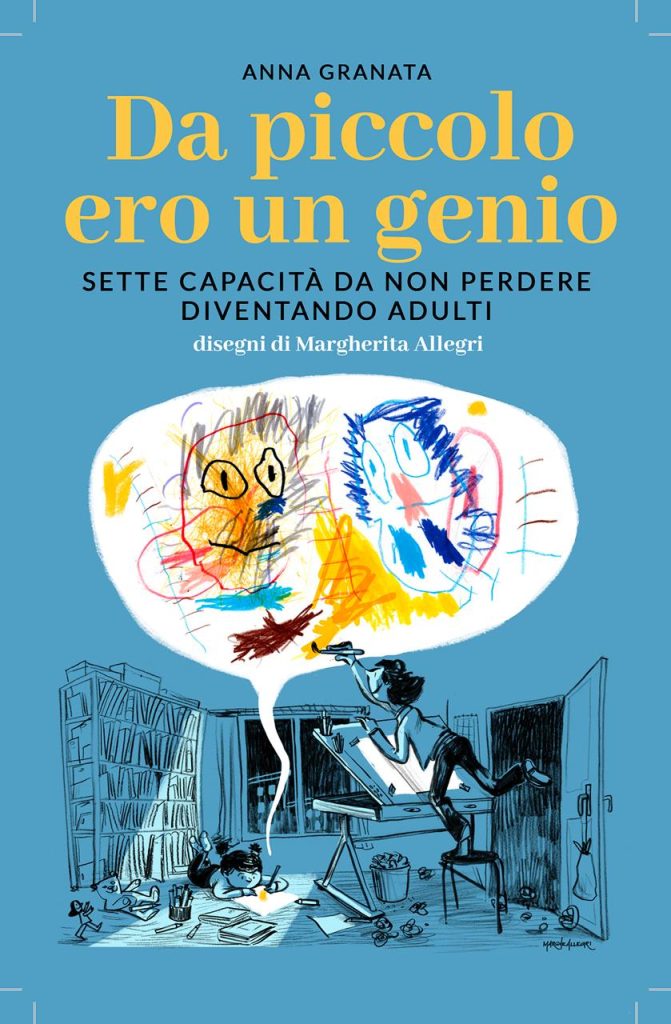
We could draw a connection between this and one of your books, called Da piccolo ero un genio (literally, ‘As a child, I was a genius’). What is it about, and what does it teach us?
The subtitle is ‘Seven skills not to lose as you grow up’. Building on Gardner’s work, this educational approach recognises the thousands of types of intelligence that children and humans have. In light of this, I reflect on a range of skills that are highly developed during childhood: curiosity, imagination, intuition, desire for discovery, etc. Children are all little philosophers, scientists, and theologians with a strong desire to learn. All these skills are highly developed in children, but weaken as we grow up. I have therefore embraced Malaguzzi’s belief that the issue is not about a natural decline in these skills, but a filter put in place by society and the school system, forcing children to disengage from some of these skills.
Do you explore that in the book?
I explore the fact that we need these skills throughout our entire lives. Starting with imagination, which helps us navigate our own existence. It allows us to be open to change, to restructure our time, to reconsider professions that do not make us happy. The importance of imagination, the ultimate human skill, must not be downplayed.
It must be protected, supported…
Maria Montessori defined the child as ‘father of the man’. And this is why it is so important to revisit these skills as an adult, to go back to these human sides of us that society, at times, can inhibit.
Speaking of which, how important are figures like Maria Montessori and Gianni Rodari in educating very young children?
The Italian education system, which is known around the world for being ahead of its time, makes us proud. What those names you mentioned have in common is that they combine ethics and aesthetics. Without separating them, dividing them. We know Rodari’s nursery rhymes for children, but he also wrote other, more profound, pieces. For example, the poem in which he reminds us that we must never engage in war, ‘not during the day or at night, not at sea or on the shore’. Within this playfulness is a profound reflection on how to raise truly free people; it is an ode to freedom. Rodari believed that creativity should be a human right for all. Not because everyone has to become an artist, but so that we are no longer enslaved.
Another brilliant sentiment…
One that holds a very powerful lesson. These creative approaches put the child in centre stage, make them an active cultural participant, and help them (Montessori) to do things by themselves, rather than depend on an adult. They are an education in democracy, autonomy, and freedom. It is a prophetic message.
Human development never really stops, so neither does learning. How important is it for adults to keep in touch with their inner child, to educate themselves and the young people around them?
Our inner child is always inside us, and we can ask them to lend us these skills that we have lost because school, work, and society have forced us to leave them behind. But there is also another aspect to consider.
What?
The children of today. It is a delicate topic for Italy, where childhood is becoming less significant, from a numerical standpoint, and less visible.
In what way?
Children often find themselves in environments that are entirely devoted to them: the home, school, sports centres. They are like boxes for childhood, barely visible to the eye, and all this has a social cost. It robs us of something. I like to mention a brilliant book called Father Time, by Sarah Blaffer Hrdy, which explores the transformative power of babies.
On parents?
On masculinity specifically. Taking care of babies helps bring out emotions like tenderness in fathers, which has an impact on their hormonal system. This translates into consideration, empathy, accepting the ‘other’: all qualities we seem to have lost a bit. I like this conclusion because – even on a neuroscientific level – it tells us that relationships between generations, and between adults and childhood, are vital parts of our societies and communities. If those relationships tend to break down or become less frequent, adults lose something, starting with our most profound and human qualities. By reconnecting generations, there is enormous potential for us to live communally.
Going back to schools, you are part of an amazing project called ‘Five minutes to change the school’. Can you tell us a bit about it?
I organised it with my research group at the University of Milano-Bicocca, where I work. The goal is to draw attention to the kinds of healthy, creative, and democratic approaches to school that cater to every child’s needs. They exist in Italy, but no one talks about them. We are trying to do just that, because we believe in the innovative and transformative power of school.
Positive examples that are not given much attention…
The growing forest, rather than the falling tree. We are used to frequently pointing out the failures of the Italian education system, which we cannot deny, but partly through the regulations that grant scholastic autonomy, there are some schools that adopt creative solutions to make the school experience more positive and stimulating. Last year we put out an open call – which is still open – for creative ideas to change school. ‘Five minutes’ refers to the short time it takes to convey each idea, given their simplicity and impact. We supported the people who came up with the ideas, as they took them from concept to reality. Now, after about a year and a half, we are sharing these ideas through our Instagram page, @5minuti_scuola.
What do these stories teach us?
They remind us that big changes in the school system have always started at the bottom, through experimentation, by someone who has tried to see if we can do school differently. And it is still the case today; schools that adopt different approaches are then copied by others. Our motto is, paraphrasing Bruno Munari: ‘No copying not allowed’. Because the more these ideas are copied, the more they can change school, from the bottom up.
Today, in many countries, education means taking different languages, cultures, and religions into consideration. Does that present more obstacles or opportunities for educating children?
I use the term ‘challenge’. Diversity in schools is, without a doubt, a challenge. It was in the past, when someone thought to mix boys and girls, to put students with and without disabilities together, when it seemed crazy to. Diversity scares us. It is challenging and cannot be managed by ignoring it. It cannot be neutralised. Occasionally, in our schools, we neutralise diversity by ignoring it.
What happens then?
Schools risk highlighting our differences, rather than encouraging peaceful coexistence. Diversity is the result of our schools being open to everyone. It is the tool we have at our disposal for educating children about citizenship. Diverse groups of people coexisting at school can present an extraordinary opportunity for children to experience living together peacefully. The policy of separating students, of creating A- and B-streams – which unfortunately also happens to some degree at a ministerial level – goes against our vision for school, and risks stripping children of their identity and value.
What do we need instead?
What I can say, as an educator who is shaping our future teachers, is that to tackle diversity, we have to develop skills related to welcoming new arrivals, communicating with people who speak different languages, and managing diverse groups of individuals who learn in different ways. It is challenging terrain, but we must explore the full potential of an education that can really make a difference to society. I will not deny that it is difficult, but the impact this kind of project can have is so significant that it is worth learning how to tackle.
Translated into English by Becca Webley