

 EN
EN
Education and Social Change: Three Projects Where the Streets and Academia Collide
What happens when the world of academia meets the streets? Through stories of initiatives in Italy, Colombia, and the Netherlands, we discover how education can be a practical tool for overcoming prejudice, tearing down invisible walls, and building a shared sense of responsibility.
Education and research are vital to the future of humankind. This is the reason one of the eight United World Project Communities has chosen these two words – ‘education’ and ‘research’ – as a jumping-off point for its work in advocating peace, intercultural dialogue, and social responsibility.
The Education and Research community views these words as tools to encourage critical thinking and collaborative learning, and strives to ensure that information is used responsibly, equipping members with the knowledge they need to tackle the biggest challenges the world is facing.
We take a look at three initiatives that delve deeper into these two universes: Doposcuola Romero (literally, ‘Romera After-School Programme’) in Italy, or more precisely, the Tuscan city of Prato; Colombia’s Universidad de la Calle, or Unicalle (literally, ‘University of the Streets’); and last year’s Exploring Polarities week at the Summer Academy in the Netherlands.
Doposcuola Romero
Prato is an industrial city in central Italy, an important textile hub with a large population of migrant workers, and a profoundly multicultural place that is home to people of more than 120 different ethnicities – over 70% of the local student population have migrant backgrounds. These factors present delicate challenges, as well as unique opportunities.
The Doposcuola Romero project has brought together university students and recently retired teachers for the last eight years to run a school of housework. The programme takes place in the Prato community centre, on the outskirts of the city, where a lot of residents from diverse cultural backgrounds spend their time.
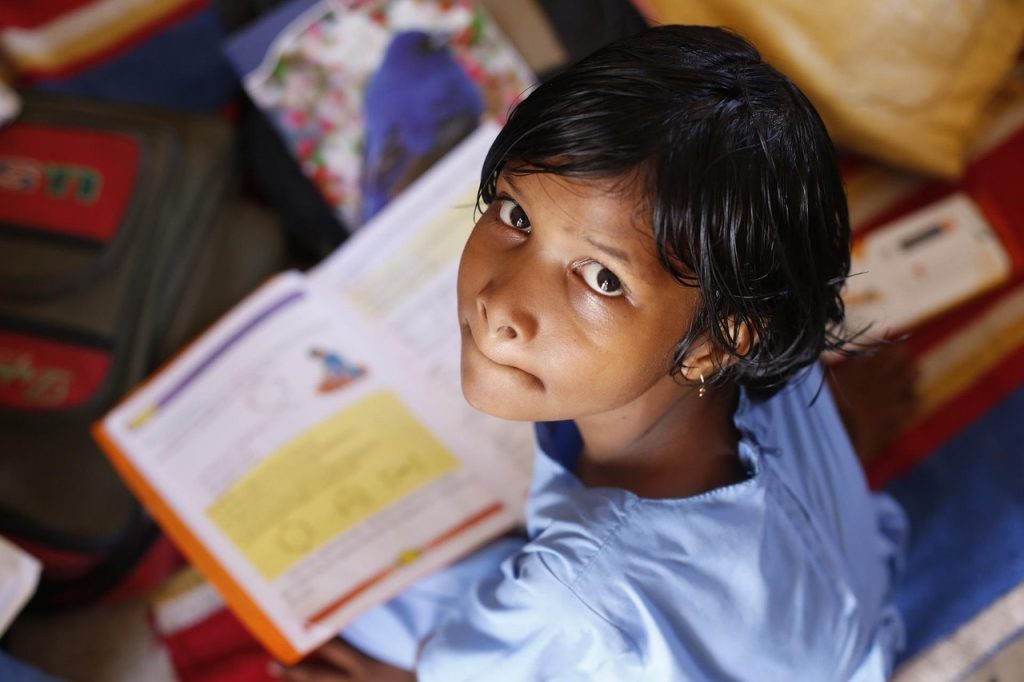
Students attending Doposcuola Romero come from a local secondary school named after Father Lorenzo Milani, the extraordinary twentieth-century Italian priest who devoted much of his life to educating the country’s most vulnerable children.
In an impressive demonstration of their spirit of service, Doposcuola Romero teachers offer lessons tailored to their students, responding to the needs of around 60 children. The teaching team combines the youth of the university students with the experience of the retired teachers, leading to a very balanced approach to running the school. While still respecting individual needs and cultural backgrounds, constant care and attention are paid by the different generations who, together, have built a profound sense of community spirit.
Universidad de la Calle in Colombia
The Colombian programme emerged within the context of ‘participatory relational democracy’ in Latin America. Developed over the last few decades, the university directly engages locals in the hope of facilitating greater inclusion for historically disadvantaged or marginalised groups.
The programme is open to all and draws on relational anthropology, which has its roots in the model of unity proposed by Chiara Lubich, the founder of the Focolare Movement. Its origins can also be traced back to the existential analyses of Viktor Frankl, an Austrian neurologist, psychologist, and philosopher who was imprisoned in the Dachau and Auschwitz concentration camps between 1942 and 1945.
Universidad de la Calle offers accessible and inclusive training to people on low incomes. The programme is built around collaborative learning in small groups that, preferably, meet in person in parks and other open spaces.

The school provides a unique educational experience that aims to build universal fraternity. During meetings, one member assumes the role of communication facilitator and leads the entire group, creating an environment where participants are encouraged to get involved and work together as they build relationships.
Universidad de la Calle’s primary focus is advocating for individuals, communities, and groups through network building and promoting new initiatives for entire communities. The food bank that the university set up in Colombia is just one example illustrating the positive results they have achieved – an idea that originally came up during one of the programme’s training sessions.
Alongside them, the Unicalle team is responsible for providing support, direction, and encouragement to the people who coordinate and breathe life into the Universidad de la Calle’s meetings. They guarantee access to guidance and a culture of shared growth. The school, which currently offers two degrees, hopes to expand its training programmes and continue to nurture and support learning environments through dialogue, community building, and a joint search for unity and universal fraternity.
Exploring Polarities at the Summer Academy in Holland
Since 2015 a group of young adults have been organising Summer Academy #Learning4Unity, an international and transdisciplinary programme of events. This year they will reunite from 10 to 17 August at the Mariënkroon centre in the Netherlands.
Back in August 2025 these young adults joined forces with educators from over ten countries across Europe, Asia, and South America. The goal? An interdisciplinary journey into the theme of ‘Exploring Polarities’.
The teachers, who came from a wide range of disciplines, as well as academic and cultural backgrounds, guided the young adults through the difficult task of tackling the delicate – and almost unexplored – topic of polarities. Both internal and external.

Participants explored how internal, societal, and intercultural polarities can become opportunities for understanding, rather than division. They achieved this by combining fundamental disciplines like history, psychology, politics, economics, and the arts in the form of interactive workshops, roundtables, and engaging educational activities – even including dance and cooking.
Last year’s Summer Academy took on the critical task of ‘Exploring Polarities’, placing particular emphasis on profound dialogue, reciprocal teaching, and personal growth. By exploring different kinds of polarity, the week-long programme in the Netherlands bridged personal, theoretical, social, generational, and cultural differences.
Teachers and students practised reciprocal teaching, exchanging ideas and information as equals. The event demonstrated how fostering understanding between disciplines, cultures, and individuals can strengthen both academic collaboration and human bonds.
Translated into English by Becca Webley