

 EN
EN
Lorna Gold: Laudato Si’ Movement ‘Is an Emergence of a New Way of Being’
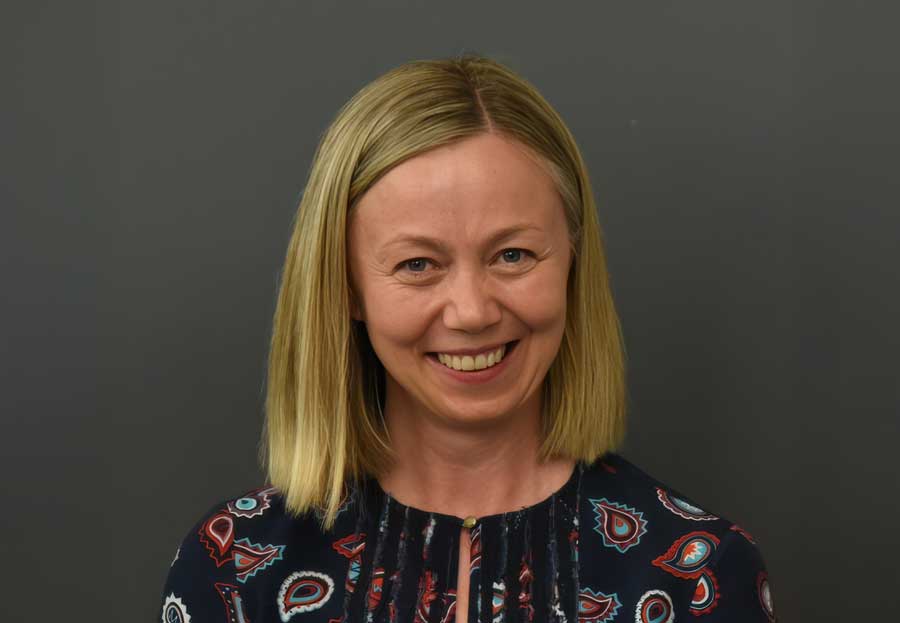
Lorna Gold, Executive Director of Laudato Si’ Movement, reflects on ten years of the encyclical, analysing how integral ecology is an essential path to global unity and tackling the climate crisis.
Lorna Gold is the Executive Director of Laudato Si’ Movement, which has organised an important conference marking the tenth anniversary of the Laudato Si’ encyclical.
The ‘Raising Hope for Climate Justice’ international conference – which will take place in Castel Gandolfo, Italy, from 1 to 3 October – has been organised by Laudato Si’ Movement, in conjunction with a number of ecclesial and institutional partners. Leaders from the world of faith, of activism, of science, of economics, of environmentalism, and of politics are set to attend, 28 in total, all of whom will come together to reflect on the impact of the encyclical and the most effective actions we can take now.
What challenges do you face as the executive director of Laudato Si’ Movement? How does it make you feel, and what responsibility does it entail?
For me, being appointed the ED of Laudato Si’ Movement is the biggest honour of my life, especially in the same year that Pope Francis passed away. The day my appointment was announced in January 2025 I had the grace of a private meeting with Pope Francis – one of the last meetings he held before being admitted into hospital with pneumonia. That meeting will remain with me forever. He was on great form and joked with me about Ireland – ‘the green island’ – and even complimented me on my Italian! As he did at every meeting I had with him over the past few years, he ended by squeezing my hand tight and looking me in the eye – ‘vai avanti’ – ‘go ahead’. Now, with his passing, it is like I feel he is urging me personally in this legacy role, to take forward his legacy. I feel his presence with me every day.
Does the death of Pope Francis represent a turning point for Laudato Si’ Movement, or not necessarily?
The death of Pope Francis has been a very significant moment for Laudato Si’ Movement. Pope Francis had a very close relationship with us, offering us many opportunities for dialogues and providing encouragement and direction. We felt is loss very personally since he, more than anyone else, embodied the spirit of our Movement. It was with Pope Francis’ blessing in 2021 that we changed our name from ‘Global Catholic Climate Movement’ to ‘Laudato Si’ Movement’. In a hand written note on Pentecost 2021, he confirmed to us ‘siete il movimento Laudato Si’’. For us, this meant a recognition that our movement wasn’t a Catholic Climate NGO – but an ecclesial reality, the germ of something more akin to a movement of the spirit inspired by his charism. Of course, we are very young – we don’t have all the verifications of a movement like Focolare or others yet – but this word of Pope Francis remains our guiding inspiration. For us, the transition to Pope Leo XIV, who carries forward this legacy with us, is a new chapter. It is one which fills us with excitement as we seek to understand with Pope Leo what God is calling our movement to next. Meanwhile, whilst we still miss Pope Francis, his intercession is like a superpower!
What value do these first ten years of Laudato Si’ hold? How have they begun to change the world, and what potential does this extraordinary movement have to continue to build on that over time?
This is a huge question. The first thing to say is that nobody set out to create a movement – in a similar way to the Focolare story, the Laudato Si’ Movement has emerged in a moment of profound crisis. A few individuals, particularly Tomas Insua and Christian Leano, as well as myself and several others felt a profound call to respond to this moment with faith. When we heard Pope Francis was writing an Encyclical we wanted to ensure it did not fall on deaf ears. It started with an act of love for Pope Francis! We decided to hold a party in St. Peter’s Square to announce the encyclical. After that, we launched a petition to COP21 in Paris – and gathered a million signatures. after that, we planned to go back to our jobs. However, it was clear there was a desire to continue to work together. That was the start of the movement.
In the past decade, the movement has grown exponentially – through initiatives like the Laudato Si’ Action Platform in collaboration with the Dicastery of Integral Human Development; the film, The Letter – A Message for our Earth; the Laudato Si’ Animators Training which has now trained 20,000 local leaders. We have promoted the annual Season of Creation and Laudato Si’ Week. We have called boldly to end investments in fossil fuels and support a fossil fuel non-proliferation treaty. Through all of this, a grassroot movement has formed which weaves together many existing movements, orders, organisations and individuals into a beautiful tapestry. It lifts up the whole of Creation in one song ‘Laudato Si’’ through tens of thousands of daily actions big and small.
Looking to the future – this movement will only continue to grow. Whilst we are many already, we are still only at the beginning! I see our movement as part of what thinker and activist Joanna Macy (who also died this year) called ‘the great turning’. It is an emergence of a new way of being, a new consciousness, which we are building together with many others in the secular and faith world. This emergence requires us simply to open our hearts and minds to work collaboratively – in a radical way – to build the future we want in our lives.
How important is it that the world is united, that this harmony is not weakened by division or – more importantly – by war, in driving the principles and goals of Laudato Si’ forward?
The work of Laudato Si’ and the work of unity are profoundly intertwined. This is why I am so delighted with the growing collaboration with the Focolare Movement and Laudato Si’ Movement. All the resources we need to tackle environmental issues and injustice are at our finger tips – but we need to learn to work together and collaborate with greater focus and commitment. This requires a deep spiritual foundation of communion between all aspects of human endeavour – to put them at the service of the whole of humanity and creation. I am so excited to see what emerges from these three intensive days, which will be blessed with presence of Pope Leo himself and many top leaders and grass roots members of our movement. I am sure that the Holy Spirit will bless us with what Pope Francis called ‘over spill’ – the unexpected action of the Spirit which we feel in our hearts when we are aligned to God’s plan for humanity.
After ten years of Laudato Si’ Movement’s work, how powerfully, clearly, and undeniably aware are we, collectively, that every environmental crisis is accompanied by social and economic crises?
I think that there is much greater consciousness of these connections, but it still needs to grow stronger. There are still major disconnects, particularly in how we govern our world and the political forces at work. It can seem at times that we are a bit schizophrenic: we think that we have to trade off ‘tacking the climate crisis’ with a stable economy. We think it is a choice we can make – focus on climate or focus on the economy. In fact, the ‘climate crisis’ and broader ecological crisis is another word of simply saying ‘safe living conditions’ – if we do not tackle these, everything else becomes much more uncertain and difficult. We need a new way of thinking about the economy to tackle the climate crisis and this starts with embracing the earth’s physical limits, based on earth systems science. Once we accept our limits, we can start to envisage a new paradigm where we must share the resource we have so everyone can have a fair share and return to living within our means. Many groups are already supporting this direction – the Economy of Francesco, the Doughnut Economy, the Well-being economy, the Economy of Communion, Regenerative Economics. We must join these dots and work together to bring this new way of seeing and behaving in the economic sphere into the public space.
At the same time we must influence the governance of our global economy and politics to mirror our planetary limits. This is a formidable task, also in the era of polarization, AI and misinformation. I think this is now our biggest challenge – and one Pope Leo has highlighted as an area he wants to address.
What are the main challenges involved in spreading the message around the world that everything is interconnected, that human beings, plants, the economy, and society form a single ecosystem, a single whole?
For me the easiest way to communicate around this is to go back to nature. To start with nature and observe quietly how it works. If you examine an ecosystem you will quickly see that it is a system, everything is about balance, everything is about tipping points, limits. A small change, like the flapping of a butterfly wing, can have an impact far far away. If we start at a young age with education outside, playing outside, then we educate our children to see that they are part of nature – not apart from it. This is fundamental. The simplest thing we can do to change our thought processes is to go outside!
Another simple thing we can do is to bring the voices of Creation and those marginalised inside – into our decisions. I have seen this done even in important organisations where the board decided to make a seat at the table for the earth! Imagine if there was a globe sitting in a chair in every board room? Imagine if we found ways to bring the earth and all its inhabitants into every daily decision. I think it would transform our thinking more than thousands of pages of analysis! That is needed too, of course, but we need to shift paradigm.
In your book, Climate Generation: Awakening to Our Children’s Future, you try to present science and the climate crisis in a simple way. Is this the challenge? To continue encouraging greater participation and raising the subject’s profile in public debate?
This is a challenge – particularly in an era where climate science is being questioned once again as a theory rather than a fact. There are many political agendas now pushing mis-information and saying that the climate crisis is a hoax, despite the fact we can see changes with our own eyes. I think that science communications is a critical topic. I think that public information campaigns, much as we had on smoking or other health issues, are needed to explain to people why we need to stop using fossil fuels, why we need to change our economic choices. This is not easy but some countries have done it successfully, such as Costa Rica.
Today there is a real, concrete demand from people around the world for global politics to commit to environmental sustainability. Do you see public administrations giving more and more space to these needs in the future?
I think that the current political situation globally is completely untenable. We have reached a point where humanity, yet again, faces a clear choice: we either move towards a new politics which is founded on interdependence and a re-affirmation of human dignity, or we face decades of decline and conflict. The signs of fragmentation are all around us. It is very hard to see a ‘quick’ solution given that the global institutions set up to govern, such as the UN, have been seriously disempowered by powerful countries that choose to disempower them. The lack of effective global governance is the most serious problem we face. When that is compounded then by the rise of dis-information, inequality and authoritarianism, the future can look very bleak. It is not a good trajectory. However, like Pope Francis, I believe that ‘things can change’, as he said in Laudato Si’. That change could come quicker than we think if enough people – the vast majority of people who want a peaceful, kind, healthy, beautiful planet for everyone- insist on it. Change has always, throughout history, happened when people least expected it. I always remember at the age of 18 when the Berlin Wall came down and communism collapsed – and then apartheid in South Africa ended. These were two changes that many thought impossible. They were like brick walls. However, people power changed everything. People have more power than they realise – we can take our money out of what we don’t believe in: divest from industries that destroy the planet! We can boycott products too. We can vote with our wallets and our feet. This is what is needed now: a vast, planetary movement.
What, on the other hand, are the greatest achievements that this small seed – now a sturdy plant, after ten years – has accomplished through its commitment and hard work over time?
The winds of the Holy Spirit have scattered the seeds of Laudato Si’ far and wide. I think the biggest shift is the change in many peoples’ hearts. There is a much stronger recognition now that care for creation – of which we are a part – is an integral part of the Christian faith, and all other faiths. This is truly significant at a theological level and has the power to transform individual lives and communities. Those ripples are evident in the many expressions of Laudato Si’ in campaigns, in practical actions in communities, in the plans and commitments made via the Laudato Si’ Action Platform. Now I can see that this spirit is also become culture. This really excites me since a song, a movie, a piece of art has the power to move people on a whole new level. The movie The Letter, which was created by Laudato Si’ Movement to bring the message of Laudato Si’ to many millions of people, continues to be a phenomenon. It is incorporated into many school and university curriculums and is used by many communities across the world during Season of Creation and Laudato Si’ Week in particular.
Does the Jubilee coinciding with the tenth anniversary of Laudato Si’ present an opportunity? What synergy could it offer?
This co-incidence has provided a platform for the campaign called ‘Raising Hope’ (raisinghope.earth) which we are running all year. It takes the opportunity of the theme of hope in the Jubilee to focus on hope for the planet, hope for the future. We have used this to reach out and build many new partnerships which will really be evident in the wonderful conference we are hosting in Castel Gandolfo with Pope Leo XIV.
What is the path we must take today to continue transforming the dream of integral ecology into an increasingly tangible reality?
I think the most important thing is to build collaboration between many different groups and movements, recognising that ecology isn’t an ‘issue’ but an integral part all our work. You can’t be working for unity without working together for our common home. There is no unity of humanity if it is ‘homeless’! Our creator, moreover, gave us one common soil, one earth to walk on together and working together to safeguard that beautiful gift is perhaps the fastest way to build peace. Dialogue becomes easier when you have your hands in the soil, when you are planting something beautiful together. This becomes a fast-track to a dialogue of life in the fullest sense – life with all creation! We discover treasures in every faith tradition in this way and learn to share our gifts for a great common goal: protecting our sacred earth.
We are a month off COP30 in Brazil. How can the efforts of Laudato Si’ Movement and the event celebrating its ten-year anniversary come together at the most important climate summit in existence?
Over the coming month, following the Raising Hope Conference we will be harvesting Laudato Si’ 10 pledges from people right across the world to bring to COP30. We are playing an active role in the Global Ethical Stocktake, which will form part of the conference in Castel Gandolfo. We want to ensure that the commitments of as many people as possible – from different faith traditions – are incorporated into this stocktake and reach leaders in Brazil. We will be there to show that people are watching and calling on governments to take bold action to safeguard the future.
Article preamble and interview questions translated into English by Becca Webley