
 EN
EN
Calciosociale: changing the rules of football to change the rules of the world
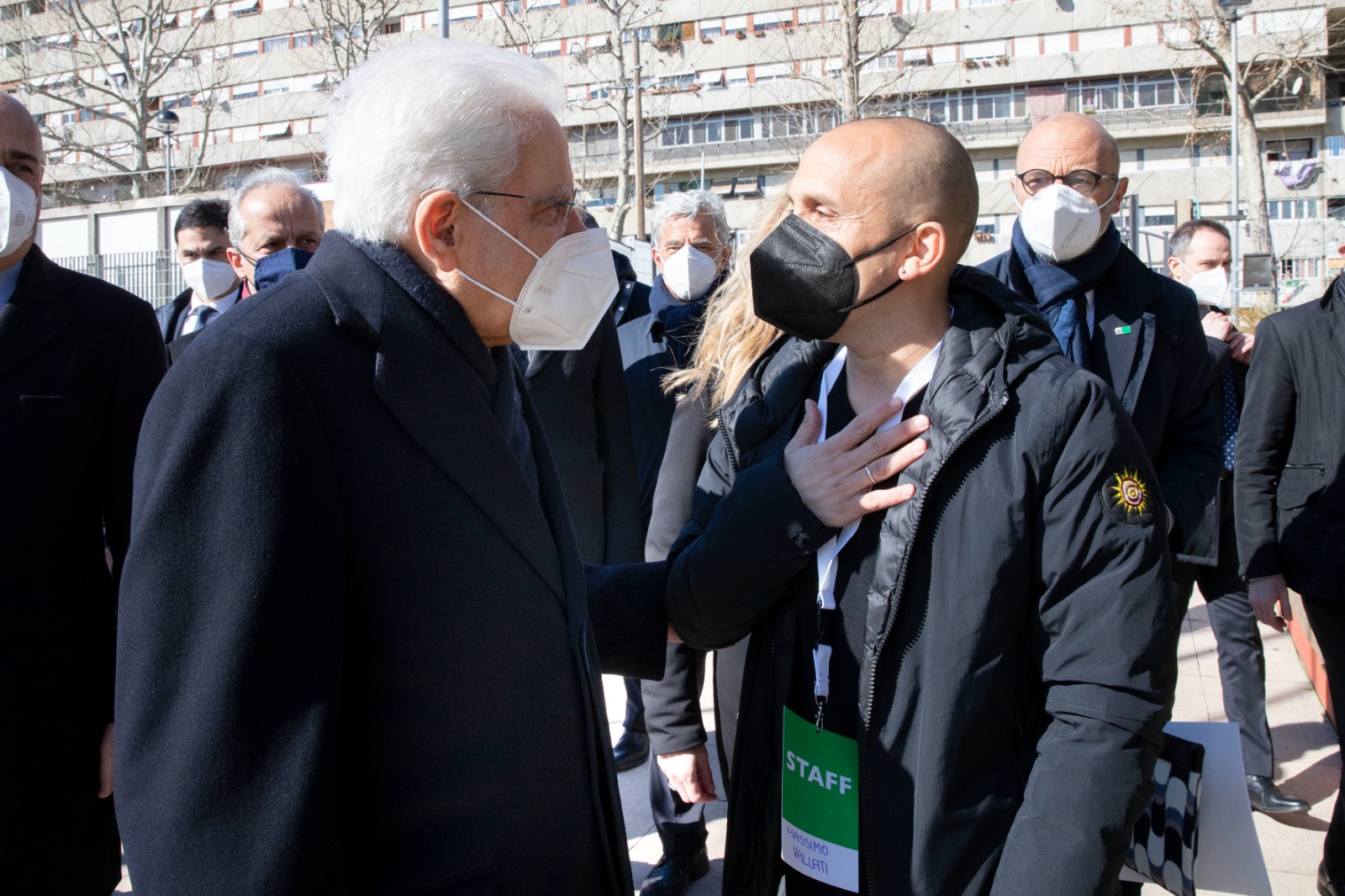
Massimo Vallati is the president of Calciosociale: a flower blooming among the concrete of one of Rome’s toughest suburbs, Corviale. A model, a revolution. Massimo shared with us this beautiful story of rebirth and hope.
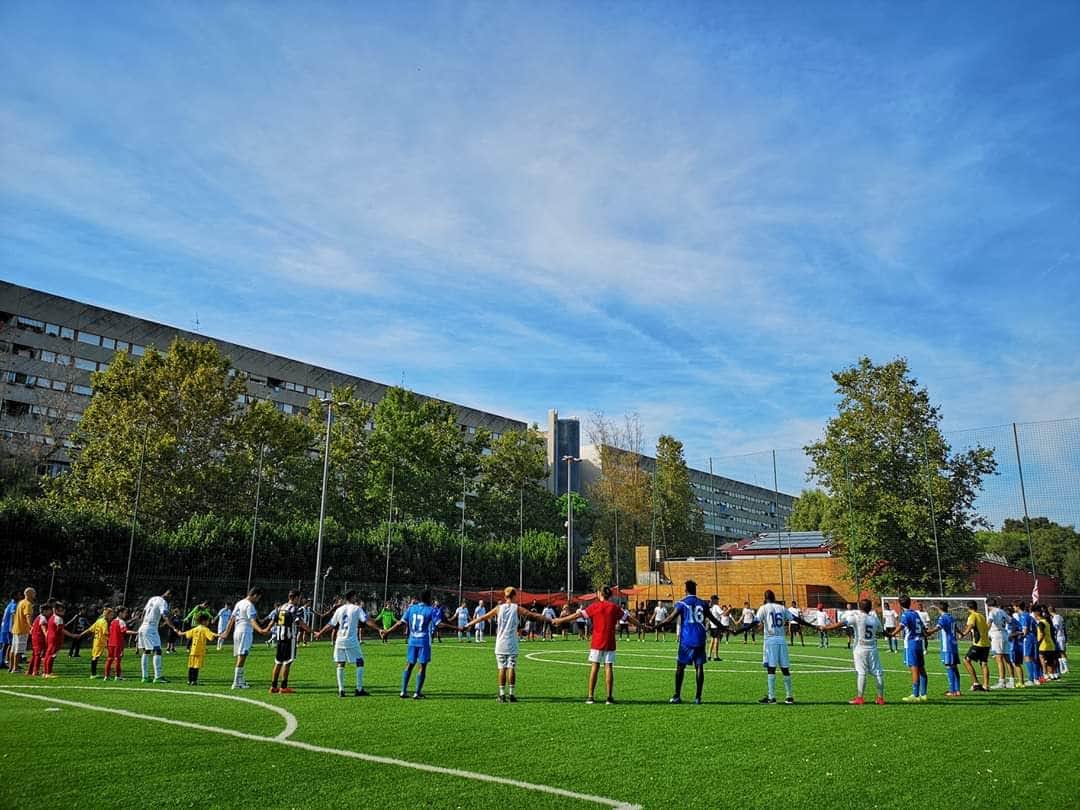
Calciosociale is much more than a sports project: it is a revolution born in the heart of the Roman neighborhood of Corviale, where football becomes a tool for inclusion, justice, and rebirth. Created by Massimo Vallati, Calciosociale has transformed an abandoned field into the “Field of Miracles,” a place where men and women, children and the elderly, people with and without disability play together to learn to cure for the other (disabilità giocano insieme per imparare a custodire l’altro).
With the idea of changing the rules of football to change the rules of the world.
How was Calciosociale born?
With the idea of changing the rules of football to change the rules of the world.
In what way?
I grew up on bread and football as a kid. In the 1980s, it was all about Panini stickers, football school, and the stadium. But football was starting to become the huge social phenomenon it is today, with corruption creeping into the beauty that once filled my eyes. In 1985 came the Heysel disaster death broadcast live on TV over a match. In the stands, people were fighting; political extremism was spreading. Drugs were entering the scene, and on local pitches, agents hungry for profit hovered around.
Did you feel an inner conflict?
Which led me to the decision to quit football. For many years, I didn’t follow it in any form. Until one day, as a catechist, I observed a parish tournament.
What did you notice?
That the same rule governing the outside world prevailed there too: the domination of the strong over the weak.
Was that the spark?
I went to the parish priest and told him I wanted to write different rules and organize a football tournament based on them. He agreed, and that’s how the adventure began the challenge of social football. At first, there were four teams, then eight, then sixteen and soon we needed a space where the project could truly grow. That was between 2005 and 2006.
When were you able to create your own football field?
The story of the field was a long battle. One of civic engagement, growth, and rebirth. We first tried to build it in the Monteverde neighborhood, but eventually we arrived in Corviale, one of the toughest areas of Rome. There, we found an abandoned, ruined space controlled by criminals. That’s where we began to build what we would later call the “Field of Miracles.”
On your own?
We started a fundraising campaign, along with promises of public fundings that never came. We ended up working in a self-managed way, on our own, and had to protect the space even sleeping there at night to prevent it from being taken over.
How did you build a relationship with the Corviale community?
The Calciosociale project became intertwined with supporting the people of Corviale. Even before we were able to build our own space, we brought the neighbourhoods children around Rome to experience social football personally.
When were you finally able to build the field?
In 2014, after many struggles. We inaugurated it with an extraordinary event: the exhibition of the World Cup trophy before the World Cup in Brazil. It was a tribute to how we had managed to transform lives that seemed destined to fall.
What did it mean to have your own field?
Once the “Field of Miracles” was up and running, we began working along two main lines: bringing social football to the rest of Italy and creating opportunities for change within the Corviale area with the Field of Miracles serving as the driving force behind the neighborhood’s rebirth.

Has it been thus?
Yes, because through social football, funding arrived for projects in the neighborhood for buildings and urban redevelopment initiatives.
What are the rules of Calciosociale?
They are all aimed at teaching values. The first rule is that men and women, seniors and children ranging from the age of 9 to 90, people with and without disabilities can all play together. The goal is to celebrate differences through inclusion. Every team has the same potential to win, thanks to a coefficient assigned to each player. Unlike in traditional football, where the richest or strongest usually wins, in social football “only those who care for others win.”
Which has become your slogan, right?
The one who wins is the one who cares for others, who nurtures their potential. Who values their abilities within a spirit of justice and cooperation.
Is there a captain on the team?
The team leader is an educator, focused on fostering the personal growth of everyone involved. Decisions are made collaboratively with others, including the assistant educator and the youth captain. The goal is to develop leadership and coaching skills.
Who referees the matches?
There is no referee. If a foul occurs, the teams must reach an agreement on how to resume play. It’s a powerful exercise in democracy that trains one’s sense of responsibility. When a team wins or loses, there’s no one to blame unlike in regular football, where the referee often becomes the scapegoat.
Other rules?
No player can score more than three goals per match this encourages attention to others. Scoring is great, but helping others score is just as rewarding. There’s no bench: everyone is a starter, with substitutions every five minutes, reinforcing the idea of fairness.
How many players are on each team?
Eight players per team, on a seven-a-side pitch the right space for certain age groups and for people with disabilities. It’s the ideal setting to develop the pedagogy of social football.
Are there other significant moments?
At the beginning and end of each match, there’s a moment of sharing in a circle at the centre of the field. It’s an important ritual of communication and listening, where everyone can express something to the others. We are something together with others and that’s another key aspect of social football.
Is there a third half?
Calciosociale matches aren’t played only on the field: the teams continue to challenge each other through community activities, earning points for the final ranking while developing a strong civic spirit and values such as honesty, justice, and empathy. Near the “Field of Miracles,” there used to be an illegal dumpsite that we reclaimed through these “off-field” matches. We believe that when a child takes part in the rebirth of a neglected area perhaps once controlled by crime a vital seed is planted within them. If nurtured through continuous work, that seed can help them care for what truly matters and become an agent of change.
How old is Calciosociale?
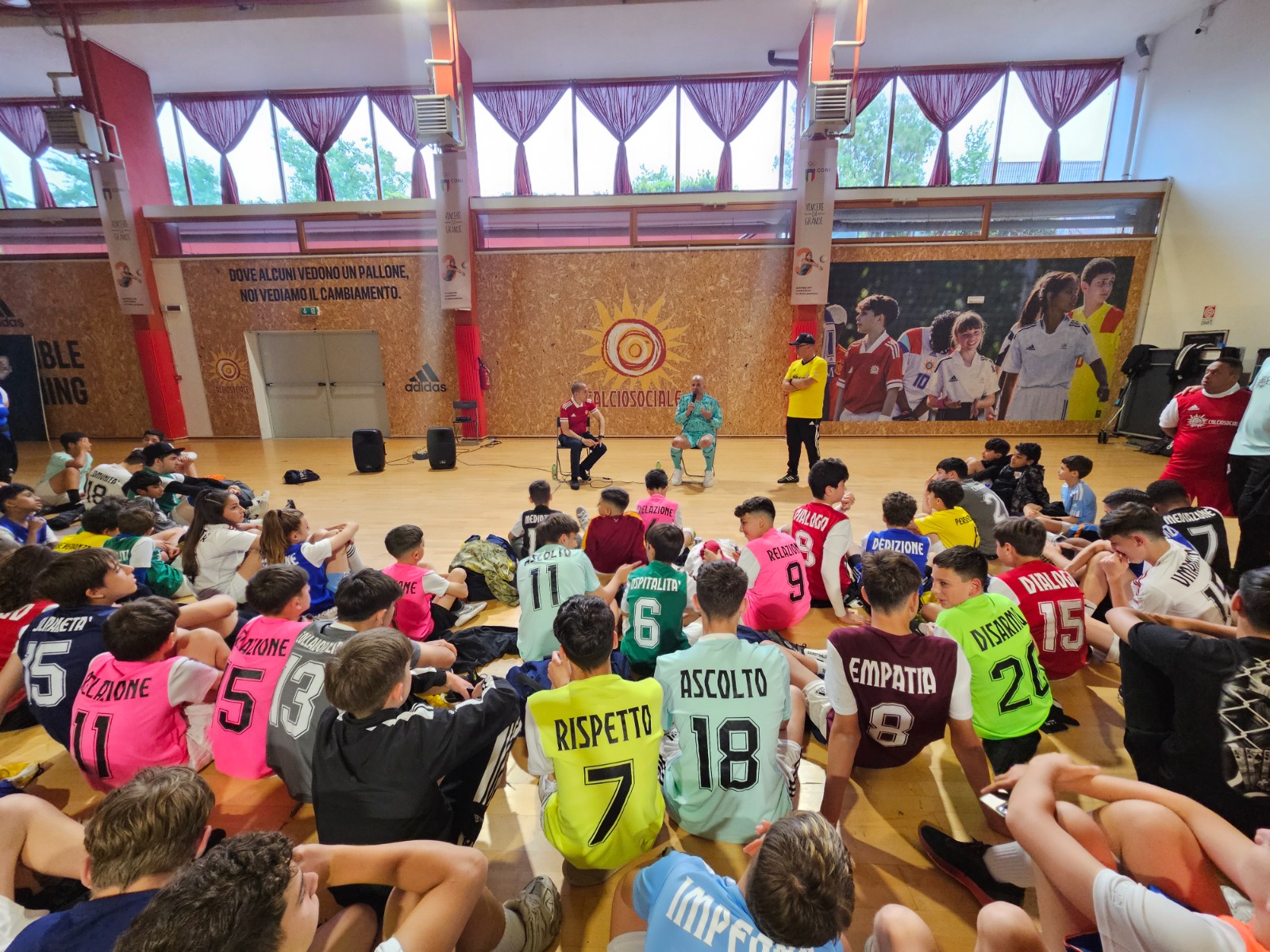
Twenty years, of which sixteen of them in Corviale. Twenty years filled with international recognition and university theses on our experience, along with projects connected to football: nutrition, the environment, and social anti-mafia initiatives. Not to mention the “social couch” experience, where young people meet weekly with educators and facilitators to discuss specific topics. Over these twenty years, always with the goal of fighting the cancer of modern football, the Miracoli Football Club was born marked by the inauguration of our full-sized pitch in the presence of the President of the Italian Republic, Sergio Mattarella.
A football school?
The first in the world to adopt the Calciosociale methodology a football school as a training ground for life: to educate a boy through a 360° perspective.
A recent chapter in the Calciosociale story was written just a few days ago, with the anti-mafia grandstand. What is it about?
It’s the first anti-mafia stand in Italy designed to promote ethical themes by transforming the violent chants of football terraces into positive messages. Stadium stands are among the most significant gathering places for the youth today, especially after the decline of parish youth centres and other youth movements. We denounce the current state of these stands marked by decay, criminal influence, and political extremism.
Carrying forward this beauty and going against the current with such determination is not easy. There have been, and still are, very difficult moments
In 2015, a year after inaugurating the “Field of Miracles,” there was an arson attack aimed at destroying it because of our work to keep kids off the streets. Other rehabilitated areas were systematically destroyed. About a year ago, my car was set on fire, and someone entered the field intending to target me. I was placed under police protection for exposing things people pretend not to see and for fighting to take space away from crime. We broke an existing balance — a crucial step for change — and we are paying the price.
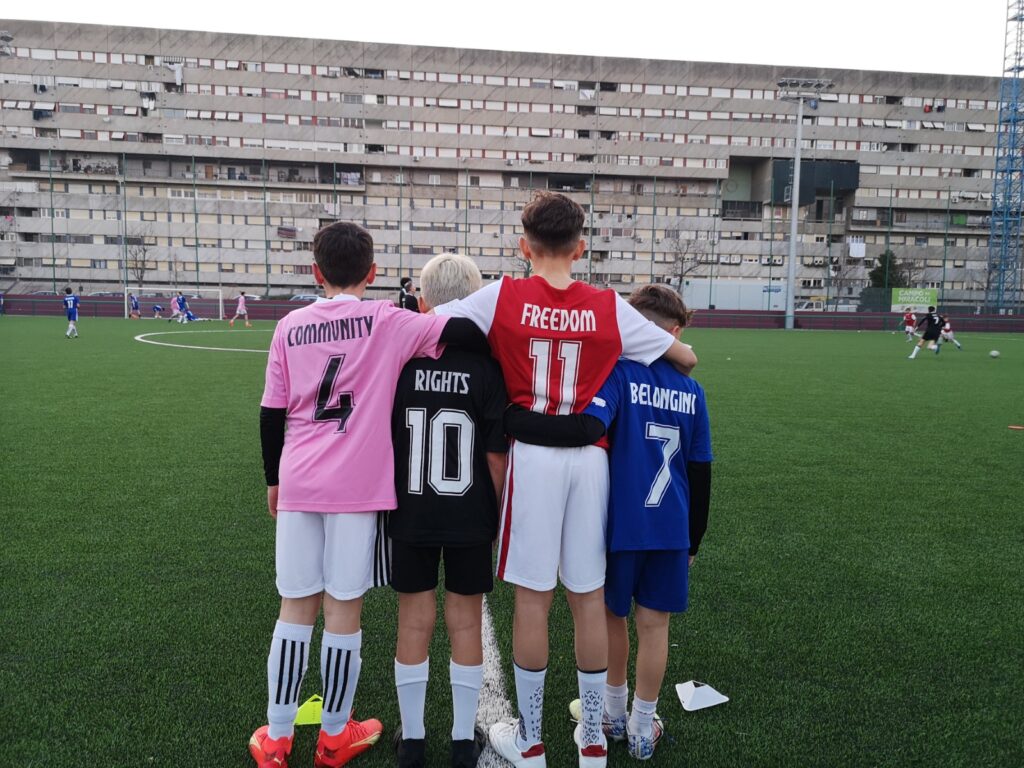
Returning to the beauty of it, the players’ jerseys don’t display names they display the values of Calciosociale
Every year, there’s a theme guiding activities both on and off field — which is reflected in the teams’ names. This year, the teams honour men and women who dedicated their lives to justice: Falcone, Borsellino, Anna Politkovskaja, Martin Luther King, Mandela, among others. On the field, their names appear on the jerseys. Off field, players reflect on their work, its relevance today, and how these figures embody “living” values.
What qualities does someone need to help keep the Calciosociale movement going?
They need to be a person with great sensitivity, motivation, and strength, because it’s easy to give up when faced with the challenges of the environment in which we operate.
What have been the greatest satisfactions and most encouraging responses over the years?
Last Monday, when I saw the new stand full of children and youth shouting, “the stand cheers and mafia is destroyed,” my heart was full of joy. Witnessing enthusiasm tied to such a powerful social value rewards all the effort, worries, suffering, and setbacks. The same feeling comes when an illegal dumpsite is transformed into a space for the community. We still have a lot to do, but we are eager to do it both in reclaiming spaces and in transforming Italian football schools, nearly as numerous as the middle schools in the country.
What advice would you give to someone who wants to start a project like yours?
They should quickly get used to being constantly attacked for their determination to bring about positive change, for wanting to move away from the culture of insults during matches, from a football steeped in violence, and from a system that perpetuates these behaviours.
How important is it for the media to support you?
It’s crucial because criminality thrives on silence and wants stories like ours to be marginalized and isolated. The fight is carried out together, also by awakening consciences and shaping the civic awareness of society.