

 EN
EN
Rete Lampedusa: Changing the ‘Toxic Narrative’ Around Migration to Tell True Stories
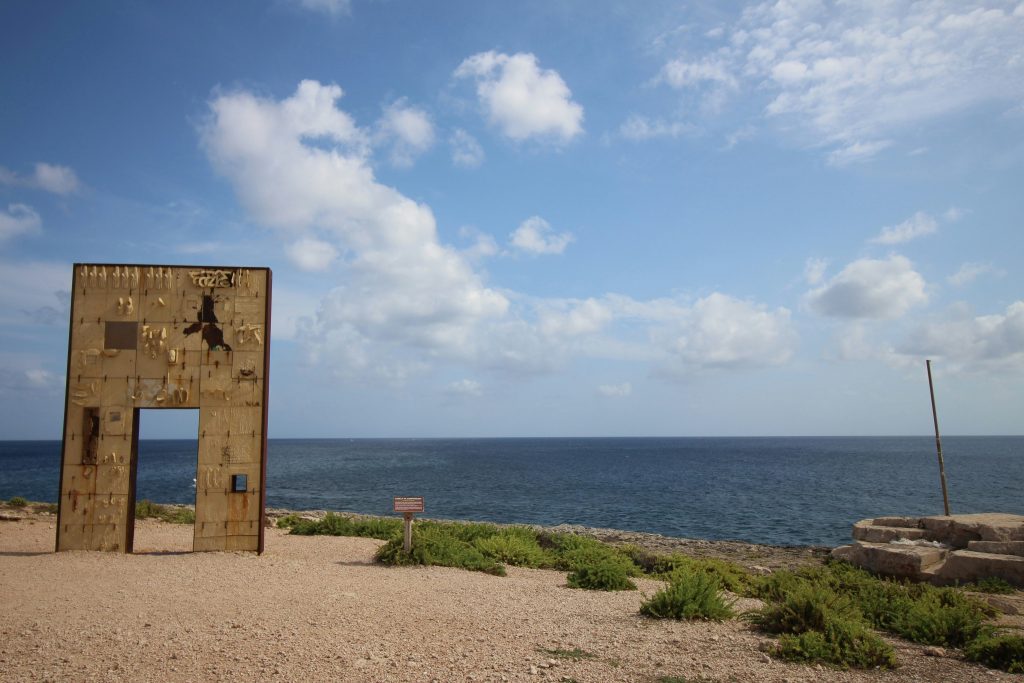
Rete Lampedusa advocates for a new way of tackling migration by fighting prejudice and hate speech in favour of a narrative based on truth, human dignity, and migrant rights.
Agostino Sella, President of Don Bosco 2000, created the national network Rete Lampedusa to help tell the story of migration and migrants in a different way. Pietro Bartolo uses a work of art by Mimmo Palladino to discuss the project.
The artwork Bartolo speaks in front of is called Porta d’Europa (Gateway to Europe) and sits on the southernmost coast of the island of Lampedusa – and therefore on the southernmost coast of Italy and of Europe itself.
A first aid medic in Lampedusa for more than thirty years, Pietro Bartolo saw firsthand the pain these migratory journeys cause. On 11 July 2026 he made this video in front of Palladino’s piece, which he says ‘represents the history of migration’.
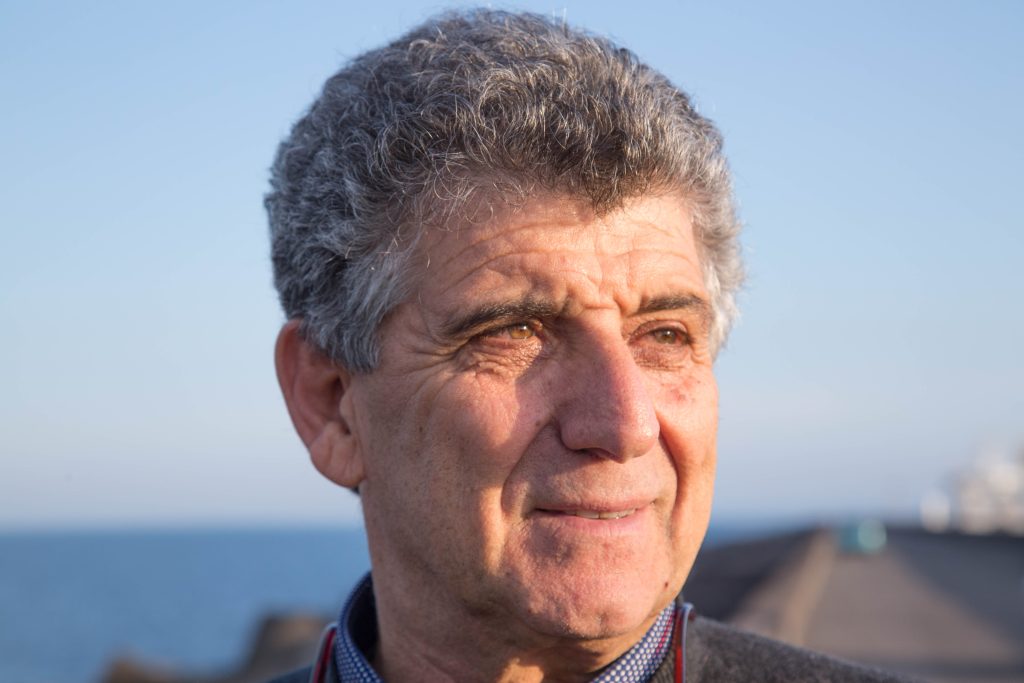
Pietro Bartolo – Rete LampedusaThe video was created to discuss a project that was officially announced just a few days later. Their goal was to change the way people think about migrants, steering the conversation away from political interests and back towards dignity and humanity.
Rete Lampedusa: Telling Stories for the Truth
In front of this gateway Pietro Bartolo explains how Rete Lampedusa ‘brings different organisations together to speak with one unique voice’ in order to achieve concrete goals like the ‘creation of employment pathways’ for migrants. He talks about the importance of telling stories of migration in a constructive way.
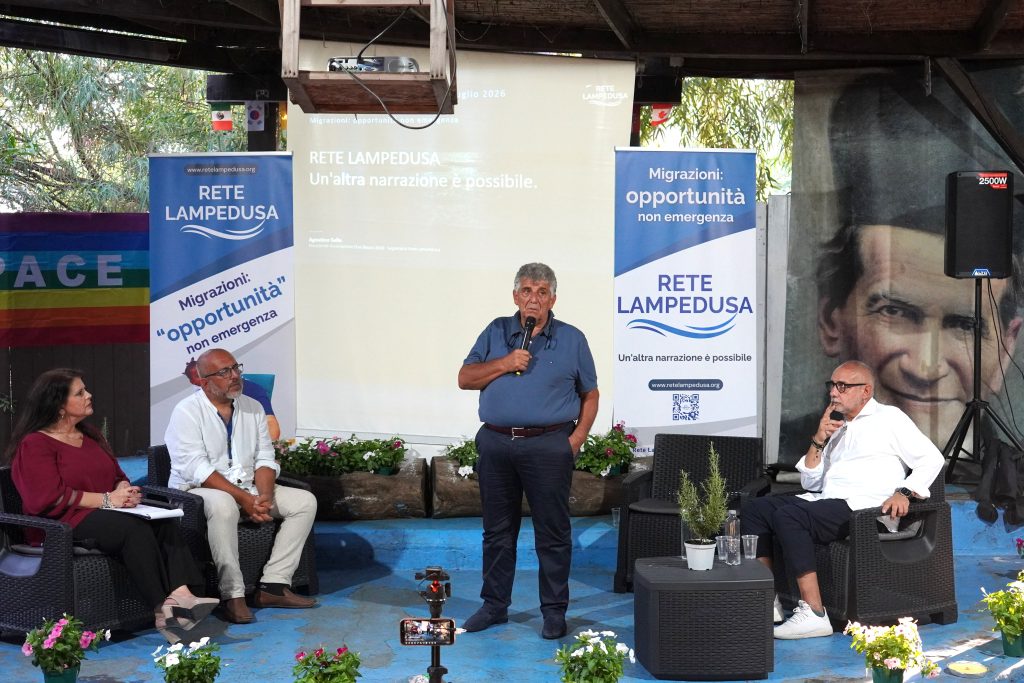
Rete Lampedusa was then officially announced on 15 July 2026 in Rome. The event took place at the Istituto Maria Ausiliatrice delle Salesiane di Don Bosco faith school, and Pietro Bartolo spoke on the sidelines. On camera with Cittanuova.it he discussed the ‘toxic narrative’ around migrants, which has given rise to ‘a climate of hate, hostility, and prejudice about people no one ever sees with their own eyes’. Hence the importance of ‘changing the narrative and telling true stories’ in order to talk in a more informed way about the lives of people who ‘are fleeing wars, poverty, and climate crises’.
Bartolo spoke about ‘migration managed with intelligence, rationality, foresight, as well as humanity – considering we are talking about people, about human beings’. Rete Lampedusa is actively working to establish ‘standard routes that can prevent human trafficking and deaths at sea’.
As you can read on their website, Rete Lampedusa ‘fills the gap with competency and humanity, bringing the third sector together with the ecclesial world and secular society in a unique, nation-wide cultural and operational movement.’
Pietro Bartolo: Observations and Questions from a Man Whose Life Has Also Been Chronicled on Film
In his interview with Cittanuova.it Bartolo asks himself a very human question: ‘Do you do all you should, Pietro?’ He then explains the meaning behind his pondering: ‘Because I feel a great sense of responsibility, more than other people. Because I know what happens. I was there, in the trenches in Lampedusa, and I know how things really are.’
Pietro Bartolo’s work in Lampedusa has also been chronicled in two films: the first is a documentary by Gianfranco Rosi called Fire at Sea, which won the Golden Bear at the Berlin Film Festival.
The second is called Nour and was directed by Maurizio Zaccaro. The protagonist, played by Sergio Castellitto, says in one of the many touching sequences of the film: ‘I like to imagine humanity as one body: if you hurt an arm, or a knee, the rest of the body cannot stay healthy. If one part of humanity suffers, the rest of humanity cannot have peace of mind.’
His remarks echo the ancient verses of Persian poet Saadi Shirazi – which can also be found inside the UN’s headquarters – and are incredibly important because they speak about humanity and living as one united country. They speak about reciprocity, about connection and encounter becoming exchange, about a solidarity among human beings that benefits everyone.
Rete Lampedusa: ‘The Mediterranean is a Cemetery’
On the network’s website there is a statement entitled, ‘Courageous Truth in the Face of Tallying up Horrors’.
The first section speaks tragically about the Mediterranean: ‘The Mediterranean is a cemetery. This statement is not meant metaphorically, nor as just another political slogan, but as a statement of literal, documented, inescapable fact – a fact that Europe must live with every day. Between 1991 and today over fifty thousand people have lost their lives while attempting to reach our continent. More than thirty-five thousand people have died or disappeared since 2014, including at least four thousand children. This tragic practice of tallying up horrors, however, only scratches the surface of a much deeper silence, filled with ghost ships and shipwrecks without witness.’
The statement goes on to explain the importance of Rete Lampedusa in such a serious and dramatic context: ‘In the face of a paralysed Europe – divided between the shouted rhetoric of invasion that is used as electoral capital and the tactical silence of people afraid to lose favour – Rete Lampedusa was created to put a stop to this apathy and give voice to people speaking truthfully and pragmatically.’
This is just the first part of Rete Lampedusa’s manifesto, which can be read in its entirety on their website.
Translated into English by Becca Webley