
 EN
EN
Together to Care: a roadmap to build a just and more sustainable future
Together to Care is a document that narrates experiences, projects and good practices from all over the world that testify the youth’s commitment to caring for people, the planet and the common good.
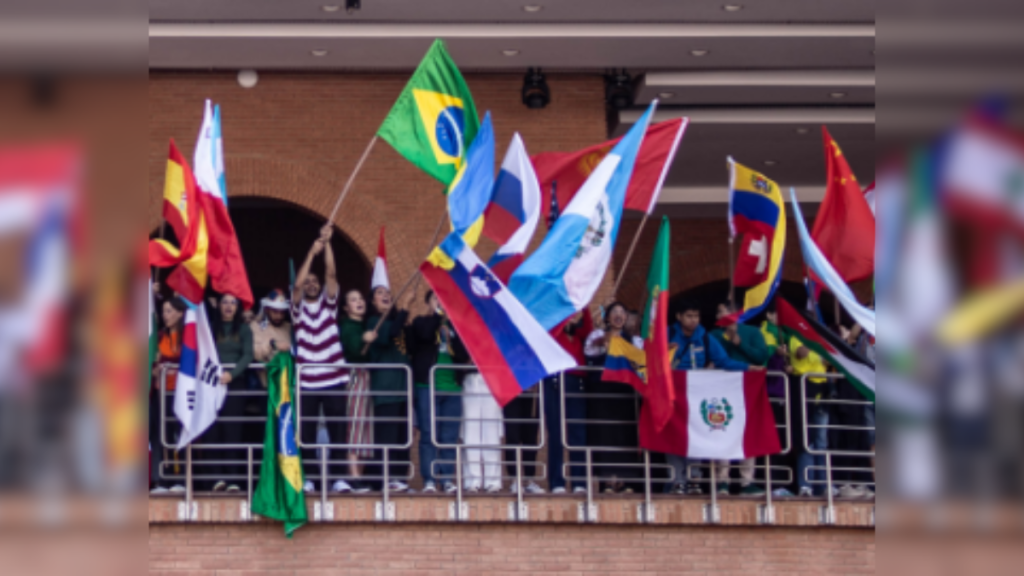
There is a beauty that gives strength and hope in the publication of the document Together to Care: for our human family and our common home. It was produced by the Youth for a United World of the Focolare Movement (Y4UW, one of the promoters of the United World Project), and it is a report on the work of these youth together with New Humanity NGO and the Focolare Movement itself, about a year after the Genfest, which in 2024 brought together, in Brazil, more than 6,000 Youth for a United World. Many of the initiatives described in the document Together to Care were born from this event.
With Together to Care, the youth for a united world reaffirm their commitment to peace, universal fraternity, human dignity and care for nature. They begin by thanking, as already expressed through a letter of October 2024, the Secretary-General of the United Nations: António Guterres, for his commitment in favour of the youth and for his leadership in addressing global challenges.
At the United Nations, from which Y4UW feel supported, these youth reiterate their desire to make a contribution. Alongside them, they stand to build a more sustainable, equitable and peaceful world, in accordance with the visions expressed in the Pact for the Future (Resolution A/RES/79/1) and in the Declaration on Future Generations.
Together to Care also tells us about local communities spread throughout the world and about the global and intergenerational network of people connected to the Focolare Movement. In different areas, these communities live and work for the common good inspired by the Golden Rule: “Do to others what you would like to be done to you.”
The three sections of Together to Care and the words of Chiara Lubich
The Together to Care document is divided into three sections: Work Together, Build Together, Dream Together. Composed in this way, it shows how, all over the world, many people are already committed to building a united world, in different ways. We are told that each community addresses concrete needs, making the most of talents and abilities, in the conviction that fraternal love is the answer to the challenges of today’s world.
Chiara Lubich, founder of the Focolare Movement, said these words: “it is by starting from small local problems that a moral conscience capable of addressing global problems is formed”.
The work of the communities
In the “Work Together to Care” section of the document, the initiatives of the United World Communities, one of the pillars of the United World Project, are illustrated. Launched during the 2024 Genfest, these bring together members of Y4UW and New Humanity in a global network across all five continents: a network active in eight essential areas of human life:
- Economy and work
- Interculturality and dialogue
- Peace and human rights
- Health, sports and ecology
- Art and social commitment
- Education and research
- Communication and media
- Active citizenship and politics
The communities offer the possibility of contributing to a more united, more fraternal and sustainable united world by putting one’s passions, talents and personal inclinations into the game. The work of the communities brings together different cultures, beliefs and generations, promoting real change starting from local realities.
Identity and objectives of the eight communities
The Economy and Work Community promotes a just and sustainable economy that values people and the planet through initiatives on decent work and social inclusion. The document talks about Liberù dae sa Gherra: an association that in Sardinia (Italy) promotes the economy by refusing to produce weapons.
The Interculturality and Dialogue Community promotes encounters between people of different cultures, religions and traditions, fostering mutual understanding, cooperation and the building of inclusive societies.
The Peace and Human Rights Community works for the promotion of justice, reconciliation and respect for the dignity of every person.
The Health, Sports and Ecology Community promotes a healthy and sustainable lifestyle, recognizing the deep connection between personal well-being, social relationships and environmental protection. Through sports activities, health prevention programs and ecological projects, it encourages responsible behaviours towards oneself, the others and the planet.
The Art and Social Commitment Community values the expressive power of the arts as a tool for personal and collective transformation. Music, theater, visual arts and other creative forms are used to raise awareness of social issues, foster inclusion and give voice to the experiences of communities.
The Education and Research Community promotes educational pathways and study projects oriented towards the integral development of the person.
The Communication and Media Community works to spread a culture of ethical, responsible and participatory information. Through journalism workshops, digital platforms and publishing projects, the youth are trained to use the media as tools for dialogue, truth and peacebuilding.
The Active Citizenship and Politics Community, finally, encourages responsible engagement in public life and decision-making processes. It promotes the participation of the youth in local and national institutions, dialogue with political decision-makers and the development of leadership oriented towards service. Political action is understood as an expression of co-responsibility towards the common good.
“Build Together to care”
The Together to Care document also talks about the “Build” section, which presents the main international initiatives promoted to strengthen dialogue, cooperation and the formation of global networks committed to building a more just and sustainable world.
Among these is the “International Congress on Relational Sustainability”, held simultaneously in Rome, Italy, and Córdoba, Argentina, in October 2024, which involved scholars, social workers and the youth from different cultural contexts.
There was also “Cities, Communities, Care. Youth in Action for Sustaining Peace”, in Nairobi, Kenya, conceived as a significant contribution to the 80th anniversary of the United Nations. The international event, held from November 10 to 12, 2025, brought together 200 young changemakers from Africa and other continents.
Another important event was “Raising Hope: Shared Hope for Climate Justice”, held in Castel Gandolfo, Italy. The meeting, dedicated to the theme of climate justice, took place in the context of the celebrations for the tenth anniversary of the encyclical Laudato Si’, as a space for reflection, dialogue and common commitment to the protection of creation.
Another precious moment was “Amazonia Viva Project: A Journey Toward COP30”, in Belém, Brazil. This project represents a journey of accompaniment towards the Conference of the Parties COP30 and is structured around three main areas of action: promoting community leadership, promoting community entrepreneurship, and amplifying Amazonian voices through forums and networks.
Another initiative worth mentioning was the meeting “Banzeiro at the Ecumenical Maloca: Amazonian Good Living”, carried out with various partners and inspired by Laudato Si’, with the aim of promoting interreligious dialogue, cultural exchange and reflection on economic resilience and climate justice.
Finally, there is “One Humanity, One Planet: Synodal Leadership”, an international program conceived as a global laboratory for political and social formation.
“Dream Together to care”
The third section of the Together to Care document is “Dream”, that is, “Looking to the future: towards relational sustainability”. This section reaffirms the commitment to recognizing relational sustainability as a central principle of the common good and to establishing a high-level UN Forum dedicated to the youth.
The document recognizes the difficulties of the current international institutional order, marked by wars, famines, climate change and systematic violations of human rights. Faced with these challenges, the importance of dialogue, responsibility and the personal and professional commitment of each individual is reaffirmed. The document expresses the desire to contribute to a “bottom-up” multilateralism, based on the action of civil society, movements and NGOs.
The conclusions of Together to Care
The document reaffirms the commitment of the Youth for a United World with the support of New Humanity and the Political Movement for Unity, through the United World Project, in a context marked by complex challenges.
Together to Care emphasizes that theory is not enough: real change comes from the joint action of people, communities and institutions.
The intergenerational experiences, projects and partnerships presented demonstrate that a united world is not only possible but is already being built. Every initiative of the United World Communities contributes to the creation of resilient, inclusive and vital societies.