

 EN
EN
Decent Work and Much More: Six Global Initiatives Transforming the Economy
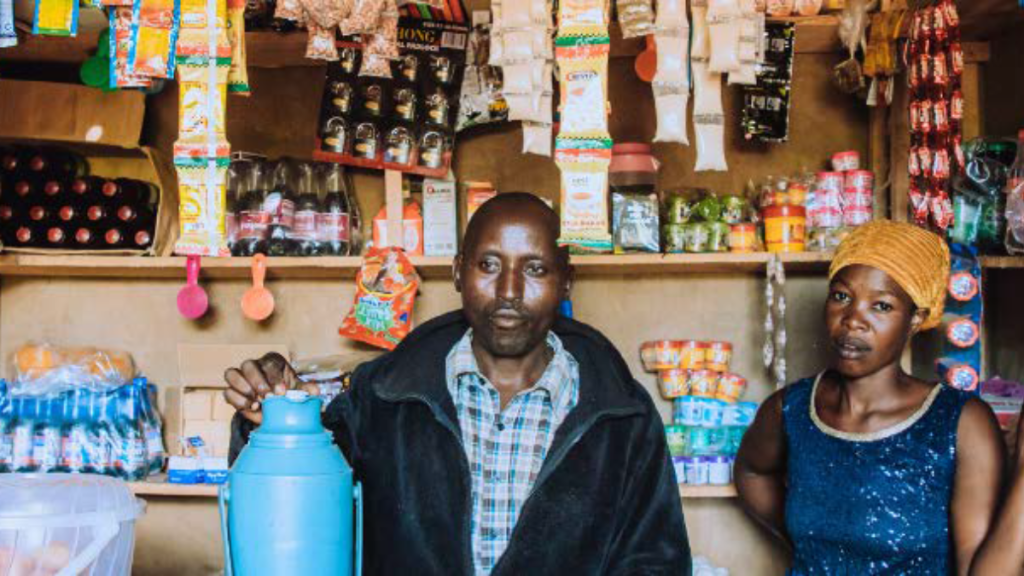
Six projects across Italy, Burundi, Ecuador, the Philippines, Syria, and Brazil are demonstrating how the economy and decent work can become concrete tools for peace, inclusion, and community regeneration.
Guided by the belief that social economy only acquires meaning when it has an impact on people’s everyday lives, United World Project’s Economy and Work Community shines a spotlight on stories where production and decent work have become the driving forces behind local development and conservation efforts.
These six stories from Italy, Burundi, Ecuador, the Philippines, Syria, and Brazil feature in the official Together to Care report, and they offer an alternative vision for the economy, with projects that are as simple as they are powerful.
Italy: Companies Choosing Not to Manufacture for War
In Sardinia a group of residents decided not to just sit back and do nothing in the face of a troubling reality. Oil, chemical products, and weaponry are among their island’s principal exports. Refusing to earn a living manufacturing weapons, they created the association ‘Liberù dae sa Gherra’ (‘Free From War’ in Sardinian dialect).
Beginning in 2021 with just 30 small and medium businesses, it has become a vast network of over 110 companies, professionals, and tradespeople committed to transforming the environment and creating a culture of peace. Participation involves reviewing everything, from banking and financial services used to working conditions and environmental impact. To support this transformation, the World Free Service cooperative offers strategic and marketing consultation, enabling each company to grow at its own pace. Today the Sardinian initiative has gone beyond national borders, making its mark in countries like Belgium and France.
Burundi: Community-Based Microfinance Where Trust Is the Guaranty
For over two decades AMU (Azione per un Mondo Unito, or Action for a United World) and its local partner CASOBU have been supporting the ‘It Is Possible’ project, a community-led microfinance initiative that directly benefits over 10,000 people across the five provinces.
Through the SILC (Savings and Internal Lending Communities) groups, families no longer have to depend on external funds or loans; they simply add their savings to a communal fund, which is then used to grant microloans by the group, for the group. This system has financed tailors and dressmakers, pedicab services, small shops, and local agricultural work. Since traditional bank guaranties are unattainable for many, mutual trust and shared responsibility have become the real financial support – not only strengthening the economy, but also the social fabric of the country.
Ecuador: Young People and Agroecology Team up Against Organised Crime
In the Esmeraldas province of Ecuador, deforestation, mangrove loss, and pollution are gravely compromising the population’s food security. This environmental vulnerability is coupled with an urgent social issue: the constant threat of young people being recruited by organised crime and drug trafficking networks.
In response, a project called ‘Sunrise’ was created with the help of the region’s youth communities. The initiative combines sustainable entrepreneurship training with the development of ecological clubs in ten different locations. Around 300 young people are taking part in direct action related to mangrove reforestation, coastal clean-ups, and river restoration. By recovering local ecosystems, they are not only repopulating key species for local agriculture and fish, but they are also providing alternative, decent jobs – as well as technical training – for 60 young entrepreneurs, offering a path in life far from violence.
The Philippines: a Christmas Tradition Becomes a Bridge of Solidarity
What started in 2009 as Youth for a United World’s emergency response to Typhoon Ketsana transformed into a permanent pillar of the community. The ‘Noche Buena Project’ (‘Christmas Eve Project’) reimagines the traditional Philippine Christmas Eve dinner, delivering hampers with essential food items to families in extremely vulnerable circumstances.
Over the course of fourteen years the project has grown from its initial 50 families to over 1,300 households across the country. Through donation campaigns, Christmas letters, and benefit concerts organised by the young people themselves, the initiative does not just meet an immediate need for food, but it also helps bridge social divides and renew a sense of community sharing and support.
Syria: Making Businesses to Stay and Rebuild Through Reciprocation
After fourteen years of armed conflict, the impact of the 2023 earthquake, and the suspension of international food aid to the country, the Syrian population is dealing with average wages of less than 30 dollars, while the average cost of living is over 300 dollars. In the face of this issue, AMU and Seeds of Hope offer a path of autonomy and dignity: the three-year programme ‘RestarT: Ripartire per Restare’ (‘RestarT: Start up to Stay’).
The initiative provides technical training and start-up funding for setting up microbusinesses. However, its most innovative feature is the system of reciprocation: entrepreneurs repay 50% of the loan in cash, and the remaining 50% through acts of solidarity within the community. For example, by offering products at reduced prices, running training courses, or creating jobs for other locals. After a 90% success rate during the pilot phase in Homs, the RestarT initiative was extended to Aleppo and Baniyas, financing dozens of new projects and integrating sustainable technologies, such as solar panels, in 2024.
Brazil: Training New Generations in the Economy of Communion
For economic change to be sustainable, a profound cultural and educational transformation is also necessary. The International School of the Economy of Communion returned to Brazil with this goal in mind, bringing together 80 young people and experienced entrepreneurs, primarily from Latin America.
Organised through an alliance formed between the Economy of Communion (EdC) and United World Project at Genfest 2024, the School has served as a space for experimentation, intergenerational dialogue, and hands-on experience. During the meeting participants worked on creating concrete tools to eradicate poverty, to advocate for decent work, and to apply the principles of fraternity, justice, and regeneration to their own professional projects.
Translated into English by Becca Webley