

 EN
EN
Peace Together Uganda: Having Fled the War at 12 Years Old, He Now Devotes His Life to Rebuilding the Country
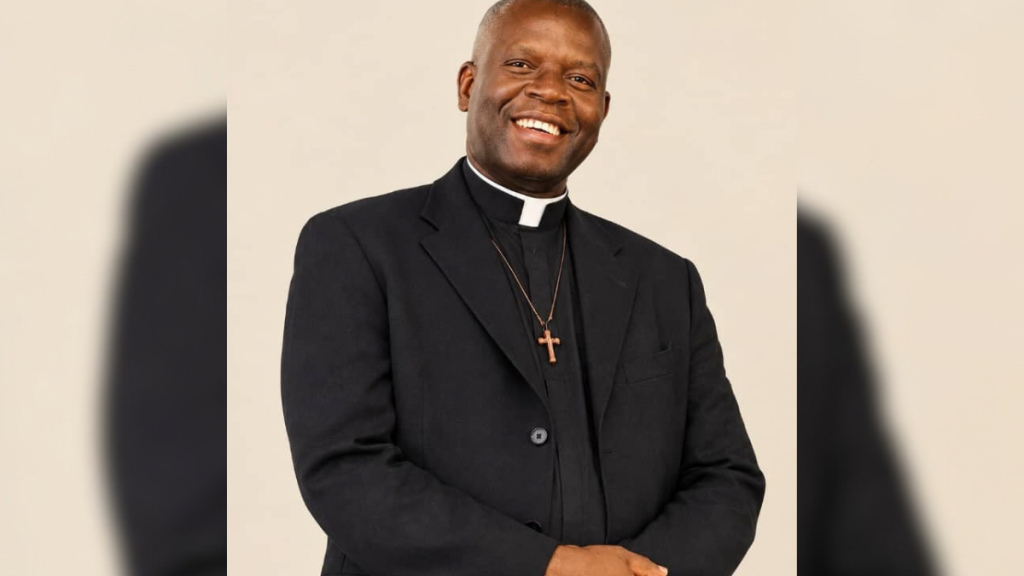
Guerrilla rebels tried to enlist him when he was still just a child. Today Leonsyo Akena – priest and founder of Peace Together Uganda – advocates for education, interreligious dialogue, human rights, reconciliation, and the coexistence of communities marked by decades of violence.
Father Leonsyo Akena shares his powerful story of peace, human rights, and other wonderful things. Also known as Ribamoi, the Ugandan priest nearly became a child soldier, but instead steered his personal and spiritual mission in the direction of love, unity, care for the most vulnerable among us, dialogue, and hope for a future of harmony among different populations, tribes, and peoples. To tell us the story in his own words, we asked about when he almost became a child armed with a machine gun.
Father Leonsyo, how did you manage to avoid that?
I was 12 in 1986 when the war began. The rebels cooked in my family compound several times, and my village was raided by the Lord’s Resistance Army (LRA). One day, when they abducted most of the boys my age in the village, they cooked in my family compound again. A rebel commander asked me to join the rebel group. I refused and ran to report it to my dad, who was sitting near their top rebel commander. Immediately Dad reproached the commander and told him boldly that I am his only son and he would have to kill him before he allowed me to be abducted. He was lying to the commander, since there are three boys in our family, but I am the youngest.
You managed to persuade him, then?
The prayers of my dad – he is a catechist who prayed the Rosary daily at home – and his courage to die for me saved me from being abducted. But I had to leave the village and went to live with Pierina, my elder sister, in a bigger town. From there I began to take care of the children who, like me, fled the village in fear of the rebels. Italian Comboni missionaries paid for my education in the seminaries for 14 years until I became a Deacon in 2007. At that time I founded a peace project called Peace Together Uganda (PTU), a nonprofit organisation, and in 2008 I became a priest.
What else do you remember about the conflict?
I saw people killed by axes and guns, or cut to pieces. I slept alone in the bushes at night, under trees and rain. I experienced hunger. I experienced trauma and profound psychological anxieties; many times I lost hope in life and in the future. Every night we had to abandon the village and flee into the forest for safety. Many of my friends were abducted and never returned home. Rebels attacked civilians for food and wanted to abduct children and young people to recruit them into their army. The government abused and would kill civilians when rebels attacked, so civilians found themselves at the centre of the terror. They were divided and became enemies: some supported the rebels, while others supported the government. Today northern Uganda is still nursing that same hatred and social conflict.
The Comboni missionaries significantly altered your destiny. What were their principal teachings?
Comboni missionaries worked with my parents for over 50 years because my parents were catechists and local missionaries. I learnt from my family, as well as from the Comboni missionaries, the virtues of: mercy for the poorest, dialogue between the rebels and the government, ecumenism, and interfaith communication. Most important was the virtue of providing concrete charity to children, sick people, the elderly, and the marginalised. Getting an education was deeply revolutionary to my life mission.
Can you give us an overview of the journey you took with the Comboni missionaries?
They adopted me, took me in at the parish, and silently mentored me to become a good priest in the future. They trusted me with the responsibility of caring for the children who came from different villages to sleep in the parish every evening. I would send food, money, clothes, medicine, sacraments. I offered both spiritual and material support to the poorest among us, to widows, to orphans, to the elderly. I later realised that God was preparing me to become a priest who would continue to promote their charism. Now it is very clear that I must also mentor younger people to continue the mission of building peace through youth education and dialogue with local and national leaders.
Before you became a priest, you had an experience with the Focolare Movement. What did that teach you?
The charisma of Chiara Lubich, founder of the Focolare Movement, just fits perfectly with my own experience. Focolare was founded during the war, and I found my vocation in wartime. Love, without discrimination, is the greatest revolution that conquered my heart when I came across the Focolare Movement in 2001. The war between the rebels and the government of Uganda was based on tribal hate and division. I studied for six years at a minor seminary, bringing with me tribal sentiment and prejudice, but when I came across the Focolare Movement, Chiara’s teachings about God’s love and unity opened my eyes. I saw value and goodness in the other tribes, and I am now an apostle of that universal brotherhood, unity, and love.
You dedicate your work as a priest – and as a man – to your young students. How important is it to work with young people in Uganda? How important is it for them to have good role models?
Young people are yearning to learn, discover, and change the world for the better, and they need leaders who have great values and virtues: love, peace, brotherhood, unity, kindness. Many young people just copy and paste what they see in their parents and leaders. My parents and the Comboni Missionaries priests – those who died serving their people – did this for me, shaping me for my current role as a leader.
A role that led you to the important project, ‘Peace Together Uganda’. Tell us about that.
When I became a Deacon in 2007, I asked myself, how did I get here, from a village, to camp life, through many traumatic experiences? God did it! I returned to my village, Pajule; I mobilised my childhood friends; and we founded Peace Together Uganda (PTU). The goal was to educate poor, school-aged children, as well as to bring together local leaders for dialogue, women for economic development, youth for psychosocial healing, and communities affected by long-running wars for relationship-building. I asked for blessings from my family and the Archbishop, and we registered with the government to make it official.
Was the war still going on?
Yes, so there was a constant fear of death. But to avoid the situation where a priest is transferred or dies and a good project is affected, I decided to centre this project around the community, so it was not dependent on me. And I decided that the presence of the church and God in the town should not be locked within the parish walls. I became the first priest to found a Catholic project run by the community in collaboration with priests, Anglicans, Muslims, the government, everyone. The transfer or death of a priest must not diminish the love of God in his people. PTU turns 19 years old today, and it continues to grow with the full support of the community.
People call you ‘Ribamoi’ in Uganda, which means ‘Hero of Humanity’ in Acholi, the dialect spoken in the north of the country. This is because you helped to reconcile two conflicting tribes. How did you achieve such an important feat?
This was in 2013 when I was a young parish priest in Patongo, for the Archdiocese of Gulu. The long war had killed many elders, and the children born in camps for internally displaced persons over those 15 years returned and did not understand the true borders of the land.
Copyright Leonsyo AkenaThis created many conflicts in many villages throughout northern Uganda. In 2013 two tribes in my parish, the Acholi and the Lango, had an intense land conflict. It led to one tribe burning the village of the other, and a child was killed. The conflict escalated, verging on a new tribal war. Since I was their parish priest, I made an appeal to the Focolare Movement in Uganda to deliver basic supplies to the affected families. And because politicians were the ones dividing people, I became the only leader trusted to go and take donations to the affected village and tribe. For this mission, then Chief Justice of Uganda Alfonse Owinydollo left his national office and returned home for ten days to join me. We selected elders from both tribes, had a long discussion about the border, and resolved the matter peacefully without going to civil court or wasting money on lawyers. As parish priest, I organised a moment of joint prayer, a mass to reconcile and unite once again. It is this peace that made the parish community, the villages, honour me with the title of ‘Hero of Unity’.
Over the years your work around peace and human rights has relied on dialogue. How has this extraordinary tool helped you, and how does it continue to help?
I decided that education for young people was the most fundamental tool for human rights protection. By loving the child, you touch the hearts of their parents and relatives. By engaging local leaders in dialogue about human rights advocacy, I realise the values of the priesthood are universal. They are not limited to the seminary training I received, but rather a fulfilment of the mission Jesus gave to Peter and the Apostles when he said, ‘Go into all the world and preach the gospel to every creature.’ This gives me a lot of joy, especially when I speak about peace with Muslims, Anglicans, Pentecostals, and cultural leaders. Sometimes I feel like there is more need for my priesthood outside the church than inside the church, because that is something many priests do not see, appreciate, or yearn for. We are content with the comfort of routine liturgy, clericalism, power, and sometimes also our privacy.
Another one of your achievements – or creations – is the International Day of Prayer for Peace. How did that first come about?
The United Nations set aside 21 September annually as a day for reflection on world peace, but it is never spoken about in Uganda’s parliament or cities. I saw this as an important opportunity to mobilise northern Uganda, uniting leaders and local communities to pray for peace. This was preceded by dialogue among leaders, youth events for peace, and national universities coming together with local communities to run a lecture on peace. Sometimes people from South Sudan, the Congo, and western Kenya also join us. All denominations and religions participate.
And this has led us to create a Fraternal Dialogue Committee that builds relationships with all of Uganda and its neighbours. Young volunteers are fanning the fire with lots of enthusiasm on social media.
The interfaith Fraternal Dialogue Committee is another interesting project. Can you tell us more about that?
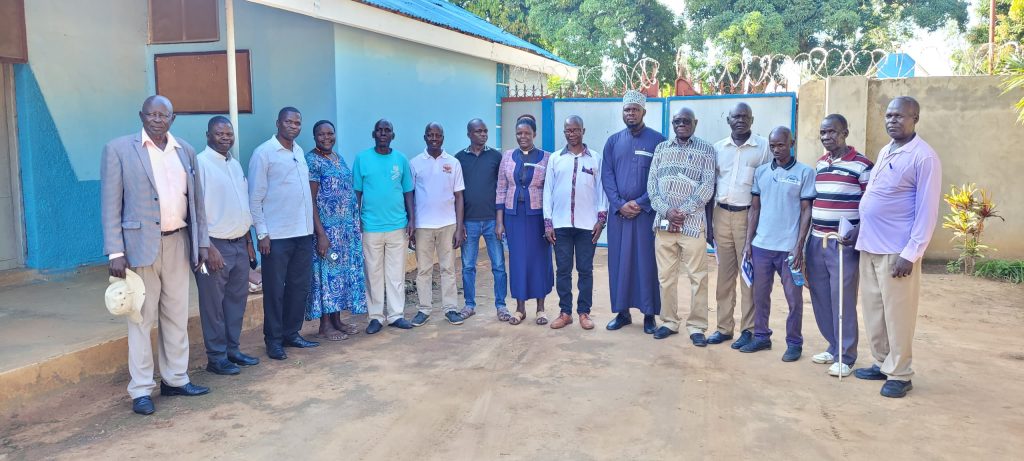
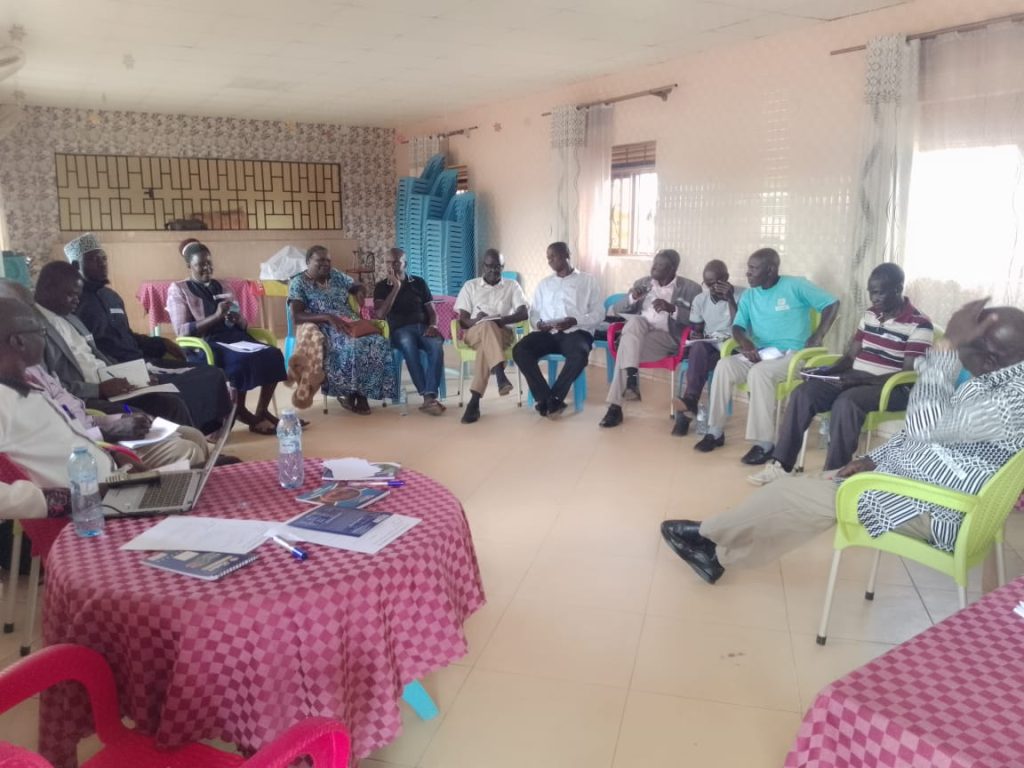
After earning a master’s degree from Sophia University Institute in Loppiano, I realised that our Archdiocese of Gulu, affected by the long war, lacked an inclusive and skilled dialogue committee. I consulted my PTU board of directors, and they welcomed my desire to create this interreligious committee. We consulted the Archbishop, cultural institutions, and other religions – and all accepted. The group is comprised of Catholics, Anglicans, Muslims, representatives from cultural institutions, elders, women, and young people. Our vision is to have built a team that prevents and resolves conflict and builds friendships within Uganda, within Africa, and beyond. I feel this is the goal of my priesthood vocation and mission. Gulu University’s Institute of Peace and Strategic Studies, the Focolare Movement, and involved cultural institutions will occasionally provide ongoing training. I hope they become the most competent dialogue team in Uganda and contribute to African fraternity and peace.
The Peace Together Uganda project will celebrate its twentieth anniversary soon. Why is this project so important for Uganda?
The twentieth anniversary is incredibly important because, from dust to grace, we are encouraged to offer ourselves totally to God in order to serve humanity – especially the poorest and most marginalised among us. Moreover, it will inspire us to see the long journey of peace- and unity-building ahead of us.
Translated into English by Becca Webley