

 EN
Fernando Muraca: “The emotions of cinema can take you deeper into the human condition”
The film director and writer Fernando Muraca explores the social impact of stories, the ethical responsibility behind every camera, and how to promote critical thinking in the face of the growing influence of digital bubbles.
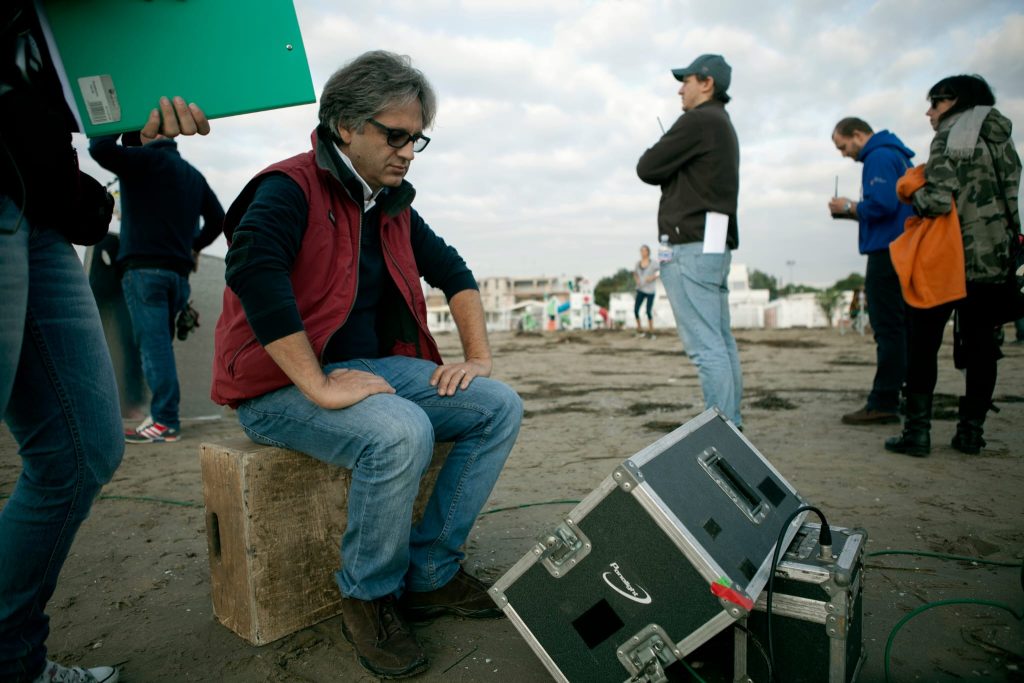
In the month that the United World Project dedicates to the relationship between art and social commitment, we asked Fernando Muraca – film director, writer and expert in communication – to help us reflect on the relationship between art (particularly cinema) and its social, formative and educational role. With him, the director of, among other works, a remarkable film about the ‘ndrangheta entitled La terra dei santi (The land of saints) we began by discussing the concept of duty.
Fernando, does art (and cinema) have a duty to fulfil a social role?
Cinema, through its cultural influence, tells stories about human beings and therefore, in its many forms of expression, naturally plays a social role, even without any specific intention. By narrating human beings and their emotions, cinema fulfils a social function, even when it does so without explicitly choosing to, or without making this its primary or sole objective.
A role that stems from freedom?
People are at the heart of filmmaking. In my case, as a screenwriter and director, I have almost always made films centered on social issues. It is a drive I feel within myself. It has to do with my way of being in the world. But there are directors with different priorities who, nevertheless, contribute significantly to social processes, just as much as I do, if not more.
So, art can contribute to building a better world in many different ways?
If you bring together these different approaches, you may realise that they often address similar fundamental issues in their own ways: climate crises, family crises, wars and migration. After all, the social question is a very broad one, and it requires many different perspectives: many directors telling different parts of the story. Many different angles of a vision.
However, we can turn this reflection around. There are ways to build a better world, but just as many ways to spread evil. Picking up a camera is a responsibility. It can be medicine or a weapon. What do you think?
I am reminded of the image of a surgeon picking up a scalpel. They must understand how delicate their work is. Every human action entails responsibility. Cinema does too, with its great influence on people’s behaviour through emotions. It is no coincidence that it has always been used for propaganda.
But there is also a need for a system that supports individuals, don’t you think?
Clearly, for the film industry to remain viable, it must develop a diverse range of products, including pure entertainment. A healthy, multifaceted industry can find the resources needed to develop films by directors who can help us change. These are the directors who broaden our horizons. At the same time, it is important to have a plurality of publishers and producers to ensure a healthy degree of complexity. Reducing this plurality to a minimum can lead to the dominance of unscrupulous oligarchies that place neither human beings nor their well-being at the centre, but only profit and propaganda.
Is a kind of production democracy important?
I believe it is necessary. If institutions, communities and states fail to find ways to make cinema accessible to a diverse range of people, there is a risk of turning it into a machine that produces nothing but entertainment, excluding authors who can help us engage in deeper, more comprehensive reflection. These are works that are essential to understanding reality and the human condition. It is no coincidence that, in Italy, more than twenty years ago, directors and actors such as Daniele Vicari and Valerio Mastandrea founded the Volontè film school to prevent access to film schools from being limited to the children of wealthier families, beyond the very few places available each year at the Experimental Centre of Cinematography.
Can new, lightweight technologies help democratise the audiovisual sector?
There are undoubtedly tools that can help. The problem is how access to education and training for the youth is ensured. If they are not allowed to develop critical, independent thinking, technology is of no use; it is merely a tool and does not generate ideas. A favourable cultural environment is needed to allow the youth to develop independently. Otherwise, they can be systematically manipulated. The oligarchic powers that dominate new technologies use them to confine young people within closed systems. They are kept entertained in a kind of bubble where they are constantly exposed to the same things. This makes it difficult for the youth today to have experiences that can broaden their cultural horizons.
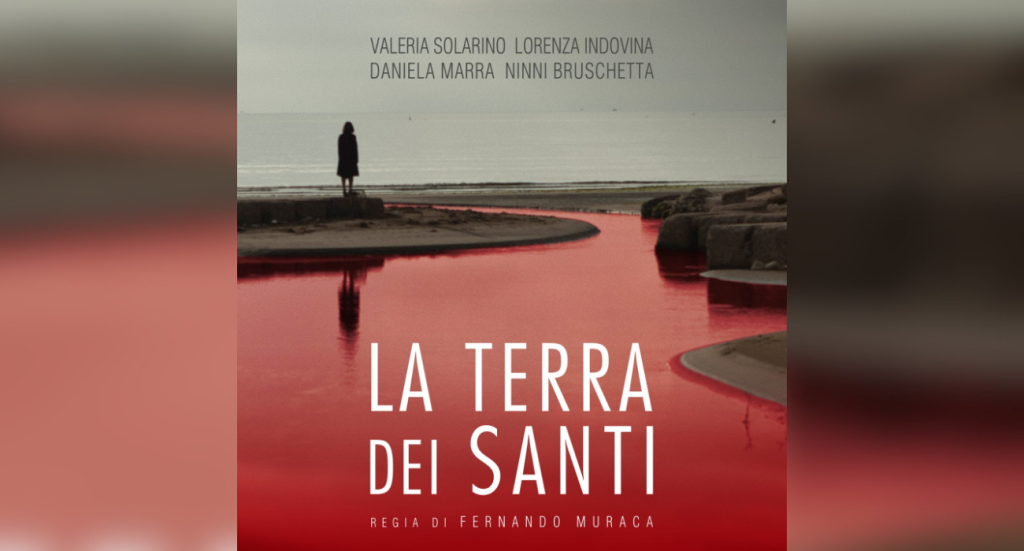
Let’s turn to one of your films with a strong civic commitment: La terra dei santi (The land of saints), which had the courage and expressive power to denounce the ‘ndrangheta. How did it come about?
I had already received proposals to make a film about the ‘ndrangheta, partly because of my Calabrian origins. I had always refused because I did not want to make some kind of Western, a cowboy film.
What do you mean?
Mafia films often portray characters with whom the mafiosi themselves identify. I did not want to promote the ‘ndrangheta. Then I thought I could turn the issue on its head and approach it from a female perspective. I tried to tell the story of a system that generates power and money, while making it impossible for the youth to identify with the bosses. I did not portray them as mythical figures worthy of admiration. I tried not to make life within criminal and murderous organisations seem appealing: a life marked by despair, anguish, inner poverty and poor life expectancy.
Did the producers like the idea?
They seemed to have accepted it, but then they kept insisting on the patriarchal relationship between the boss and his son. I expressed my disagreement very clearly, firmly defending my female-centred interpretation of the story, to the point of refusing to make the film as they wanted me to.
And then?
The screenplay had already been written, and those who had read it – well-known Italian actors such as Ninni Bruschetta, Lorenza Indovina and Valeria Solarino – had greatly appreciated it. They valued the seriousness with which it tackled the subject, keeping in mind the young at risk of being drawn into that terrible world. The actors mentioned began supporting the project, helping it in various ways. This did not mean that every obstacle had been overcome: the Calabrian political establishment shut the door in my face, and I had to shoot the film in Apulia.
What did this change entail?
Initially, the project had a broader and more complex scope, but I had to make a less cinematically ambitious film, focusing instead on the characters’ stories. I had to give up visual and representational ideas that would have added greater power to the film.
La terra dei santi is nevertheless a very beautiful film.
I decided to make it by changing the structure of the project in order to contribute to the public debate on the ‘ndrangheta from perspectives different from the usual ones. This urgency took precedence over the filmmaking approach. I focused on the female protagonists of the story, who were crushed by the toxic criminal environment of the mafia and lost their children.
What did you feel when the film met its audience?
A wonderful connection was established with the audiences in the cinemas. It was among the Italian films that won the most audience awards that year, in addition to several important critics’ awards. I am thinking, for example, of the Grand Jury Prize at Annecy, France. And all this without any distribution funding. La terra dei santi travelled around the world, and I remember countless screenings where audiences stayed behind to talk to me until late. I experienced firsthand how an artist can help people better understand an important issue. News reports almost always tell you only the facts. The emotions of cinema can sometimes take you deeper into the human condition.
But you don’t limit yourself to cinema. You are also a writer, and here too your work carries a strong civic commitment. In your 2019 novel, Liberamente Veronica, you address social media addiction.
I first became aware of this issue as the father of teenage children. The experiences I shared with them prompted me to organise meetings with more than 30,000 youth, drawing on research into the influence of digital imagery on contemporary culture. As a director, I was also familiar with digital technology from a technical perspective, and I had tried to protect my children from its dangers. The same had not been true for many of their friends, some of whom had developed serious social media addictions. My children encouraged me to do something for their schoolmates, particularly to write a book that could help them.
This is where Liberamente Veronica came from, right?
I thought a novel for teenagers would give me the opportunity to convey the research I had conducted. Ten years ago, these addictions received less attention. I remember some adults reacting with indignation when, during meetings, I argued that social media could have criminal implications, that the youth would be trapped in a bubble, unable to discover their specific talents and vocations, and that, in some cases, their mental health would be compromised. Above all, I tried to bring parents and teachers together to build an educational partnership. This work also led to an essay entitled Le immagini al potere (The power of images), primarily aimed at educators working with teens.
Let’s return to Liberamente Veronica. What is the story about?
It is the story of a girl who decides to conduct an experiment: 30 days without social media. I drew on the real-life experiences of several teenagers whom I had asked, with their parents’ consent, to undertake the same experiment. They kept diaries for me, which allowed me to convey the sensitivity and importance of the subject during the meetings and, later, in the book.
What are you working on now?
I am writing a new novel, La fisioterapista (The Physiotherapist): I will explore the existential pain of our times through the bodies of the protagonist’s patients. I have also finished writing a new feature film together with two colleagues. It is the story of a migrant inspired by a true story. We hope to find the financial resources and distribution needed to make it in 2027.