

 EN
EN
Seventy Years of Città Nuova: a Journal ‘on the Border Between Reason and Mystery’
‘Città Nuova exists to provide a humble and free service, in the sense that it does not seek money or power. Rather, it provides information, training, and research, keeping humanity at heart’.
Publishing group Città Nuova, one of United World Project’s partners, is celebrating a special occasion this year: its seventieth birthday. Through an interview with editor-in-chief Giulio Meazzini, United World Project is honoured to embrace the journal – which forms part of the Focolare Movement – as we share many of the same values, goals, and philosophies.
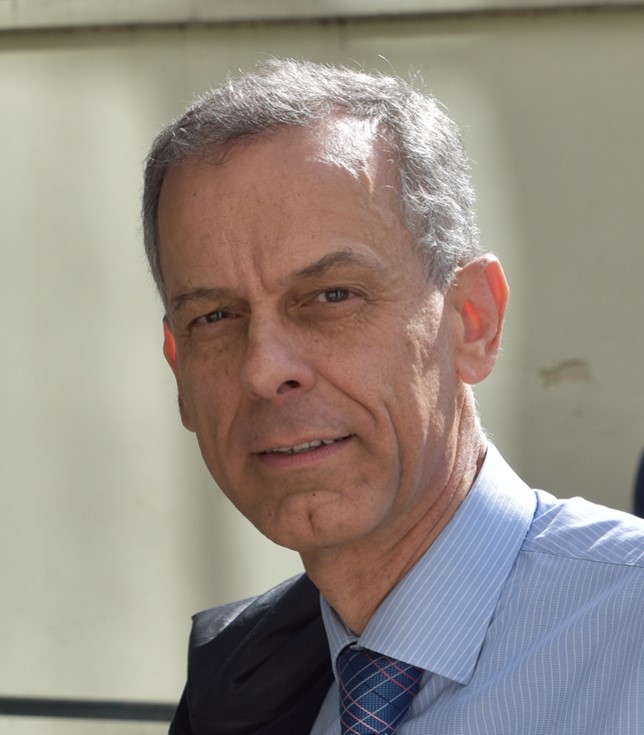
Giulio, how did this great adventure first begin?
In July 1956 in the Dolomites, during Mariapolis, the Focolare Movement’s summer conference. Since the beginning Chiara Lubich felt that, without a journal, there can be no revolution. Without a philosophy that spreads, investigates, and builds a new culture, we can create no change. Without critical reflection on the world, we cannot build a community capable of sharing common values and goals. The magazine starts as a way for people who share the same spirit of unity to stay connected, but it soon opens up to the world – both ecclesial and secular.
Does Chiara Lubich participate personally?
She writes editorials herself. She participates, reasons, offers ideas, explains. The pen becomes her voice, the instrument with which she expresses her charismatic insights. As Chiara sheds light on new topics through her ideas and charisma – from the economy to politics, from culture to healthcare – the magazine’s words translate this journey into a language that is accessible to everyone. Describing the purpose of Città Nuova, ‘the Movement’s first publication’, Chiara explains that the journal must be directed both inwards – towards the members of the Movement, to keep them connected and help the community grow, therefore creating a magazine that is ‘ours and ideal’ – as well as outwards. By bringing the culture of unity to everyone, the magazine would also be ‘universal’.
What are the core principles that Città Nuova could never compromise on?
A few months ago, while responding to a reader, I wrote that Città Nuova has its roots in the Gospel: that is our core principle. At the same time, a not-insignificant part of our readers are not Christian or have no religion, and so we also keep secularism at heart. We are on the ‘border’ between reason and mystery. A sometimes very unfashionable position to take in times of division, but that is our particular role: occupying the rift between different worldviews, without running away or simply choosing one side.
Consideration for others, then…
Exploring and understanding our world means listening to others and making an effort to understand what motivates people who think differently, what their values are – everyone has them – or what their fears are. Then, at the end of the conversation, each of us will make our own choice in good conscience. And even if we do not change our minds, we will all carry a little piece of each other’s sky, meaning we will look upon them without hatred, but with a level of kindness and compassion.
Does CN have other core principles?
Città Nuova does not belong to the editor or staff. Città Nuova is an expression of a community that does not want to live in a bubble, defending itself from ‘others’ around it; it is a community that wants to engage in dialogue, blend together, welcome each other in, sow the seeds of peace. The journal presents a worldview that is shaped by a community – and therefore by a shared spiritual experience – and characterised by a mindset that is by necessity open, restless, and rich in imagination. One of the outcomes is that a bond of friendship, almost a secret intimacy, has formed between the people who read Città Nuova and the people who write it.
Are there other core principles important to CN?
A third guiding principle is our responsibility for the world moving towards a civilisation of love, as opposed to the incivility and narcissism of our current systems. To win this battle, we need men and women of the world who can ‘love the homeland of others as they love their own’. That means we need a network of people collaborating all over the world, who can share the attitudes, values, and perspectives of various cultures, having lived in the very places they are reporting on. This way, we can learn from each other and live for each other.
How important is the topic of dialogue to CN?
I will start with myself: I can say that, as editor-in-chief, I have been profoundly shaped by the praise (and criticism) of my editors and readers, and I am thankful for that. Just as I am thankful for the dialogue that happens during editing and with our experts, who we always consult on ‘cold’ topics. Not to mention our Readers’ Letters, which provide an important barometer of the ‘harmony’ between writers and readers. All this to say that Città Nuova does not have a ‘single ideology’. It is an editorial team made up of diverse opinions on various topics – even if only because of age – and a group of contributors, each with their own unique perspective. It is a community made up of people who truly think for themselves.
That is already dialogue…
The role of Città Nuova is to provide its readers with a variety of articles and in-depth analyses, possibly written by people with very different perspectives, because there is a truth in everyone, one that can be expressed without having to compromise on one’s own worldview. That way, everyone can form an educated opinion. We have faith in our readers’ ability to form opinions based on their personal beliefs. When choosing articles, we prioritise clarity, in-depth analysis, a non-aggressive but dialogical style, as well as the author’s and interviewee’s authority.
More dialogue…
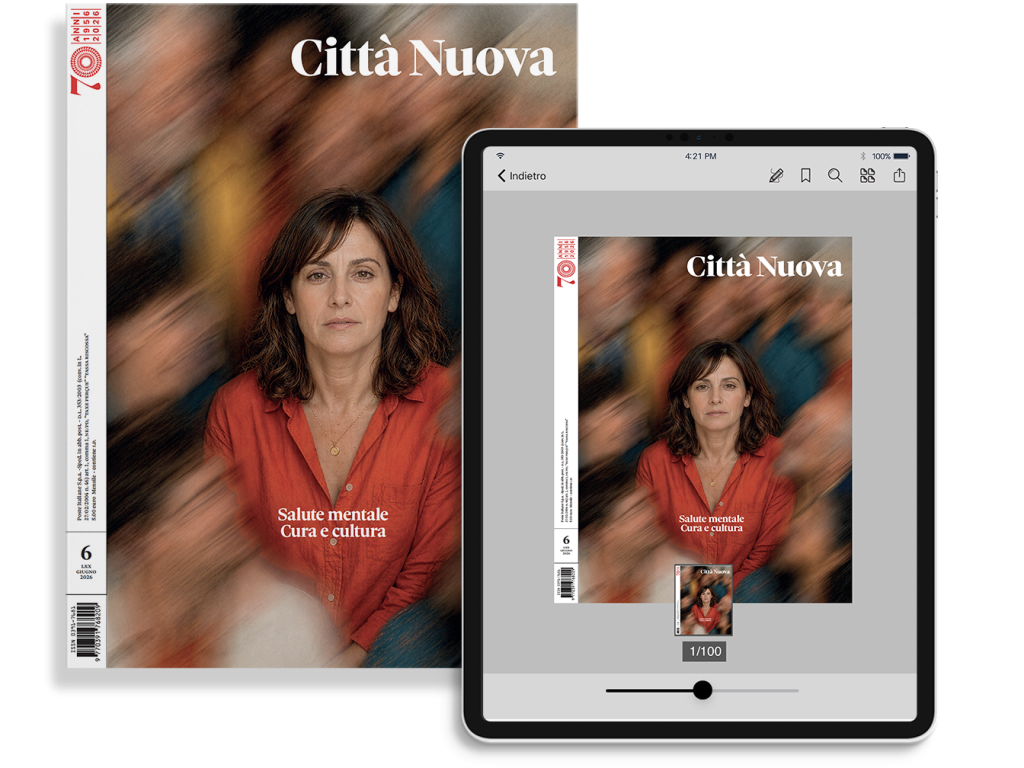
We also have the honour of being part of a movement that has one of its core principles rooted in ‘dialogue’: dialogue within the Catholic Church, between Christian churches, among religions, with people who have no religion, and with culture. We hope to give a voice to these dialogues in the magazine, in the CN edicola app, and on our website. We publish more than six journals: Big, Teens, PassaParola, New Humanity, Ekklesia, and Vangelo del Giorno.
What is the relationship between reality – even when it is grim, something a journalist cannot deny – and the hope that gives us the strength to face that very reality?
I would like to draw attention to Chiara’s words, dated 17 May 1968: ‘It is absolutely essential for idea to give way to reality. We must not make a magazine of opinion pieces. All opinion must disappear behind the topics discussed, which is to say that opinion must stay with the person writing, who should not preach.’
How is this way of thinking translated?
We insert ourselves into the timeless debate of the role of a journalist, which you cannot confuse with the role of an activist. First and foremost journalists must investigate and understand reality to help the reader construct their own vision of the world.
So, first and foremost, they have to expose lies, brutality, unbridled violence, and the kind of hypocrisy to which the world has already succumbed. But they must never stop. They must become a touchstone in the fight for peace, for justice, for family, and for unarmed information, all through the lens of universal fraternity.
How does Città Nuova engage with good and evil, and their presence in the world today? How does it tackle the subject?
First of all, I would say that we do not need to deny reality, but tackle it. Misunderstood, we have to delve into the causes and possible ways out, without giving up. In our magazine, on our website, on the app, you find a huge number of articles, interviews, dossiers, spotlights, and in-depth studies addressing various topics and giving a voice to experts and professionals – as well as to the people who experience the events first-hand. Evil seems to grow more effective, shameless, and cruel with each passing day. We feel powerless. It makes you want to give up and disappear down some hole.
But?
We cannot, or at least the people who read – and write – Città Nuova cannot. We still need people who believe that history has meaning and that humanity has a destiny that does not end in self-destruction. And so we continue contributing to creating a more human world, one built with heart and mind, with people of different lifestyles and cultures. A society where beauty and peace are more important than death and hate. More specifically, Città Nuova tries to spark its readers’ imagination with ‘captivating words’; with (true) stories of beauty, goodness, and justice; with interviews and articles that are realistic, but which do not overlook the good that exists in the world.
No to surrendering, then…
We will not surrender our vision of the future to the interests of greedy warmongers, paranoid dictators, and serial haters. If we want to change the world, we first have to imagine it anew: honest and full of comfort, kindness, and calm. Someone once said, wherever an idea goes, sooner or later, history follows. And even if we are small, we have a strong sense of charisma that still has a lot of potential left to be expressed. I would like to share two quotes.
Of course
The first is from Catholic writer Flannery O’Connor, who reminds us that the human adventure takes place on the ‘devil’s territory’, a stage for cruelty for the sake of pleasure, so it takes a very sharp eye to spot the ‘almost imperceptible intrusions of grace’.
The second?
One of Chiara Lubich’s first friends, Luminosa, would always say, ‘Let’s keep playing.’ For believers, this means loving and working together with ‘a God who has created everything out of love, and who has hidden love behind façades of death and pain.’ For people who are not religious, continuing to play means continuing to have confidence in the human family’s ability to redeem itself and improve.
How important do you think it is, when reporting on reality, to always try to keep hope alive?
As one reader, Cecilia Tumiatti, suggested, Città Nuova exists to provide a humble and free service, in the sense that it does not seek money or power. Rather, it provides information, training, and research, keeping humanity at heart and ensuring it is always in dialogue with different people and cultures. It always starts from an ‘unedited’, Trinitarian point of view in search of new, positive horizons and perspectives, never getting tired of searching for signs and glimmers of hope along a journey shared by all humanity.
A task that carries hope in and of itself…
Guglielmo Boselli, the long-serving editor at Città Nuova, said that ‘you need to be able to show people, through the journal, God’s design for individual populations as well as for the whole of humanity, and take a specific angle: is this event, is this person helping create a more united world, or are they an obstacle to that?’ And so Città Nuova, alongside its readers, delves into the complex challenges of today, offering a unique perspective, giving hope to people searching for meaning, and – as much as possible – making the world smile.
Translated into English by Becca Webley