

 EN
EN
Teens Magazine: a Publication Produced Entirely by Young People with a Fresh Perspective on Current Events
Teens Magazine is a place for young people to talk to the world. A place for their ideas and their stories. ‘These teens wanted to show the “grown-ups” all the positive things they were spearheading,’ says Aurora Nicosia, the magazine’s director.
One of the eight United World Project Communities, named ‘Communication & Media’, dedicates itself to shining a spotlight on the importance of information and communication in fostering peace and driving progress. The group explores the potential offered by new languages and technologies, including artificial intelligence.
Developed by Teens4Unity, the Teens Magazine project shares many of the same objectives, running journalism workshops for young people led by professional journalists. There are similar projects in Argentina, Chile, Paraguay, Uruguay, Brazil, Panama, the US, Portugal, Italy, Spain, Hungary, the Philippines, India, and Kenya.
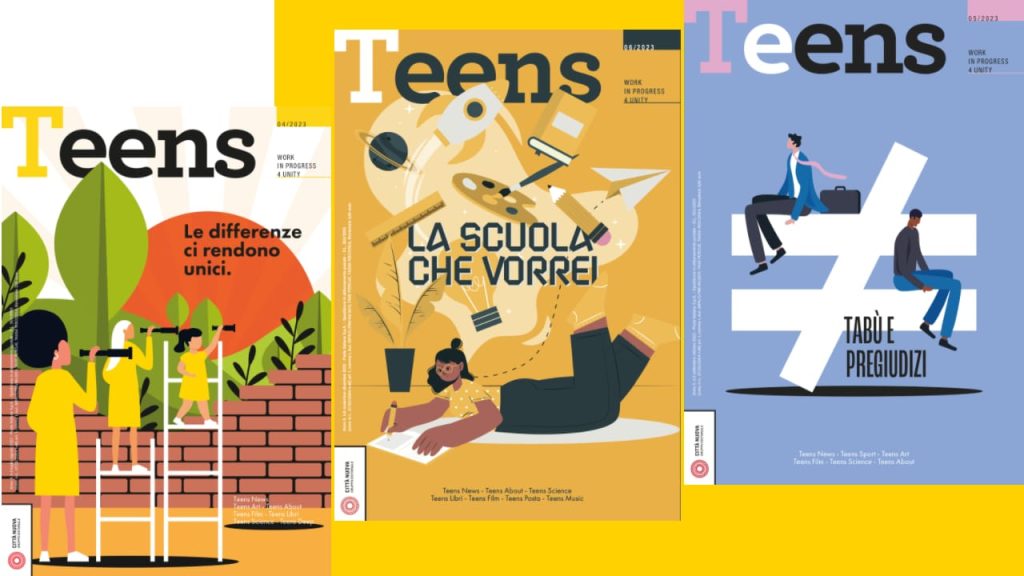
The Aim of Teens Magazine: Spirit and Progress
A chance for young people passionate about writing to learn how to generate ideas and communicate them in an inclusive and effective way. The teens also learn how to interact with other people their age in an atmosphere of sharing, leading to cultural exchange between different countries. The goal of Teens is to build a more united world by giving voice to young people’s opinions on current events that concern them.
We had the pleasure of meeting with journalist Aurora Nicosia, director of the Italian publication Teens Magazine, for an in-depth exploration into the value Teens offers. Her words have helped us better understand the nuances of an important project that has been ongoing across the country for some time. We started at the beginning.
Aurora, when did everything start?
Teens emerged thirteen years ago from within the publishing group Città Nuova. A group of teenagers wanted a tool to make their voices heard, to talk about their lives in a different way than how they are typically described by adults and the media. These teens wanted to show the ‘grown-ups’ all the positive things they were spearheading.
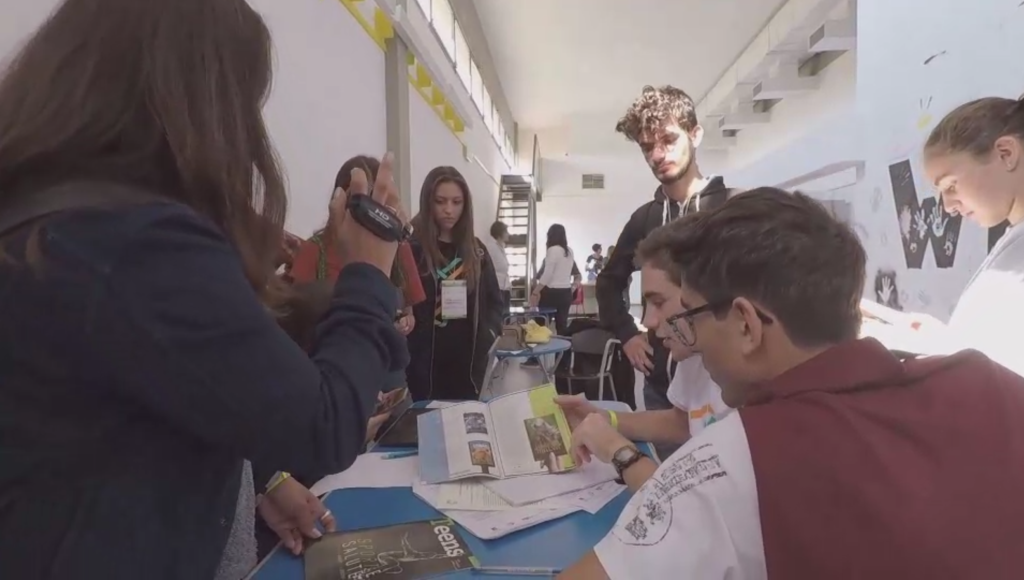
And you helped them…
We adults made ourselves available, listening to their goals and breathing life into the project. The bimonthly magazine touches on a wide variety of themes: from citizenship to dialogue, from the environment to sport, from politics to justice, from rights to the economy. It is not hard to imagine how many subjects we have tackled in the past thirteen years.
How is the editing of Teens organised?
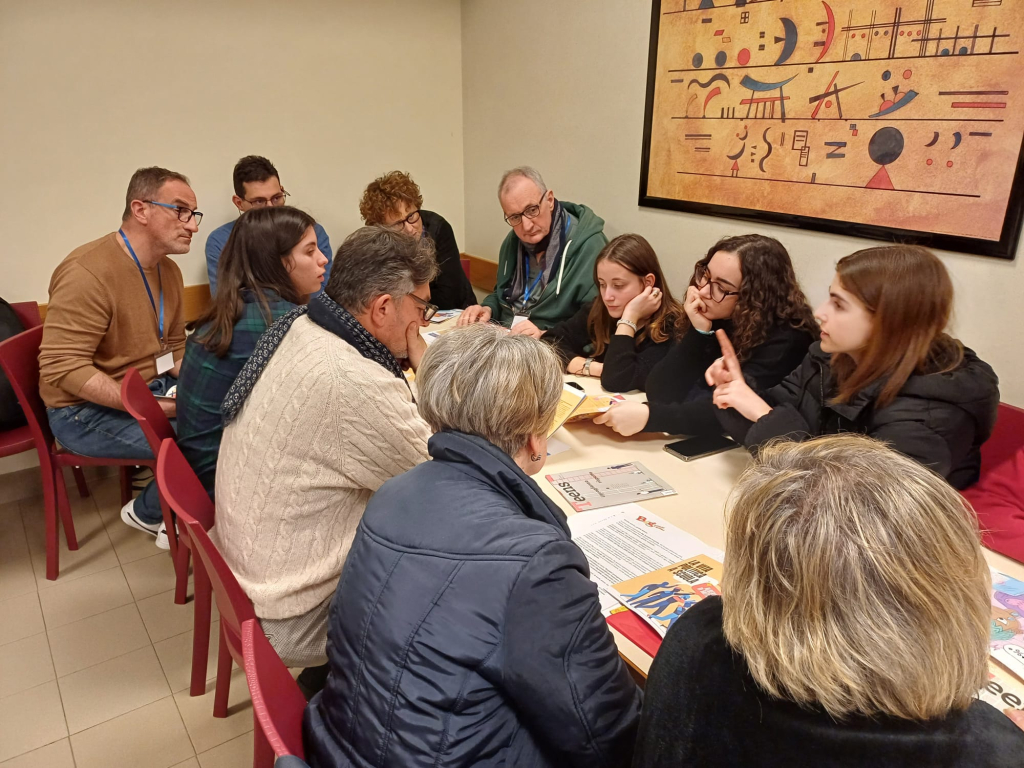
Editing is spread across the country. We get together every other month via Zoom to discuss the theme of the upcoming issue – as well as in person once a year, where possible. We have been publishing single-theme issues for some time now. Each child puts their ideas forward, they put together a mock-up, and then they divide up the writing tasks among themselves. There are also several regular features, from Teens news to Teens cinema, sport, science, art…
What role do you adults take?
We act as tutors to the teenagers, but they are the ones who write all the articles, because what makes Teens unique is the fact that it is written by teens, for teens. We are available to help them with corrections, discussions, and contacting interviewees. We are by their side, and we help them right up to final layout, an integral part of the process managed by Hammer, in San Benedetto del Tronto. The layout of a magazine is always very important, especially when it is a magazine for kids.
What are the core principles that Teens could never compromise on?
First and foremost, respect. Respect for the people and themes we discuss, rooted in dialogue and fraternity. Clearly, we are not just dealing with positive stories and topics. Teens also tackles hot topics, important issues. But always through the constructive lens of fraternity.
How important is dialogue, and what role does it play, in the editing of Teens?
It is a fundamental lens through which we see the world, adopted first and foremost internally within the editorial team through intergenerational dialogue that is enriching for everyone – teenagers and adults alike. Dialogue between equals, because everyone has something to offer others, as well as something to gain from them. The dialogue continues with the people being interviewed, and in the classrooms where Teens is used as an educational tool, fostering constructive debate on the themes tackled in the magazine. In fact, the next edition for May/June centres around dialogue, with stories, reflections, and in-depth analyses on the topic. And it is not the first time in the last thirteen years that we have tackled the subject of dialogue in a serious and constructive way.
What is the relationship between reality – something a journalist can never deny – and the kind of hope that motivates us to face that reality head-on, no matter how harsh it may be?
Hope is another fundamental theme. Perhaps even more so today than in the past. It is true: we live in a terrible world, where wars, hate, and strained relationships between individuals and entire populations dominate the media. It feels as though it is the only thing that exists, but we have a duty to fuel hope, which means resisting superficiality and blind optimism. Precisely because of this difficult situation we find ourselves in, we know it is not the only one that merits our attention. I always remember my first editor at Città Nuova, Guglielmo Boselli, used to say that ‘you need a nose for love to be able to spot it wherever there is the slightest glimmer’. There are so many glimmers of positive experiences, of people who get to work, spending their lives serving the common good for a more sympathetic and united world.
Examples that help the kids behind Teens…
Our kids have the right to believe, to see opportunities to do something different. In fact, they themselves, with their unique perspective, can spot the signs of hope and discuss them in their articles. I think hope is absolutely essential, and no journalist can pass up an opportunity to choose hope when tackling the hardest and darkest moments in history. Often it comes in the form of faint flickers of light peeking through a thin crack: small flickers of light that allow us to move beyond the dark of this world.
Translated into English by Becca Webley