

 EN
EN
Marcoluigi Corsi, UNICEF Representative in Lebanon: “Starting with Children Brings People Together”
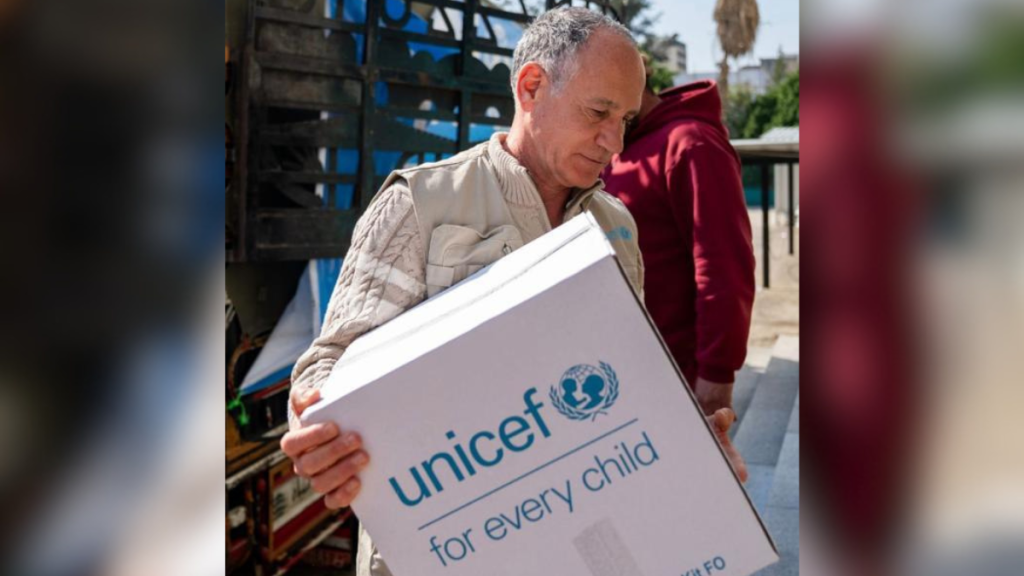
After thirty years spent in some of the world’s most challenging environments, Marcoluigi Corsi, UNICEF Representative in Lebanon, reflects on child protection, hope and the humanity that endures even in the midst of war.
Marcoluigi Corsi has worked for UNICEF for 30 years. In a variety of roles, he has traveled to many countries around the world: Mozambique, Bolivia, Indonesia, Eritrea, Somalia, Tanzania and Myanmar.
Today, he serves as a UNICEF Representative in Lebanon, where he leads the implementation of the national program, providing strategic direction and oversight for UNICEF operations in support of children, women and the youth.
His work with UNICEF: A life dedicated to protecting the most vulnerable children
Despite his numerous responsibilities, Marcoluigi generously gave us some of his time, sharing the wealth of experience he has gained from witnessing not only the wounds of the world, but also the human responses to immense suffering. We began our conversation with a simple question.
Marco, what is UNICEF’s mission?
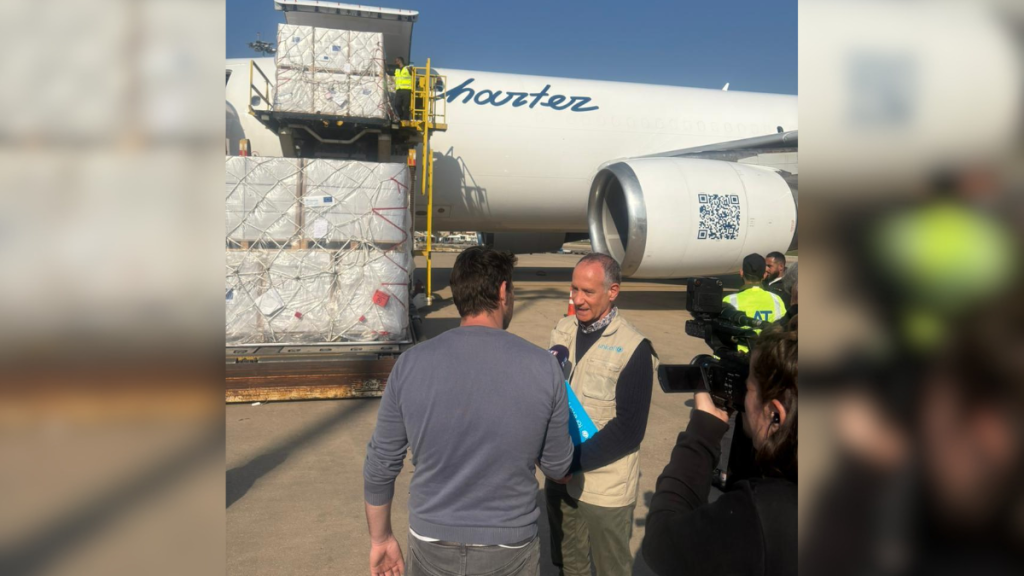
UNICEF works in the fields of education, health and child protection. It strives to ensure that children have access to clean water, nutrition and hygiene. It advocates for children’s rights to be respected and fulfilled through policies and funding from national and local governments. UNICEF operates in many different contexts, always within humanitarian emergencies caused by either natural disasters or armed conflicts.
When was UNICEF founded?
Immediately after the Second World War, through emergency funds created to protect children affected by the conflict. That commitment to children is part of our DNA and continues to guide us today, as we work in many countries around the world: wherever humanitarian emergencies exist.
How does UNICEF work with institutions?
Our work is closely tied to the ability of governments to respond to emergencies: the stronger their response, the more effective our work can be.
What is UNICEF’s reality in Lebanon today?
It is a dual reality. On one hand, we work toward achieving the Sustainable Development Goals by 2030, in collaboration with national and local institutions. This means developing effective policies that help realize children’s rights, for example, improving the quality of education and access to vaccinations.
And the second reality?
We provide humanitarian assistance to all displaced children and their families affected by the conflict. We do this alongside governments, various United Nations agencies and NGOs. Every day, we confront the profound uncertainty these people live with.
What are your days like in Lebanon?
As UNICEF Representative in Lebanon, I manage several offices: one in Beirut and three others in the north, center and south of the country. I coordinate our activities to ensure they are effective and efficient. Alongside this management role, there is also the work of protecting children affected by conflict and advocating for compliance with international laws designed to safeguard them. Once again, this means working with governments and parties in conflict. Ensuring respect for the rights of children, and civilians more broadly, in wartime is always the most difficult part of our work.
Would you say that, compared to a natural disaster, however tragic and painful, conflict forces people to experience some kind of human degradation that makes reality even harder to accept?
The pain caused by loss and human suffering is intense in every situation. But in a conflict, there is also the element of violence, which makes everything even more painful to endure.
Is it as though, in war, there is a wound within the wound?
Fortunately, even within conflict, solidarity does not disappear as many organizations mobilize to help. Faced with certain realities, people often ask where humanity has gone. It is a legitimate question when you see lives, especially children’s lives, brutally crushed by the violence of war. And yet, I have the privilege of witnessing that humanity still reveals itself, even in those moments.
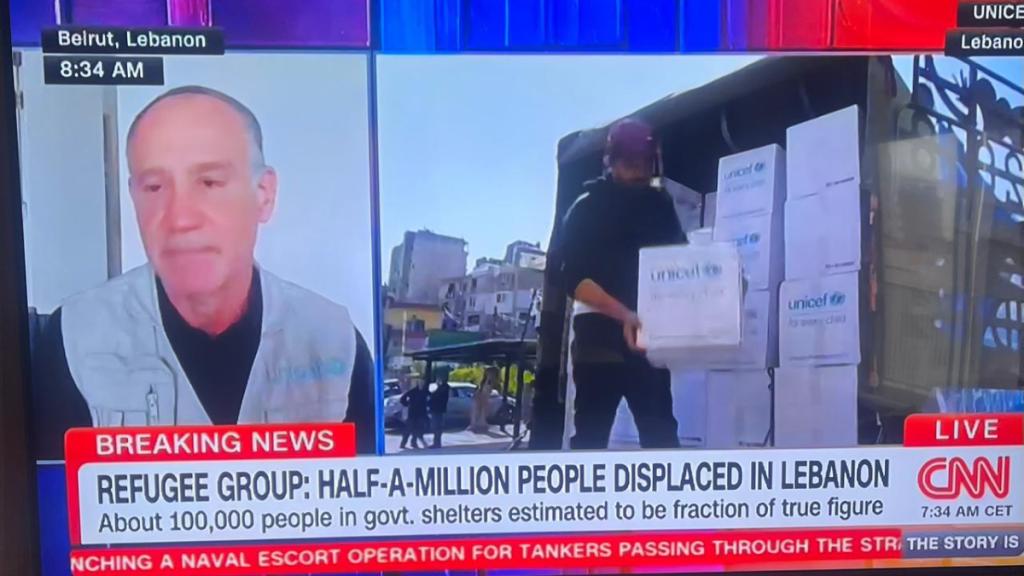
Marcoluigi Corsi
In what way?
When you see a mother walking for miles to bring her child to safety, or communities welcoming displaced families with extraordinary generosity, that is humanity surviving. Witnessing these acts gives us the strength to continue and persevere. I always tell my colleagues to focus on the small things.
Because focusing on the bigger picture risks overwhelming us or making us feel resigned?
Focusing on the small things helps you see that there is always something you can do, even in the most critical situations. That gives hope.
Hope for the individual and for UNICEF’s work as a whole?
It gives hope to UNICEF’s noble mission and to the mandate entrusted to us by the United Nations General Assembly: to be the voice of the children and to safeguard their essence.
How would you describe that mandate?
Extraordinary. Beautiful. It is what makes UNICEF respected by everyone, and it makes me, after 25 years with the organization, profoundly grateful.
When did your journey with UNICEF begin?
I have always been drawn to humanity and humanitarian work. After starting out with NGOs, it felt natural to move closer to United Nations organizations. Then came UNICEF, which became much more than a professional path; it became a life journey. It has brought me into contact with countless realities around the world and taught me one fundamental lesson.
Which is?
That we are all the same. That we all need one another. This is the personal and inner privilege I mentioned earlier. Of course, this journey is also marked by frustration, feelings of helplessness, and sadness for all that still needs to be done, for the many obstacles that remain, for the immense needs and very real suffering we encounter.
Among the many places around the world where you have worked with UNICEF, before Lebanon there was Myanmar.
A country that has endured internal conflict for many years, and inevitably children bear the consequences. Even in Myanmar, within an extremely complex reality to explain (one unlike anything I had experienced before, despite having worked in other war zones) the life lesson was immense. Once again, what I feel most is gratitude.
How long were you in Myanmar?
Three years during which there were two cyclones and an earthquake in addition to the conflict. Yet even there, I saw hope moving forward. In certain situations, you stop thinking about yourself and begin to see how human beings can face extraordinary hardship with dignity. The way people repeatedly confront disaster becomes a profound life lesson. Under such circumstances, resilience could easily disappear. Instead, it grows stronger.
How much does it help, amid such a painful complexity, to feel a part of the UNICEF?
Despite all the challenges I mentioned, being part of an organization like UNICEF gives you significant responsibilities, but it also gives meaning to your actions. It allows you to move beyond being a spectator and become an active participant in a humanity that can make a difference. Knowing that your work can help protect a child, enable them to go to school, support them psychologically, or reopen a window of hope in their life is something extraordinary. I think of the children here in Lebanon. Some two-year-olds have already lived through two wars. In such contexts, even small steps forward have enormous value.
Those children will be the adults of the future.
Absolutely true. But they are also the present, and they deserve our protection now. We must always do our utmost for them.
From your words, it is clear that UNICEF is a tool for peace and dialogue.
To guarantee children’s rights, peace is essential. Starting with children brings people together and creates dialogue, which is always a pathway to peace. On the contrary, when people stop talking to one another, children are the first to suffer. UNICEF’s strength lies in building bridges. As Pope Francis often said, we ourselves are called to be bridge-builders. And there is another essential tool.
Which one?
Listening. Our presence in the field begins with listening to the people we meet. It means putting ourselves in someone else’s shoes. Our credibility and ability to engage in dialogue stem from a neutrality that is never indifference. Rather, it is an approach that always places the best interests of the child first.
For thirty years with UNICEF, you have witnessed the world’s wounds, accumulating—as you’ve described—both inner richness and suffering through contact with the harshness of reality, but also with the humanity that survives horror. Given all this, do you feel more hope or more resignation when you think about the future?
As long as we can do something, there is hope. The people you meet pass that hope on to you. They show you that, despite everything, humanity remains alive. Sometimes that humanity is made up of countless invisible threads that connect us to one another. There are many difficult situations in the world, but there is also progress that deserves recognition.
For example?
There are fewer children growing up without vaccinations, and that is extremely important. Education levels have increased. Fewer children die from preventable childhood diseases. These developments may not make headlines as often as other stories. Let me be clear: I do not want to minimize the enormous challenges of the world rather, I want to emphasize that there are reasons for hope, even amid the immense amount of work that still lies ahead.