

 EN
EN
Christopher Nolan’s The Odyssey: Odysseus and the Need for a New Dawn
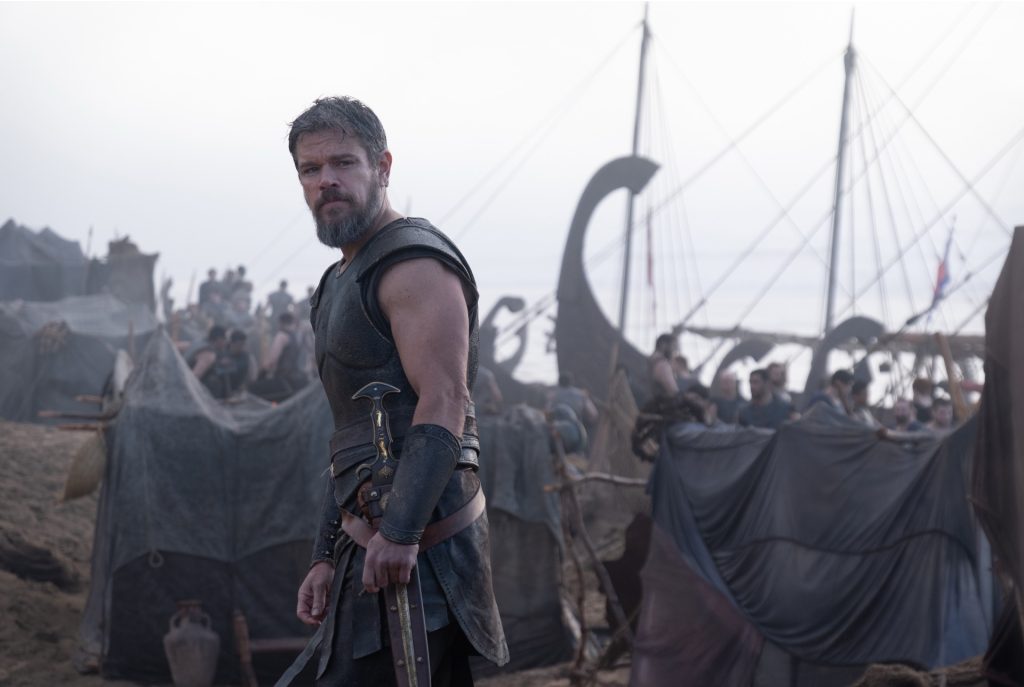
Reflections on peace, war, dialogue, violence, power, connection, and the ‘golden rule’ after seeing The Odyssey, directed by Christopher Nolan.
In his new film The Odyssey, Christopher Nolan’s Odysseus does not feel like a hero. He is not driven by a desire to return home victorious. He is not a victor, a leader, or self-obsessed. Other ghosts haunt the mind of this solemn, weary, melancholic Odysseus: the thoughts of a man rather than a myth, the feelings of someone from our time. He is fragile and lost, with a sense of beauty and justice deep within his soul. But he is also uncertain, troubled, evasive, overwhelmed, hiding from the idols and evil that stand between our lives and our desire for true humanity.
Odysseus’ Pain
What pains Christopher Nolan’s Odysseus is seeing close-up, from within, a war that has killed men and civilisation. What weakens Matt Damon’s character is the violence that hides within the dialogue, exchanges of information, and encounters. This is compounded by the fact that he defeated the enemy through deception – tricking them with the horse – which does not serve to glorify the idea of deceit, but rather fuels an agonising sense of remorse for the lie and the act of treachery.
The Law of Zeus and the Golden Rule
Nolan’s Odysseus suffers in silence, increasingly aware that, without respect for a fundamental law, man cannot achieve true happiness. Man goes nowhere, losing itself and destroying everything around it.
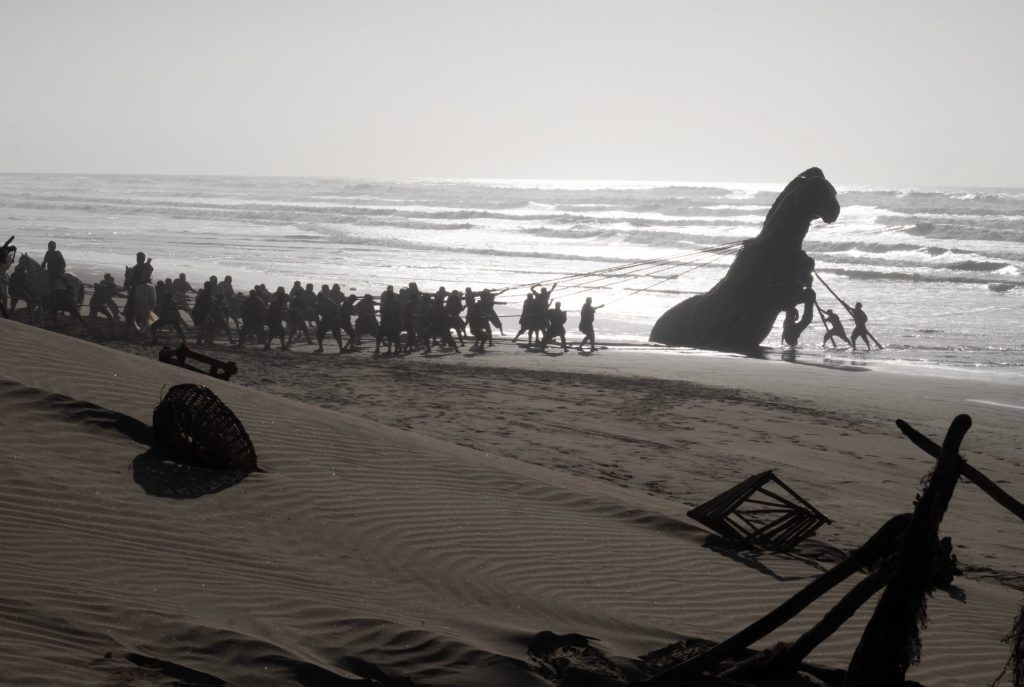
Without this law, humankind is lost. The animalism that the witch Circe unleashes is a prime example: in one of the most disturbing yet effective sequences of the film, she transforms the soldiers into beasts.
In Nolan’s mesmerising feature, this law is referred to as ‘the law of Zeus’, while in various other cultures and religions, it is deemed so significant as to be termed ‘the golden rule’.
It is a simple and ancient law: ‘do unto others as you would have them do unto you’. Such a profound truth that it is, unsurprisingly, written into the scriptures that underpin all religions.
Odysseus’ Question
This law becomes an underlying question and tormenting doubt for Nolan’s complex Odysseus/Ulysses. ‘Did I respect it?’, he asks. No! He knows he did not. He admits to having broken this law of Zeus that compels men to be hospitable and welcoming; manufacturers of connection, exchange, peace, and mutual growth; constructors of civility.
The Danger of the Sea People
Just as Agamemnon attacked the Trojans for his own personal gain and the pleasure of domination – taking it far beyond the issue of Helen – those who do not obey this law, like Odysseus, turn into what the film calls ‘sea people’. In other words, beings who bring about conflict and invasion, a threat that creates anguish, bloodshed, and division. In this Odyssey, which is not faithful to Homer’s, yet powerful nevertheless, this insane exercise of power culminates in Odysseus and his soldiers being driven back, destroyed, and annihilated indiscriminately and inhumanly by the Laestrygonians.
Robots without souls, they are like Agamemnon, hidden behind his dark, metallic mask. A giant in his armour and ‘blind’ when the gates of Troy swing open, when the onslaught floods the city of Troy.
The Old and the New Odysseus
Odysseus is torn between a need for – and the memory of – a civilisation founded on the law of Zeus, and a propensity for war, which is fuelled by the use of force and leads to mass dehumanisation.
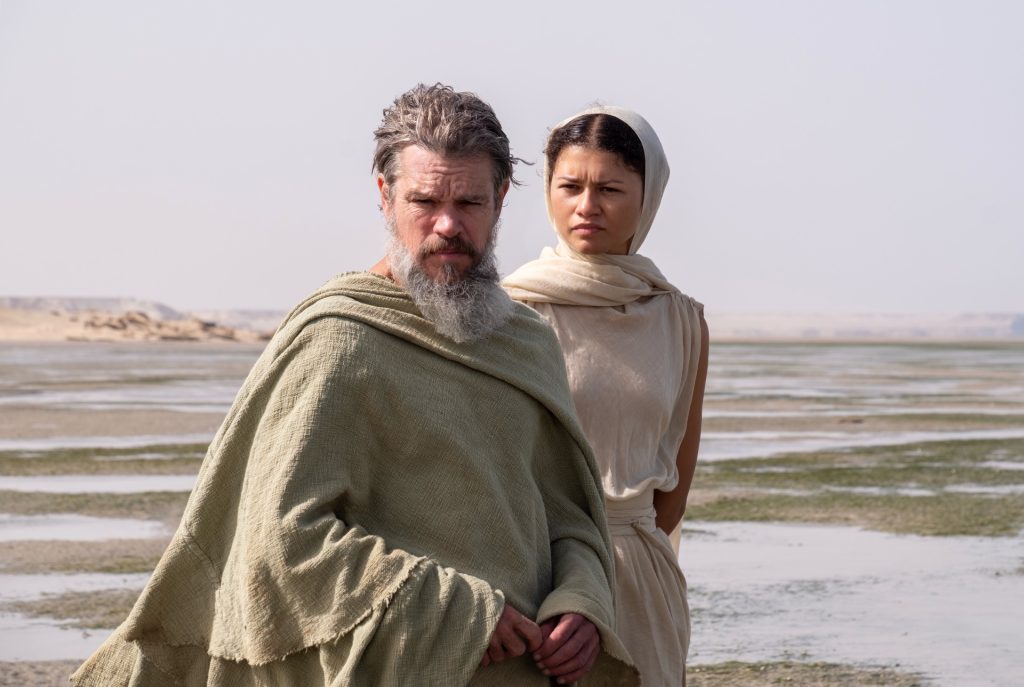
Gradually he develops a new conscience through his long journey home, with Athena (Zendaya) frequently by his side, and through the loss of so many of his comrades, starting with Eurylochus.
A nostos so dramatic that it drives him to solitude and a kind of emotional coma brought on by the oblivion that Calypso imposes on Ogygia.
After this period of stasis – a time of recovery, in a sense – Odysseus begins to reflect on the past and the future. The search for meaning continues all the way to Ithaca, through Odysseus/Ulysses’ inner journey and dialogue with the dead.
Here, in another of the film’s finest sequences, the protagonist realises the importance of remembering others. He feels that the lives of those who have suffered, those who have been subjected to violence at his hand, are even more significant. Those who, in the name of this absurd war, have paid with their lives. Odysseus feels the need to make amends and continues to change.
The Necessary New Dawn
This marks another step in his painful journey to the harbour where ‘a new dawn will break over the darkened world’. Power is not what saves mankind, nor conquest, this newly risen Odysseus appears to say, but unity among peoples, a shared commitment to the common good, the understanding that every life matters and must be defended in its dignity and beauty, in its fragility. The golden rule must pave the way to peace.
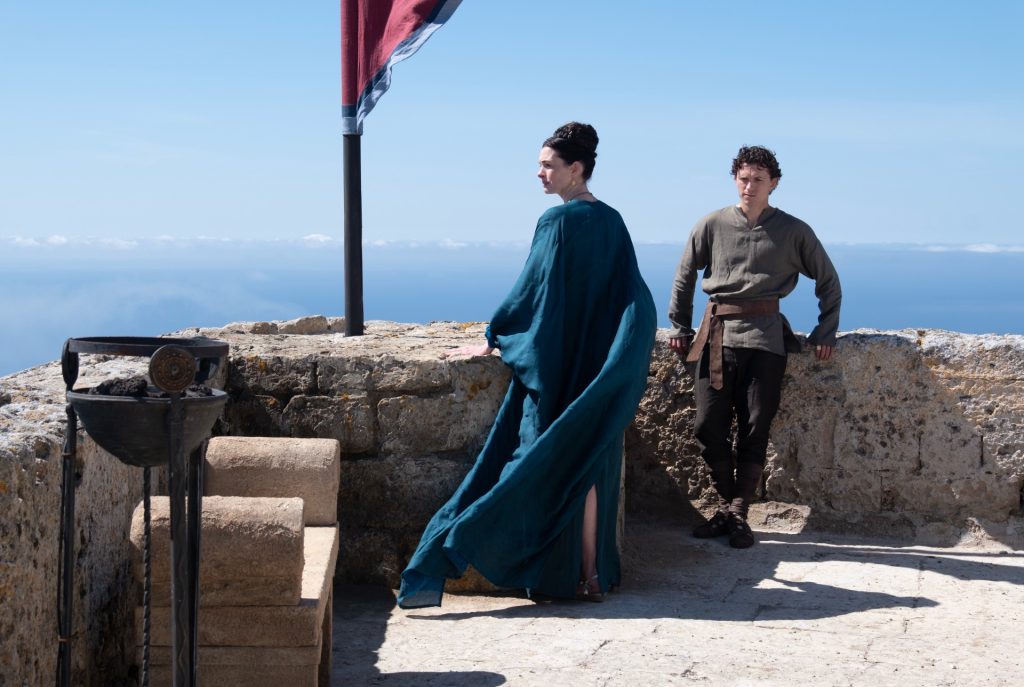
And so Odysseus leaves Ithaca once more, this time with Penelope (Anne Hathaway), to pay his respects to the victims of the violence and atrocities that he himself played a part in. To try and build a new world, a brighter world.
Odysseus’ New Ocean
Odysseus is on a journey once more – through memory, as well as enlightenment and pain – traversing the same ocean, but now in the opposite direction, along a new path. He crosses the vast expanse of water, which need not turn into a breeding ground for brutal, animalistic evil. It is a bridge that people must cross with their ships and supplies to share their respective forms of wisdom and build upon them, expanding and enriching their collective knowledge.
Nolan’s Odysseus and Our Time
A new man is struggling to be born in Nolan’s impressive feature, and with him, perhaps, a new sea people as well, this time portrayed in a positive light. The English director’s Odysseus becomes a contemporary figure in an ocean – in the Mediterranean, but not exclusively – that can either welcome or reject him. It is an age like today’s, where wars are setting so many places in the world ablaze, an age with so many modern-day Agamemnons ready to strike.
It is an age where each of us must strive to create our own new dawn every day, wherever we can, however we can, and as often as we can – just as, in its own way, this epic film reminds us.
Translated into English by Becca Webley