

 EN
EN
Sisters in Sorrow: the Mother of a Terrorist and the Sister of the Victim Turn Tragedy Into Forgiveness

What happens when you consider someone else’s pain alongside your own? The book Sisters in Sorrow tells the courageous story of two women who were divided by tragedy, yet prepared to create space for peace where there was once only rubble.
Some stories – like that of Sisters in Sorrow – are capable of transforming misguided behaviour into communion, sorrow into hope. They are capable of transforming the deepest divides into unity and productive communication, unprecedented violence into peace, forgiveness, and dialogue.
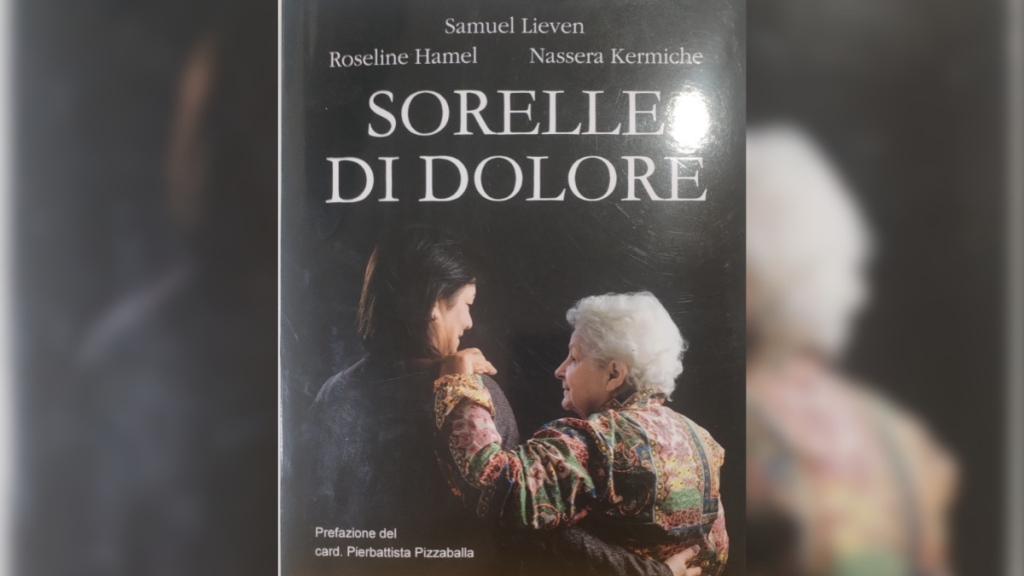
Sisters in Sorrow, by Samuel Lieven, is one such story: it is the story of two women, Roseline Hamel and Nassera Kermiche. Hamel is the sister of Father Jacques Hamel, who was killed by two young jihadists in 2016 while celebrating Mass in his church in Saint-Étienne, France. Kermiche is both the mother of the terrorist who killed the priest and a victim herself, as her son and his accomplice were also killed in the attack.
Sisters in Sorrow: the wise decision to tread a new path
Together, Roseline Hamel and Nassera Kermiche have driven away hatred and division, making it clear that neither would prevail. By combining their sorrow, they transformed it into the opposite: courageous beauty. By talking to each other and then meeting in real life, they merged their diverse faiths and cultures. Together, they cultivated forgiveness. Yes, they became sisters in sorrow, but also sisters in hope.
Samuel Lieven writes as much in the prologue to this touching book: ‘The story could have stopped there. It could have been a harrowing tale, like all attacks carried out in the name of a god who – inconceivably – kills. But this sister and mother decided to write their own story together, going against all the hatred and resentment one would expect. They wanted to try another path because their lives depend on it – as do ours.’
‘I cannot abandon her, because she is suffering more than me’
Cardinal Pierbattista Pizzaballa, who wrote the preface to Sisters in Sorrow, offers a synopsis: ‘The heart of the book is not the martyrdom of Father James Hamel,’ he explains, ‘but what happens next. Humanity resisting under the rubble.’ That humanity lives on, ever stronger, within the pages of this ‘female’ book; a book that tells a story of women and mothers, of listening, of fragility, of resilience, of empathy. A story that was only made possible by their ability to consider the sorrow of others alongside their own.
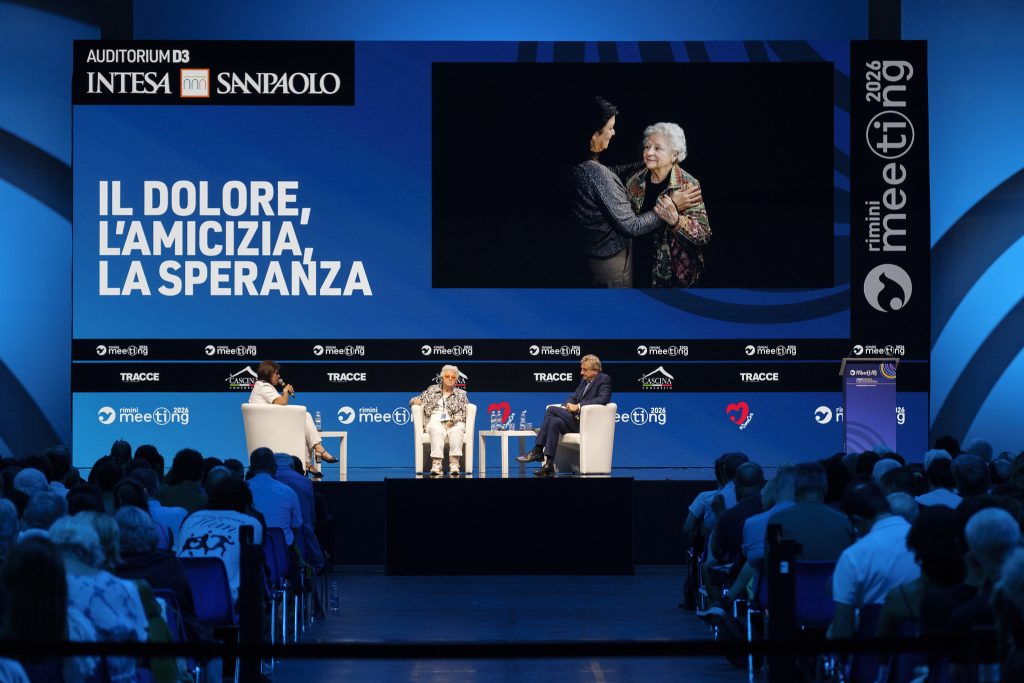
During the recent Rimini Meeting, in a talk entitled ‘Sorrow, Friendship, and Hope’, Nassera and Roseline discussed Sisters in Sorrow and the story behind it, sitting side by side in front of a huge crowd. Among the most powerful things expressed by the two women was something Roseline said. She remembered how, in the middle of her own struggles, she stopped to think about the figure of Mary, the mother of Jesus, as a universal symbol of maternal pain in the face of tragedy. In asking herself what woman could be carrying a sorrow greater than her own, her thoughts went straight to Nassera.
‘A woman I did not know, a mother like me, with children. I said to myself, my God, if I were that mother, with a son who committed such a horrendous act, what sorrow would I feel? I imagined the suffering this woman and mother went through, the feeling of guilt she might have, the looks of animosity she might be receiving. Perhaps she lost her job, the trust of her colleagues, her friends. No, I cannot abandon her, because she is suffering more than me.’
‘I have been waiting for this for a long time,’ and the note…
Roseline contacted Nassera, who welcomed the gesture as a ‘breath of fresh air’. They started to talk. First on the phone, and increasingly, until they met in person. ‘I have been waiting for this for a long time,’ Nassera told Roseline on the eve of their first meeting.
Together, as Sisters in Sorrow describes, they went to the grave of the attacker, Adel, and Rosaline left a note:
‘Adel. My brother’s soul leads me to you: it is testimony of his forgiveness. The faith of believers is hope. Forgiveness is the path to peace. I pray to the God of Abraham, father of all believers, that you may find peace. May He welcome you with his spirit of compassion and mercy. A wicked spirit stole your soul. With the forgiveness I offer you, I implore Father Hamel and the God of love, because I see in you the soul of a sensitive and loving son. Thanks be to God, and peace to those of good will’.
The word ‘love’ lies in this note, and throughout their story. A love that moves the world, in contrast with hatred, which knocks it down, destroys it, degrades it. You can see the love that Roseline has devoted to her ‘new responsibility’. Lieven describes this in a touching passage of Sisters in Sorrow as the love found in ‘making her brother’s calling shine a different kind of light than it did when he was alive’.
‘I did not come here to be asked forgiveness’
Samuel Lieven talks openly about the universal message of love found in the acts of these two extraordinary suffering women. Women who, despite their suffering, have proven capable of creating ‘space for the future’.
In a passage on the inside cover of Sisters in Sorrow, Nassera Kermiche writes, ‘I had to ask forgiveness from the victims and Father Hamel’s family. Forgiveness for my son because I want to believe that, if he had survived, he himself would have asked forgiveness.’
Rosaline – in effect – responds in a passage on the back cover of the book: ‘I did not come here to be asked forgiveness, but to face our sorrow as sister and mother together.’
Translated into English by Becca Webley