

 EN
EN
Elena Gentili of Save the Children: “It Is Our Responsibility to Ensure That Children’s Courage Is Never Left Unsupported”
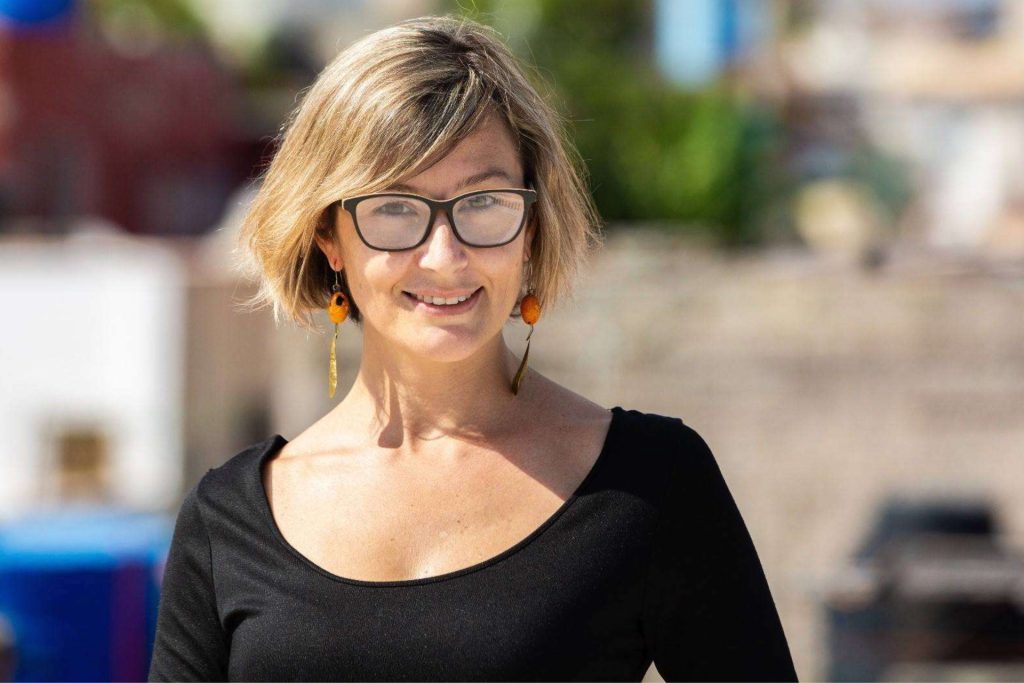
Elena Gentili of Save the Children Italy discusses humanitarian work in emergencies, advocacy, and the importance of education and social inclusion in ensuring children’s rights.
The United World Project spoke with Elena Gentili, Head of Advocacy and Policy at Save the Children Italy, an organisation with over 100 years of history and a presence in more than 100 countries, draws inspiration from the legacy of its founder, Eglantyne Jebb: “There is no inherent impossibility in saving the world’s children. It is impossible only if we refuse to do so,” and “Every generation of children offers humanity a new chance to rise from its ruins”.
Save the Children: Survive, Learn and Be Protected
Elena Gentili emphasises that the organisation’s mission is clearly focused on the future: “Our direction is expressed through three major concepts, summarised in our 2030 breakthroughs: Survive, Learn and Be Protected. We want no child to die from preventable causes before the age of five, and we want everyone to have access to quality education in a world where violence against children is no longer tolerated”.
Elena, how much do these statements reflect the way Save the Children operates?
A great deal. Now more than ever, they are central to our work. The first statement speaks of responsibility and our choice to continue saving children around the world. It tells us that the conditions in which they live are not inevitable. Poverty, violence, exclusion and lack of access to education are not accidental; they are the result of decisions and policies.
So, they can be changed?
Yes, and that is why Save the Children does not limit itself to addressing the consequences, but also works on the underlying causes through programmes, local initiatives and projects, research, and dialogue with institutions. Through advocacy and campaigns, we seek systemic changes in policies, regulations and funding that can have a long-term impact on the lives of children and adolescents. This approach is part of our work in every country: tackling educational poverty, protecting migrant children, responding to armed conflicts and humanitarian crises, and preventing violence and climate change. We work to ensure that our experience translates into fairer decisions.
And the second statement?
It looks further ahead, towards the future. Even in the most difficult circumstances, children are not merely vulnerable individuals who need protection; they are rights-holders with their own voices and aspirations. They can contribute to projects that bring about change in their lives, both now and in the future. For Save the Children, it is essential to work not only “for” children and adolescents, but also “with” them. This means listening to them and supporting their active participation, while providing spaces where they can take part in decision-making processes.
Jebb’s two statements complement each other, don’t they?
They describe Save the Children’s approach very well: we do not accept injustice as inevitable, and we invest in a different future. They sum up Jebb’s legacy: turning indignation into responsibility, and responsibility into action.
Does Save work for rapid but lasting change?
Responsiveness is essential in an emergency, but it is not enough. It is important to hold two time horizons: protecting children’s rights today, in emergencies and crises, while creating the conditions for that protection to last. A long-term presence in the contexts where we work is essential: it allows us to know communities and institutions, as well as the vulnerabilities and critical issues that can turn into crises or conflicts.
A dual objective?
Ensuring life-saving aid and maintaining the continuity of essential education, health and protection services (including psychological support), with a view to rehabilitation and reconstruction. The emergency and its aftermath should not be thought of as separate. By analyzing contexts, anticipating risks and preparing for crises, Save can act quickly while thinking about what comes next. This is a fundamental principle: returning to normal does not simply mean rebuilding what existed before, especially when that normality already left many children excluded. We need more inclusive and accessible systems that work during the crisis itself.
What role does civil society play in this?
A fundamental one. Organisations, associations and local communities are key drivers of change: because they have an in-depth understanding of local contexts and social dynamics, they have access to communities in ways that external organisations cannot. Today, this is even more important, as humanitarian space shrinks during crises and international aid workers face greater difficulties in gaining access.
Advocacy is also part of this work, isn’t it?
It is essential for turning immediate and ongoing operational experience into structural change. Being alongside families and children shows us where systems are failing, which rights are not being upheld, and why. This leads us to collect data, develop policy proposals and engage with institutions at different levels to create conditions that help prevent humanitarian crises. Reaching a child with a service is not enough if the conditions that created their vulnerability remain unchanged. Through advocacy, we seek to influence regulations, policies, funding and practices, going beyond individual projects.
We have mentioned listening. How important is it?
Listening to children, young people, families and communities is fundamental. For a response to be sustainable, it must start with younger generations.
Save the Children (for over 100 years and in more than 100 countries) works from emergencies to education. Can we describe you as a big tree with different, complementary branches?
It’s a very effective image: it conveys the idea of a large global organization, with a trunk that has developed expertise and ways of intervening: the branches, which grow from the same root and share the same goal: the rights of boys and girls. Our direction is expressed in three major concepts, summed up in our 2030 breakthroughs: Survive, Learn and Be protected. We want no child to die from preventable causes before the age of 5, and everyone to have access to quality education, in a world where violence against children is no longer tolerated. Our branches, different and complementary, covering various themes and ways of working, must talk to each other. This is essential in responding to the problems children face. One element that runs through the roots, trunk and branches is the active participation of children and young people.
Childhood is a source of potential, but children are also vulnerable. How do wars and disasters affect them?
Today, crises—poverty, food insecurity, conflicts and climate change—overlap and reinforce one another, with lifelong consequences. Wars are among the most dramatic threats, particularly because they are lasting longer and are increasingly fought in densely populated areas, reaching even the places where civilians live their everyday lives. They have particularly serious consequences for children, starting with the loss of education, which also means the loss of opportunities for social interaction. The impact cannot be measured only in terms of deaths and injuries, but also in displacement and the loss of familiar points of reference.
Our latest report states that 520 million children live in conflict-affected areas. That is more than one in five! It is estimated that over 200 million children will need humanitarian assistance in 2026. In 2026, Save the Children’s humanitarian plan aims to reach 17.8 million people, including 10.1 million children, across 45 countries: we provide assistance while strengthening the leadership of local communities, with greater investment in prevention.
And we must not forget inequalities…
Inequality has a profound impact on children, both between countries and within individual countries. There is a risk that children born into poorer families, marginalised neighbourhoods, isolated areas or conflict zones will lose out on opportunities. A crisis tends to widen inequalities and undermine access to services. We work to prevent this from happening. For us, peace means more than the absence of war. Lasting peace is also built in advance by reducing inequalities, strengthening social cohesion and creating opportunities for participation, so that people feel recognised, heard and part of a shared future.
Without forgetting the problem of hunger.
153 million children face food insecurity, with long-term consequences. When we talk about the multidimensional crises affecting children, we must consider both the immediate situation and what happens afterwards. That is why we work on social cohesion and peace. Developing fair systems and ensuring that opportunities are distributed equitably creates the essential conditions for a more inclusive and resilient society, capable of facing crises.
Save the Children addresses every kind of crisis. Does this mean that climate change is also a priority today?
It is central to our work, as climate change increasingly affects children’s rights. One of our reports states that around one billion children—half of the world’s child population—live in countries considered to be at extremely high risk. They have not contributed to the causes of climate change, yet they suffer its consequences, both today and tomorrow. Climate change is a crisis multiplier and an amplifier of inequalities. Another report indicates that 7,740 million children face multidimensional poverty alongside high climate risks.
What action are you taking?
To address this problem effectively, we need to act at several levels in different countries. Once again, the active involvement of young people is essential: their voices and mobilisation must contribute to decision-making on climate policies. That is why we develop educational programmes to help them recognise risks and acquire the skills needed to put forward proposals for change. In a few weeks, we will participate in COP31 for the fifth time, linking climate issues to children’s rights and calling for faster emissions reductions to keep the goal of limiting global warming to 1.5 degrees within reach. It is a major challenge!
Can we say that childhood is now at risk even in more prosperous countries?
A country’s wealth does not tell us how well the rights of all children are being upheld. We must look beyond averages and examine how rights are distributed. In Italy, for example, there are significant and increasingly evident social disparities, ranging from educational poverty to psychosocial well-being and adolescents’ mental health, as well as new forms of violence and exploitation online, and the difficulties migrant children face in achieving genuine social inclusion. Save the Children works locally to improve access to services and identify needs, as well as to conduct research and collect data that help us understand the causes of inequality. Rights cannot be taken for granted once and for all, in any country.
What exactly is educational poverty?
It is not simply a matter of whether children can attend school. It also concerns the lack of opportunities to learn and develop their abilities, aspirations and talents; to build relationships and participate in social life; and to imagine and shape their own future. A family’s economic circumstances and the area in which a child lives both matter, as they affect the availability and quality of services. The risk of educational poverty is that a child’s starting circumstances determine their future opportunities too early in life.
How do you address this issue?
One example is our Punti Luce initiative, launched in 2014. These are spaces offering a high concentration of educational opportunities. There are 27 centres in 20 cities across 15 Italian regions. They provide free academic support, workshops, sports and cultural activities, and opportunities for social interaction. Families are also involved in this work. So far, we have reached approximately 72,000 children and adolescents. As always, however, we also work to change the conditions that lead to inequality, and schools play a central role in this effort.
For example, through our Back to School reports, which examine the state of Italian schools from a specific perspective, focusing particularly on the voices of students, teachers, educators and educational communities. The 2025 edition, Call Me by My Name, focused specifically on students with a migrant background. Once again, we need to work towards reducing inequalities and invest in public education as a means of achieving this, while promoting inclusion and participation.
It seems to me that migration is a central issue for Save the Children.
Having worked for many years to protect and safeguard children, we also support unaccompanied foreign minors. Our work is guided by the principle of the best interests of the child, which is fundamental to us and serves as our guiding principle. We work on two fronts: providing direct support in places of arrival and transit, and conducting advocacy to strengthen protection laws, policies and systems. We are present at landing points in southern Italy and in some land-border areas, where we provide information, support and direct protection to children, adolescents and families who have endured long and traumatic journeys. In Ventimiglia, we have established a space where unaccompanied minors can be heard and receive support. Alongside this work, we also carry out projects through strategic partnerships, such as Civico Zero.
What does that involve?
These are day centres in four Italian cities: Rome, Milan, Turin and Catania. They serve as points of reference for many unaccompanied foreign minors and young migrants. We do not see these young people as a problem to be managed, but as individuals with abilities, aspirations and energy who can be an asset to the country and their communities, provided that the right conditions are created for them to fulfil their potential.
Returning to advocacy, then?
A fundamental milestone in this regard was Law No. 47 of 2017, known as the Zampa Law, which we strongly supported alongside other civil society organisations. Next April will mark the tenth anniversary of this law, which represented an important step forward in recognising unaccompanied foreign minors first and foremost as children and, therefore, as rights-holders like any other children.
Over the years, we have continued to monitor its implementation and the European Pact on Migration and Asylum.
How can you maintain hope in such a difficult climate?
Some of the figures are shocking and discouraging, but for Save the Children, hope is not something abstract: it comes from concrete experience. It grows out of encounters. It emerges when a girl manages to study even in the most difficult circumstances, when a malnourished child regains weight and health, when an adolescent finds safe spaces again, when a child fleeing danger searches for a school, or when someone continues to imagine a different future while bombs fall around them.
The greatest source of hope comes from children and young people. Their courage becomes our courage. Our responsibility is to ensure that their courage is never left unsupported. But hope alone is not enough. It must be accompanied by expertise, coordination and resources, and by people willing to turn it into action. This brings me back to Eglantyne Jebb’s statement quoted at the beginning: “There is no inherent impossibility in saving the world’s children. It is impossible only if we refuse to do so”.