
 EN
EN
Peace & Human Rights

Stories from around the globe show how a united world is already in motion. This platform highlights experiences, initiatives, and projects from people and communities working for unity and peace. Explore what’s happening and get inspired.
<p><em>Meeting people of other religions personally helps you understand their cultures and traditions and is the best remedy against prejudices. Here are three examples of how to dial up the interreligious dialogue in everyday life.</em></p> <p><strong>Coping with anti-Muslim sentiment</strong><br />Recently there was an incident in my school when a second grader drew a picture of an armored tank directed toward the school, and on it he wrote: “My plan to blow up the school.” There had also been several previous episodes when he talked about killing non-Muslims that were troubling for us in the school administration.<br /> Sam has been struggling with his own developmental issues, but complicating things for him were the summer he spent with his family in Palestine and the recent violence reported in the media, including the anti-Muslim backlash after the Charlie Hebdo murders in France.</p>
<p><em>A celebration of the three monotheistic religions in Egypt, that’s the main idea behind the Daraweesh Carnival, a festive and colourful event which took place on Friday, June 12 in the streets of Old Cairo.</em></p> <p>Participants had the opportunity to visit the Amr ibn al-‘As mosque, the Saint George Church, one of the oldest churches in the Egyptian capital, and the Ben Ezra Synagogue.</p> <p>The festival organisers’ aim is to promote mutual respect and understanding between Muslims, Christians and Jews, especially among the youth.</p>
<p><em>Like every year, in early May the Youth for a United World all over the world have made a lot of activities and initiatives within the United World Week. Below you find some other fragments (and others at these links: <a href="http://unitedworldproject.org/it/home/14-notizie/766-qualche-stralcio-dalla-settimana-mondo-unito-2015-nel-mondo.html">1</a> - <a href="http://unitedworldproject.org/it/home/14-notizie/770-qualche-altro-frammento-dalla-settimana-mondo-unito-2015.html">2</a> - <a href="en/home/10-news/776-other-fragments-from-the-united-world-week-2015.html">3</a>).</em></p> <p><strong>Loppiano, Italy.</strong> In 1500 people for the 42nd edition of the May 1st Youth Meeting at Loppiano, inside the United World Week 2015. "A network" to meet the challenges of multiculturalism, integration and violence. A big blue door and many keys were the symbols of this edition of May 1st in 2015 which carries the title "Outside - Look. Choose. Be." <a href="https://www.flickr.com/photos/sif_loppiano/sets/72157652285364721/">look at the photos</a></p>
<p><em>In a parish in Córdoba (Argentina) a group of young people roll up their sleeves, spurred by the desire to put the Gospel into practice. Love for those in need stimulates their creativity.</em></p> <p><strong></strong><strong>In 2011, three young people from a parish in the province of Córdoba (Argentina) were invited to a meeting in “Mariapolis Lia,”</strong> a small city of the Focolare Movement, 250 km from Buenos Aires. Participating at this meeting was a great experience for all three, a full immersion in the Gospel in action, an incentive to concretely give of themselves for others. “That meeting changed us,” says Susana. “We found that we were more enthusiastic, more welcoming, more trusting in God who we rediscovered is Love. It was a chance to grow as people but also as a group.” So much so that today there are about fifteen teens who are moving forward together with some very interesting initiatives. As an example, the “Clothing Fair,” a very useful idea for their region in which there are many families who live below the poverty line.</p>
<p><em>At the European Commission’s Headquarters, some religious leaders will gather to reflect on peaceful coexistence and the challenges it has to face. Also the Focolare President, Maria Voce will attend the meeting.</em></p> <p><strong></strong><strong>The meeting with the religious leaders</strong> will take place on <strong>16 June </strong>at the Berlaymont Building in Brussels, seat of the European Commission. The top-level operational meeting is regularly held among the organisations of the European Union and churches, religions, philosophical associations and non-religious organizations, as provided by Art.17 of the Treaty of Lisbon.</p>
<p><em><em>Like every year, in early May the Youth for a United World all over the world have made a lot of activities and initiatives within the United World Week. Below you find some other fragments (and others at these</em> links: <a href="http://unitedworldproject.org/it/home/14-notizie/766-qualche-stralcio-dalla-settimana-mondo-unito-2015-nel-mondo.html">1</a> - <a href="http://unitedworldproject.org/it/home/14-notizie/770-qualche-altro-frammento-dalla-settimana-mondo-unito-2015.html">2</a>).</em></p> <p><strong>Paraguay.</strong> Young people went to share an afternoon with the children of a kindergarten and also went to accompany the elderly from a geriatric hospital. They also launched a proposal to give blood to help those in need. Sunday, May 10 they made the closure of the UWW in the city of Caazapá, with the race for unit, where they met with the teens for a united world and young people from other places.</p> <p><strong>Philippines.</strong> They campaigned for empowerment and a fund-raising to help the earthquake victims in Nepal, called "One for Nepal". They asked for donations and also made musical concerts sell T-shirt.</p>
<p><em>The UN Agenda for development post-2015 in discussion in the Vatican, upon the initiative of the Pontifical Council for Justice and Peace. Among the women speakers was Rita Moussalem from the Focolare's Center for Interreligious Dialogue.</em></p> <p><strong></strong><strong>While gender is the topic under discussion in the Western world</strong>, in developing countries the concern is for the tragedy of exploitation; in the Middle East the rights of women, and peace. Still in the West, women forced to choose between work and family; lives that are subjected to violence…</p> <p><strong></strong>These are a few of the<strong> challenges and problems </strong>– differing according to the various geographical areas – in discussion at the United Nations, in view of the new agenda for the <em><a href="https://sustainabledevelopment.un.org/focussdgs.html">Sustainable Development Goals</a></em>, to be carried out after the year 2015 (the date by which the 193 member states hoped to achieve the famous <em>Millennium Development Goals</em>).</p>
<p><em><span id="result_box" lang="it"><span title="August 25th-30th 2015 "></span><span title="Palazzo Scopoli, Tonadico (Trent, Italy) ">Religions in the Global World<br />August 25th-30th 2015</span></span></em></p> <p><span lang="it"><span title="Palazzo Scopoli, Tonadico (Trent, Italy) "><span id="result_box" lang="it"><span title="Religions are having a strong impact on the international scene, continuing to influence heavily cultures, societies and the broader academic and public debate worldwide."></span><span title="of the positive function that religions can actually play. ">Religions are having a strong impact on the international scene, continuing to influence heavily cultures, societies and the broader academic and public debate worldwide. Understanding the role of religions in the global world has to be conceived not merely in terms of political instability, social disorder, or as a de-facto analysis of a pluralistic environment, but also as an historical fact that opens a space for a better understanding of the positive function that religions can actually play.</span></span></span></span></p>
 Health, Sport & Ecology
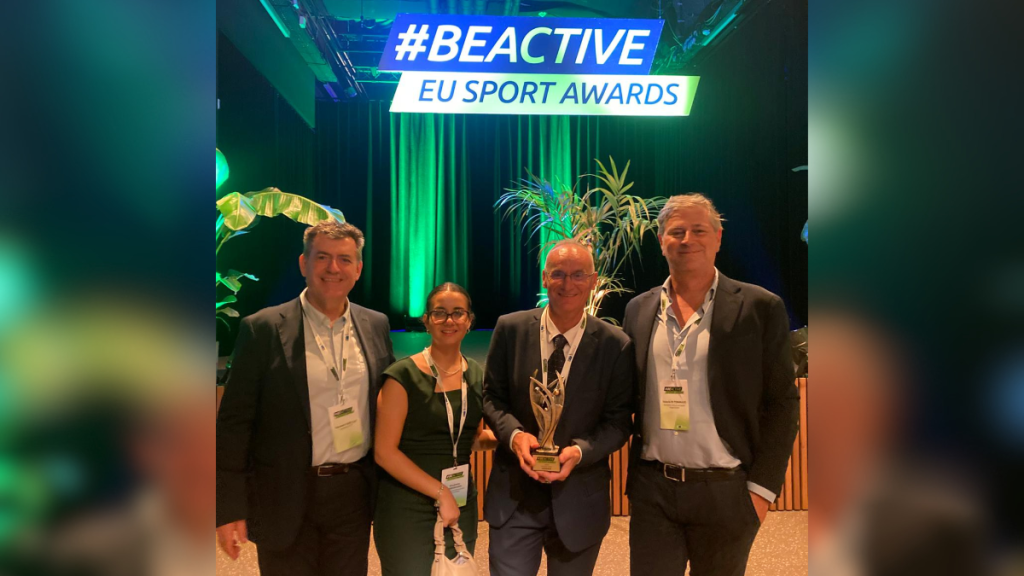
Run4Unity has received the prestigious BeActive EU Sport Awards from the European Union in the “sports and peace” category, recognising more than twenty years of work promoting fraternity, inclusion and a culture of peace through sports.
 Dialogue & Interculture
 Dialogue & Interculture
 Peace & Human Rights
Elena Gentili of Save the Children Italy discusses humanitarian work in emergencies, advocacy, and the importance of education and social inclusion in ensuring children’s rights.
 Active Citizenship & Politics
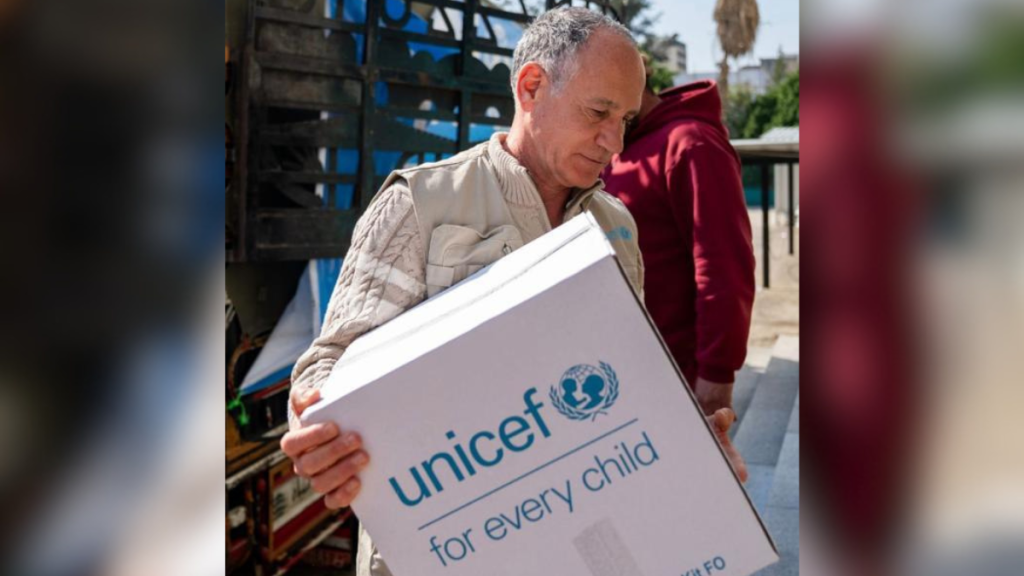
After thirty years spent in some of the world's most challenging environments, Marcoluigi Corsi, UNICEF Representative in Lebanon, reflects on child protection, hope and the humanity that endures even in the midst of war.
 Economy & Work
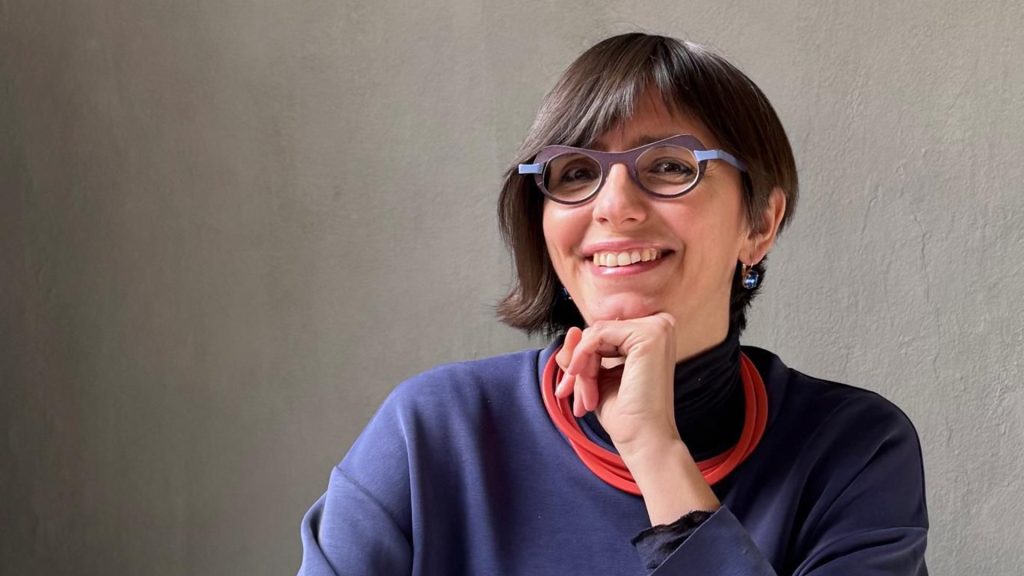
Anna Granata, professor at the University of Milano-Bicocca, reminds us that teaching peace is not an abstract utopia. It is something that happens every day in Italian classrooms among children with diverse stories, languages, and backgrounds.