

 EN
EN
Dialogue & Interculture
United World Week

Stories from around the globe show how a united world is already in motion. This platform highlights experiences, initiatives, and projects from people and communities working for unity and peace. Explore what’s happening and get inspired.
<p><em>How much do we know about Islam and how much do we think we know? How does a Muslim woman live and how do we imagine her life? An interview with Abir, a young Italian Muslim woman of Moroccan origin.</em><br /><br />In the world there are many preconceptions about Muslim women. "They must have little freedom", "She is like a prisoner, she cannot express herself". "She is oppressed, there are many rules that she cannot change”. "I wonder what number of wife she is and what will she do with her life, because with her clothes I cannot get an idea of her." "We do not know their culture and they are stigmatized by news of wars and conflicts." All these sentences were spoken by Western people. How much of this is true?</p>
<p><span style="background-color: transparent;">Often the news circulating on the most read newspapers and the most watched/listened broadcasters convey the image of an extremely poor Africa: its endless civil wars, epidemics such as AIDS, ebola, malaria, etc. A continent where population growth is a threat. People constantly fleeing war or poverty by migrating to neighboring countries or to Europe, etc.</span></p> <p>The purpose of this article is not to contradict this image conveyed by certain media, but rather to highlight the other face of Africa that is not often shown. It is an Africa in search of its own unity. An Africa that struggles to find the most appropriate solutions to its problems. We could share several initiatives in this direction, but we would rather analyze the Gambian experience as a living witness of an Africa in search of negotiated solutions, specifically in the area of conflict resolution, as described in the document of the African Union: 'Vision 2064: an Africa without the sound of weapons.’</p>
<p><em><strong><a href="http://www.pilares.org.ar">Pilares</a> </strong>(pillars) is a Foundation that works in one of the largest slums in the city of Buenos Aires, called Villa 21-24 de Barracas. A story that began with a group of young people in 2008 and is today a Foundation that helps 365 families.</em></p> <p>Buenos Aires is well known for being a cosmopolitan, crazy city, nourished by culture and beauty. But it is also known to be one of the cities that house the largest poor settlements in Latin America. The largest slums in Argentina are in Buenos Aires. One of them, the biggest one, is ‘Villa 21-24 of Barracas’, in the South-East of the Argentine capital city. It hosts about 45,000 people in a situation of precariousness and poverty.</p>
<p><em>It will take place in the Permanent Mariapolis of <strong>Loppiano</strong>, in the province of Florence, Italy, from April 29 to May 1, 2017, on the theme of Peace.</em></p> <p>The title is provocative: "<strong><a href="http://www.primomaggioloppiano.it/">Change your Heart. Change the World</a></strong>". That is, begin with your own heart and change the world around you.<br />The <strong>Meeting</strong> is conceived as a journey of discovery of the thousands of actions in which the <strong><a href="http://www.y4uw.org/en/">Youth for a United World</a></strong> are already committed to building a future of peace in the most various areas, along with <strong>other movements, associations, and groups</strong>, including: Nuovi Orizzonti, Rondine, Centro internazionale La Pira, Non dalla guerra, Living Peace, Istituto Universitario Sophia, Dancelab, EcoOne, Economia disarmata, Barbiana, and Sportmeet.</p>
<h4 style="text-align: justify;"><em style="background-color: transparent;"><span style="font-family: 'Calibri Light', sans-serif;"><strong>For most people, holidays are a time to "escape from reality", to rest, to do what one likes. Some even seek to get away from people so they can rest. But some people are different ... and these people decided, therefore, to live "different holidays".</strong></span></em></h4> <p>January 5 through 15 in San José, a small town located in the heart of the <strong>Calchaquíes Valleys</strong> of the Province of Catamarca, in the Northwest of Argentina, 60 young people and adults from Paraguay, Uruguay, Guatemala, and Argentina gathered to challenge the ordinary logic and organize a rest without being governed by "what one wants" but based on "building it with the other."</p>
<p><em>10th Edition of ReGENerate not to be missed!</em></p> <p>For 10 years now, young people involved or connected in the <strong><a href="http://www.focolare.org/gb/">Focolare Movement</a></strong> across <strong>Great Britain</strong>, <strong>Ireland</strong> and <strong>Western Europe</strong> have been coming together, once a year at the Focolare Centre of Unity in Welwyn Garden City, to ReGENerate.</p> <p>From the 24th-26th February 2016, <a href="https://www.facebook.com/regenerate2017/"><strong>ReGENerate</strong> </a>will once again come to Welwyn Garden City for what Conleth Burns, one of the young people in the Focolare states will be a "very special weekend."</p>
<p><em style="background-color: transparent;">Morocco in its natural family: a step towards the unity of the continent</em></p> <p>So often African news is about a suffering Africa. On January 31, 2017, Africa became an Africa that sings thanks to the return of <strong>Morocco</strong> to the African Union family after more than 30 years outside the continental organization.</p> <p>Indeed, the <strong><a href="https://www.au.int/">African Union</a></strong> is a continental organization created by the African leaders in Addis Ababa in 1963 to strengthen the unity of the continent and lead the peoples of the continent towards an African renaissance.</p>
<h2>The RImPRESA Project started off!</h2> <p><em>It is aimed at offering a support to the recovery of many small productive, trade, and tourism businesses affected by the earthquake in Central Italy, in the areas along the Via Salaria, in the territory between Amatrice and Ascoli Piceno, in the Val Nerina and in the Abruzzo Region. Rural areas, whose economy was mainly based on agriculture and sheep and cattle livestock, and whose customers were their same population along with tourists who came in summer and for the weekends.</em></p> <p>It all started after the earthquake that last August destroyed the town of Accumoli, in the Province of Rieti, Central Italy.</p> <p>A few days later, Federica left her home, in the Southern Province of Rome, officially:<span style="font-size: 11pt; line-height: 115%; font-family: Calibri, sans-serif;">«T</span>o go and check the condition of the house inherited by my husband<span style="font-family: Calibri, sans-serif; font-size: 14.6667px;">». I</span>n fact, as she adds <span style="font-size: 11pt; line-height: 115%; font-family: Calibri, sans-serif;">«B</span>ecause Roberto and his family were from Accumoli. After his death, we created an association of social promotion called<em> </em><strong><a href="https://www.facebook.com/abbraccioplanetario/">Abbraccio planetario</a></strong><em> </em>(Planetary Hug) to carry out actions that promote the values in which he believed, such as the care and love for our neighbours, especially the weakest. I went to Accumoli because I wanted to see with my own eyes the actual situation and what we could do to help them<span style="font-size: 11pt; line-height: 115%; font-family: Calibri, sans-serif;">».</span></p>
 Dialogue & Interculture
United World Week
Dialogue & Interculture
United World Week
United World Project launches #ChooseToDialogue, a global invitation as part of United World Week 2026. A proposal to build spaces for encounter and share stories of impact through a powerful and necessary tool: dialogue.
 Dialogue & Interculture
 Economy & Work
 Dialogue & Interculture
United World Week
Dialogue & Interculture
United World Week
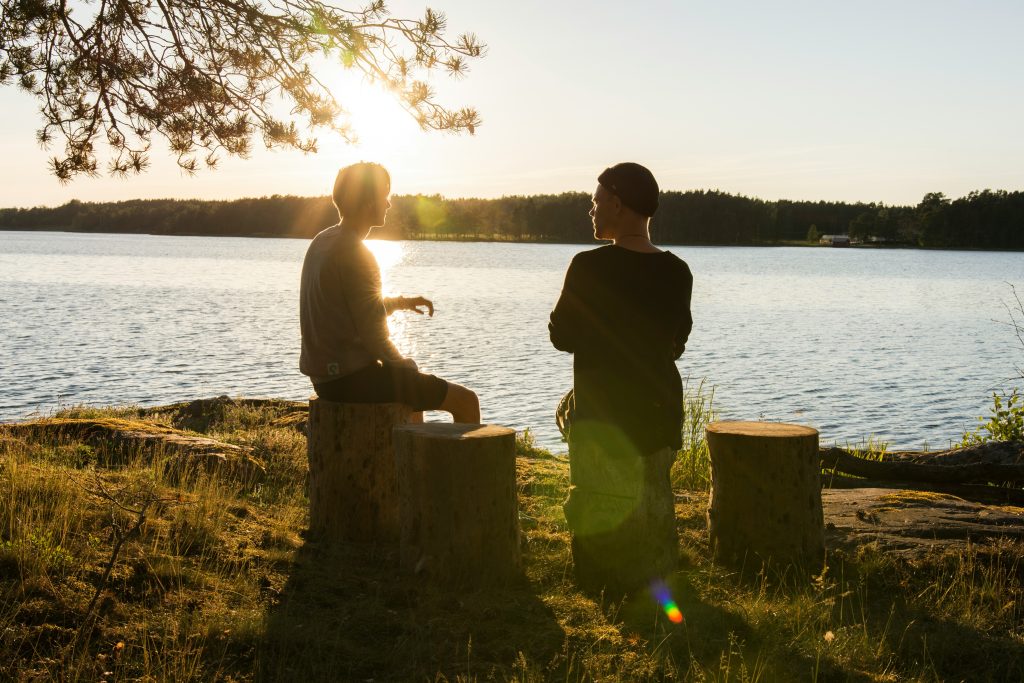
Here’s the key: knowing that we do not know. No one possesses the absolute Truth, and by engaging in dialogue with everyone we can grasp aspects or fragments of truth that help us reassemble a shattered vase that we can restore only if we are “together”.
 Economy & Work
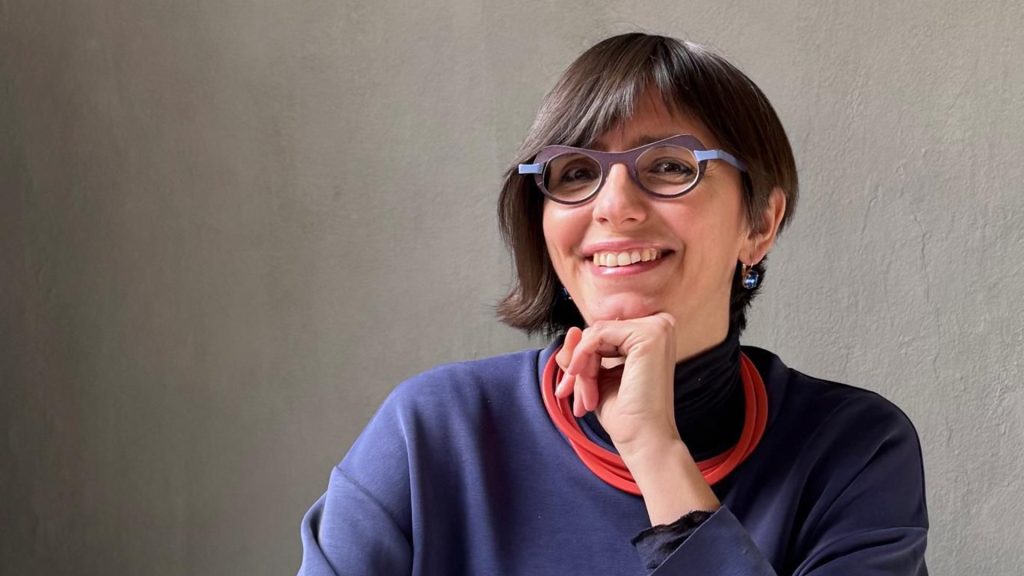
Anna Granata, professor at the University of Milano-Bicocca, reminds us that teaching peace is not an abstract utopia. It is something that happens every day in Italian classrooms among children with diverse stories, languages, and backgrounds.
 Art & Social Commitment
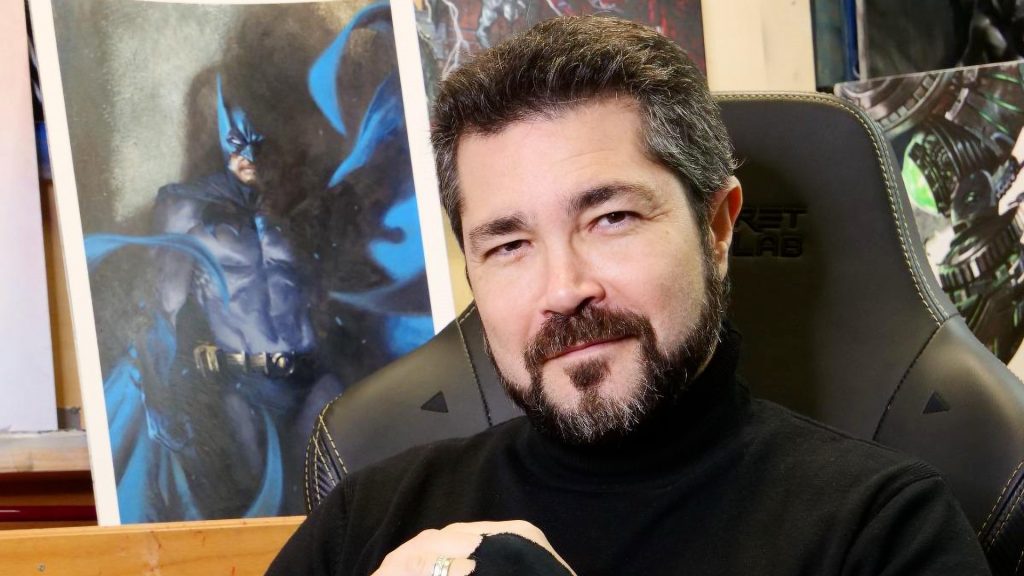
Celebrated Marvel and DC artist Gabriele Dell’Otto invites us to consider the people who are working to build peace as the real superheroes of our world. A profound discussion on responsibility, citizenship, and the challenge of doing the extraordinary in our everyday lives.