Stories from around the globe show how a united world is already in motion. This platform highlights experiences, initiatives, and projects from people and communities working for unity and peace. Explore what’s happening and get inspired.
<p><em>Alberto Lo Presti, Director of the Igino Giordani Centre, reflects on some excerpts from Giordani's book on the uselessness of war.</em></p> <p><strong></strong><strong>Peace is the result of fraternity amongst the peoples, </strong>solidarity with the weakest, mutual respect. This is how a more just world is built, this is how war is set aside war as a barbaric undertaking that belongs to a dark period of human history. Giordani knew war: he had taken part in the first world war. He received a medal after he had been seriously wounded on the Austrian front. But it is not only the horror of blood and death that should put aside war as a means of solving international problems. War can be seen as something quite natural to those impoverished minds that imagine humankind as a machine in thirst of power, ready to launch out against any enemy to satisfy its dreams of power. Yet, there is nothing natural about inflicitng suffering, misery and death.
<p><em>In the capital of the Democratic Republic of the Congo, as in many African countries, access to health care is expensive and not always direct or immediate. This is the experience of Aline, nurse and biologist, who chose to welcome others above all else.</em></p> <p><strong></strong><strong>“One day we were closing, when at 4:30 p.m. a mother with a baby</strong> about 8 months old arrived for a blood sample withdrawal.” Aline M. is a nurse and a biologist in the university clinic of Kinshasa. In the Congo/DRC, the birth rate is very high, as is the mortality rate and the infant mortality rate. Life expectancy at birth and the average age of the population are both very low.</p>
<p><em>Justice is an essential requirement for the ideal of universal fraternity.</em></p> <p>[...] To this end, there is a need to ensure the uncontested rule of law and tireless recourse to negotiation, mediation and arbitration, as proposed by the Charter of the United Nations, which constitutes truly a fundamental juridical norm. The experience of these seventy years since the founding of the United Nations in general, and in particular the experience of these first fifteen years of the third millennium, reveal both the effectiveness of the full application of international norms and the ineffectiveness of their lack of enforcement.
<p><em>The news reports on this African country have been alarming. The political conflict has been really trying for the entire population of Muslims, Christians and Animists. All are hoping for a peaceful solution.</em></p> <p>“Ever since the coup d’etat last Thursday, 17 September– we are all still at home: the schools, offices, and shops are all closed. Petrol and food are running out and whatever is available, costs double,” explains Aurora De Oliveira of the Focolare in Bobo-Dioulasso, the second city of Burkina Faso. The protest here is felt, but not as strongly as in the capital, Ouagadougou (population of 1.5 million), where the main events of last week came about and where <strong>more than 100 people were wounded and at least ten have died</strong>.
<p><em>Il mondo ha bisogno di riconciliazione</em></p> <p>"For some months now, we have witnessed an event which fills us with hope: the process of normalizing relations between two peoples following years of estrangement. It is a process, a sign of the victory of the culture of encounter and dialogue, “the system of universal growth” over “the forever-dead system of groups and dynasties”, as José Martí said (ibid.). I urge political leaders to persevere on this path and to develop all its potentialities as a proof of the high service which they are called to carry out on behalf of the peace and well-being of their peoples,
<p><em>Romano Prodi and Pasquale Ferrara give an interview at the convention for worldwide Focolare delegates, currently underway at Castel Gandolfo (Rome) from 14-27 September.</em></p> <p><strong></strong>“We can react to this situation through forms of reorganization, even if they are not perfect, but which bring together countries and people from various fields. Our problem in Europe is one of an imperfect unity, but we must keep going with it. And in the context of the migrant crisis we feel that unity is essential to our future,” states <strong>Roman Prodi</strong>, twice Prime Minister of Italy and former President of the European Commission. As an economist, academic and politician, he gave an interview during the meeting for Focolare regional delegates.</p>
Sharing stories inspires change, connects communities and shows the strength of collective action
Add your voice by sharing your story, initiative, or project. After review, it could be featured on our global platform to inspire change far beyond your community.
Together to Care is a document that narrates experiences, projects and good practices from all over the world that testify the youth’s commitment to caring for people, the planet and the common good.
In times of polarization, an initiative by the Igino Giordani Foundation put dialogue to the test, through a series of 4 meetings, as a tool for understanding others without trying to impose a truth.
Elena Gentili of Save the Children Italy discusses humanitarian work in emergencies, advocacy, and the importance of education and social inclusion in ensuring children’s rights.
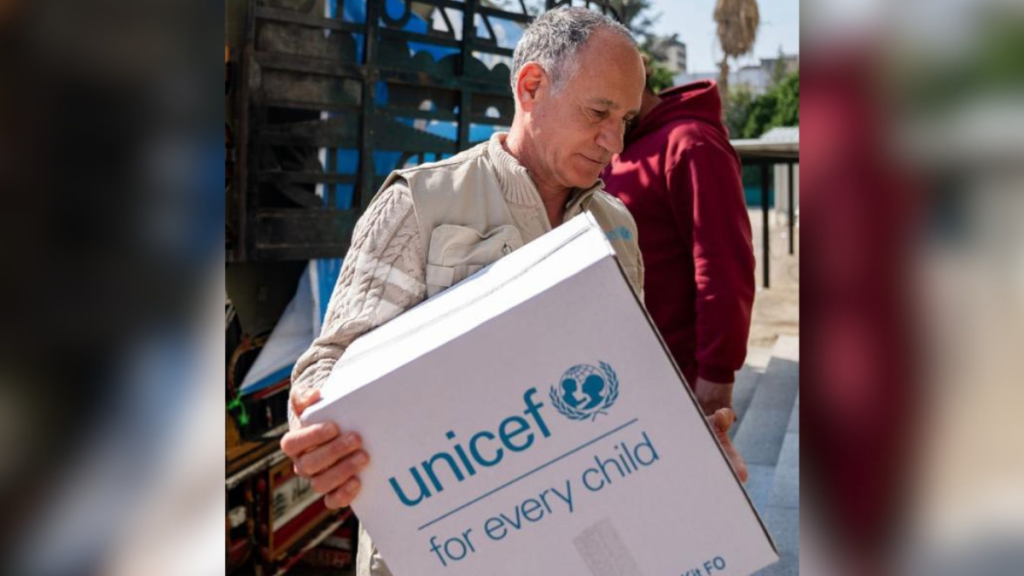
After thirty years spent in some of the world's most challenging environments, Marcoluigi Corsi, UNICEF Representative in Lebanon, reflects on child protection, hope and the humanity that endures even in the midst of war.
Manage Consent
To provide the best experiences, we use technologies like cookies to store and/or access device information. Consenting to these technologies will allow us to process data such as browsing behavior or unique IDs on this site. Not consenting or withdrawing consent, may adversely affect certain features and functions.
Functional
Always active
The technical storage or access is strictly necessary for the legitimate purpose of enabling the use of a specific service explicitly requested by the subscriber or user, or for the sole purpose of carrying out the transmission of a communication over an electronic communications network.
Preferences
The technical storage or access is necessary for the legitimate purpose of storing preferences that are not requested by the subscriber or user.
Statistics
The technical storage or access that is used exclusively for statistical purposes.The technical storage or access that is used exclusively for anonymous statistical purposes. Without a subpoena, voluntary compliance on the part of your Internet Service Provider, or additional records from a third party, information stored or retrieved for this purpose alone cannot usually be used to identify you.
Marketing
The technical storage or access is required to create user profiles to send advertising, or to track the user on a website or across several websites for similar marketing purposes.


 EN